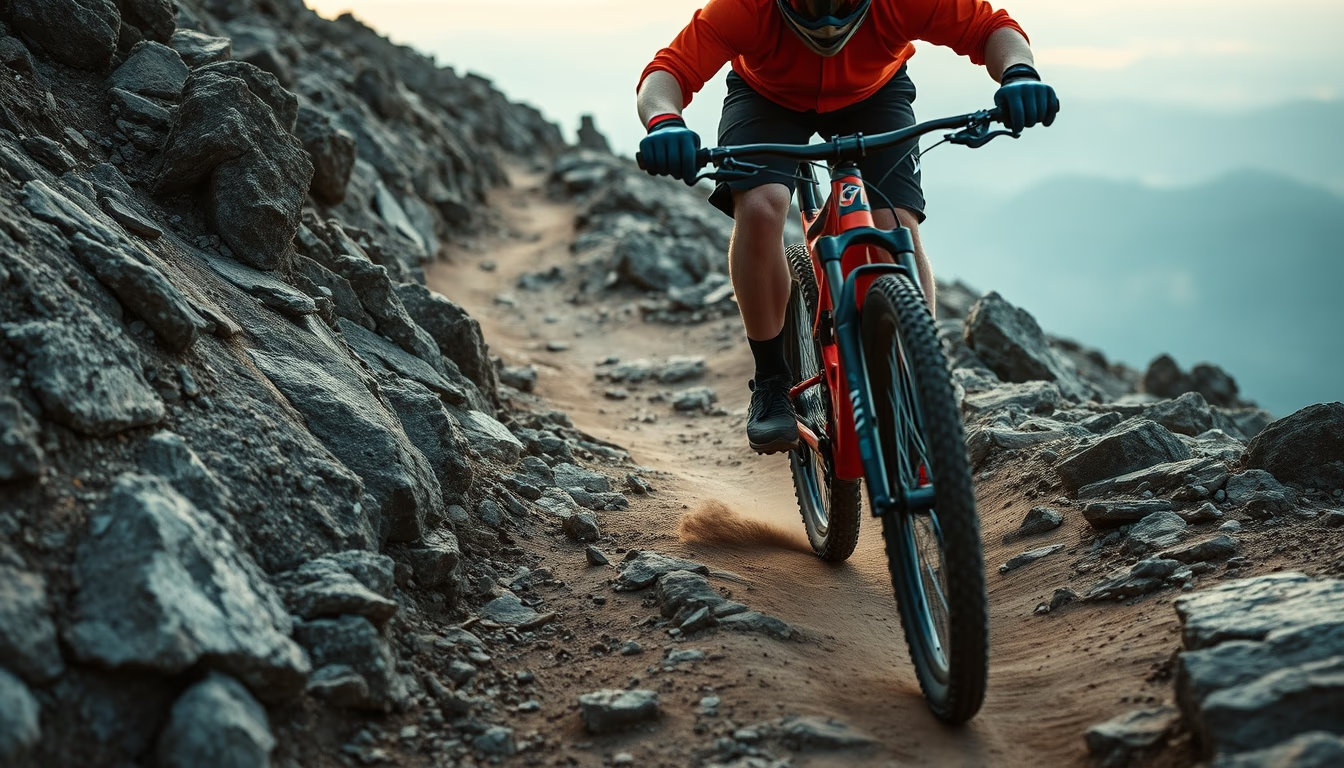
Mtb rocky trail descent
1344×768 · AVIF · CC BY 4.0
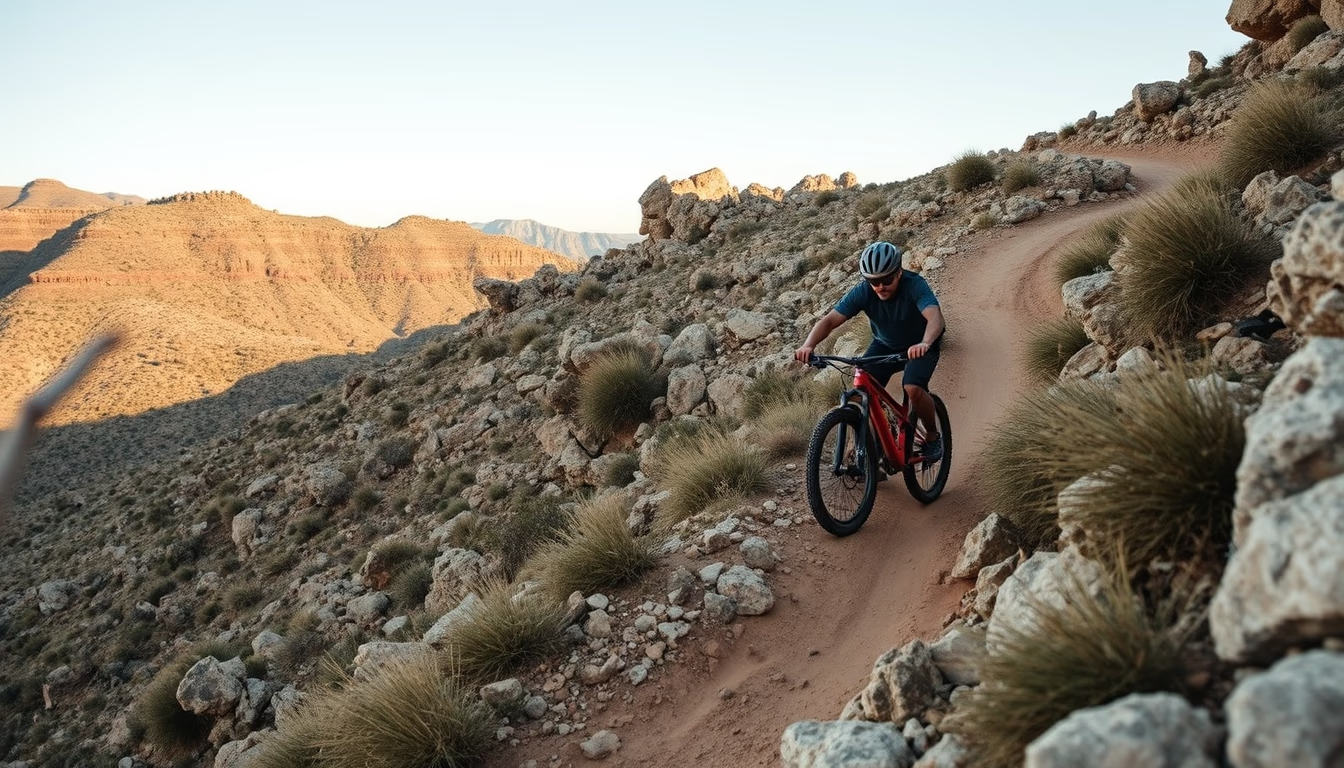
Technical rocky trail descents in mountain biking require skill, proper equipment, and terrain knowledge to safely navigate obstacles.
About this subject
Rocky trail descents are among the most challenging aspects of mountain biking, demanding speed, control, and terrain reading ability. Unlike smooth surfaces, rocks require constant posture adjustments, precise line choices, and techniques like manual or bunny hop to clear obstacles. Suspension setup and tire pressure are critical: larger volume tires with aggressive treads provide extra traction, while progressive damping suspension helps absorb impacts without losing stability.
In Brazil, regions such as Serra do Mar in São Paulo and Chapada dos Veadeiros in Goiás offer technical trails with rocky sections that attract advanced riders. Globally, destinations like Moab (USA) and the French Alps are benchmarks for rocky terrain. Safe practice includes mandatory protective gear, full-face helmet, knee pads, and elbow pads, along with frequent bike maintenance, especially brakes and tires.
The technique for rocky descents involves keeping pedals level, center of gravity low, and eyes focused on the exit of the obstacle, not in front of the wheel. Experienced riders advise never locking brakes abruptly on loose surfaces, as this can cause skids and falls. Instead, they use the rear brake modulated and the front brake gently to control speed.
Beyond physical fitness, the mental aspect is crucial: confidence to tackle steep, rocky sections comes with progressive practice. Many beginners start on less aggressive trails and gradually evolve to more technical terrain. Riding groups and mountain bike schools offer specific downhill courses, teaching from basic posture to advanced maneuvers.
Frequently Asked Questions
What is the best bike for rocky trail descents?
Full-suspension mountain bikes are ideal, offering greater impact absorption. Models with 140mm to 170mm of travel, wide tires (2.4 to 2.6 inches), and modern geometry for high-speed stability are recommended.
How to improve technique on rocky descents?
Practice on progressive trails, starting with smaller obstacles. Focus on keeping your eyes ahead, pedals level, and weight slightly back. Brake before corners and avoid locking wheels. Specialized courses and tutorial videos from experienced riders can accelerate learning.
What are the risks of riding rocky descents without proper protection?
The main risks are falls causing fractures, severe abrasions, and head trauma. Therefore, a full-face helmet, gloves, knee pads, and elbow pads are essential. Additionally, a poorly adjusted bike or worn brakes increase danger on technical terrain.
Direct URL
https://pub-c7d6a6ea828543ac903a74a341ccb2e1.r2.dev/imagens/mtb-rocky-trail-descent-documentary-nature-style-fresh17.avifHow to credit
Include a visible link back to UtilizAí. Copy one of the snippets below:
<a href="https://xn--utiliza-eza.com/en/midia/imagens/mtb-rocky-trail-descent-documentary-nature-style-fresh17">Mtb rocky trail descent</a> by <a href="https://xn--utiliza-eza.com">UtilizAí</a>, licensed under <a href="https://creativecommons.org/licenses/by/4.0/">CC BY 4.0</a>.
[Mtb rocky trail descent](https://xn--utiliza-eza.com/en/midia/imagens/mtb-rocky-trail-descent-documentary-nature-style-fresh17) by [UtilizAí](https://xn--utiliza-eza.com), CC BY 4.0
License: CC-BY-4.0