Bmx skatepark concrete
1344×768 · AVIF · CC BY 4.0
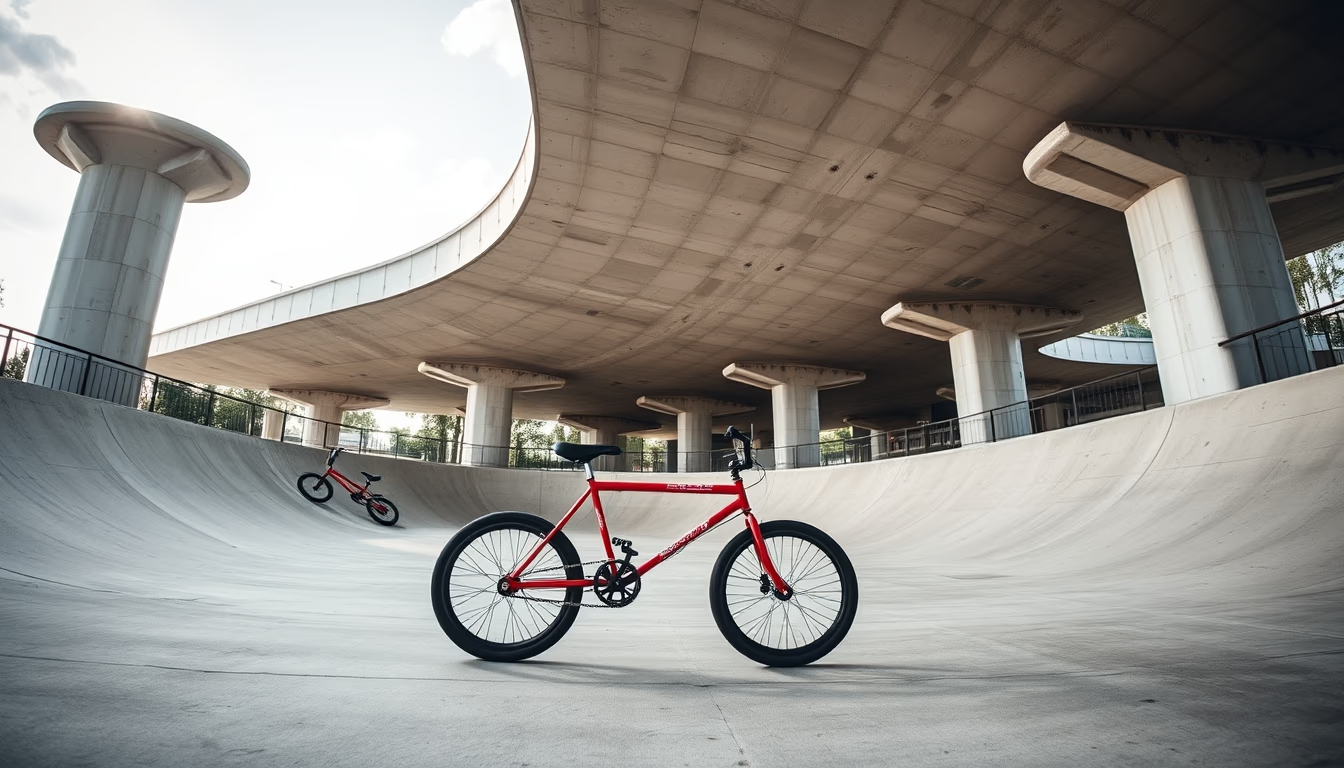
Concrete BMX skateparks transform urban spaces into sports and leisure areas, merging functional design with extreme cycling culture.
About this subject
Concrete BMX skateparks represent a milestone in the evolution of public spaces dedicated to extreme sports. Unlike wood or metal structures, concrete offers superior durability, low maintenance, and a consistent surface that allows for more precise and safer maneuvers. In Brazil, cities like São Paulo and Rio de Janeiro have concrete parks designed by specialized architects, often in partnership with cycling federations. These spaces not only encourage sports practice but also revitalize degraded areas, promoting social integration. Internationally, the Pump Track in Portland, Oregon, and Pedal Heaven in Rotterdam are famous examples of how concrete can be shaped to create fluid and challenging courses. The geometry of the tracks is carefully calculated: banked curves, bowls, and ramps with specific radii to generate speed without losing control. The concrete texture also matters; a finish that is too smooth can be slippery, while one that is too rough wears tires quickly. BMX practice on concrete tracks gained prominence with the inclusion of the discipline in the Summer Olympic Games since 2008, boosting the construction of permanent facilities. Beyond the competitive aspect, these parks serve as community hubs where cyclists of all levels share techniques and experiences. Maintenance is simple, involving periodic cleaning and crack repairs, ensuring decades of heavy use. The design often incorporates natural elements like grass and trees to soften the visual and environmental impact. In urban settings, concrete stands out for its resistance to weather and vandalism, making the tracks true legacies for future generations of cyclists.
Frequently Asked Questions
What are the advantages of a concrete BMX track compared to other materials?
Concrete offers greater durability, weather resistance, and low maintenance. Its consistent surface allows for more predictable maneuvers and is less prone to deformation over time.
Where can one find concrete BMX tracks in Brazil?
Cities like São Paulo, Rio de Janeiro, Belo Horizonte, and Curitiba have public concrete parks. Examples include the BMX track at Parque do Carmo (SP) and the Radical Park in Deodoro (RJ).
How is the geometry of a concrete BMX track designed?
Engineers and architects use precise calculations to define slopes, curve radii, and bowl depths. The goal is to create a continuous flow that maximizes speed without compromising safety.
Direct URL
https://pub-c7d6a6ea828543ac903a74a341ccb2e1.r2.dev/imagens/bmx-skatepark-concrete-architectural-photography-fresh18.avifHow to credit
Include a visible link back to UtilizAí. Copy one of the snippets below:
<a href="https://xn--utiliza-eza.com/en/midia/imagens/bmx-skatepark-concrete-architectural-photography-fresh18">Bmx skatepark concrete</a> by <a href="https://xn--utiliza-eza.com">UtilizAí</a>, licensed under <a href="https://creativecommons.org/licenses/by/4.0/">CC BY 4.0</a>.
[Bmx skatepark concrete](https://xn--utiliza-eza.com/en/midia/imagens/bmx-skatepark-concrete-architectural-photography-fresh18) by [UtilizAí](https://xn--utiliza-eza.com), CC BY 4.0
License: CC-BY-4.0