Mountains everest base
1344×768 · AVIF · CC BY 4.0
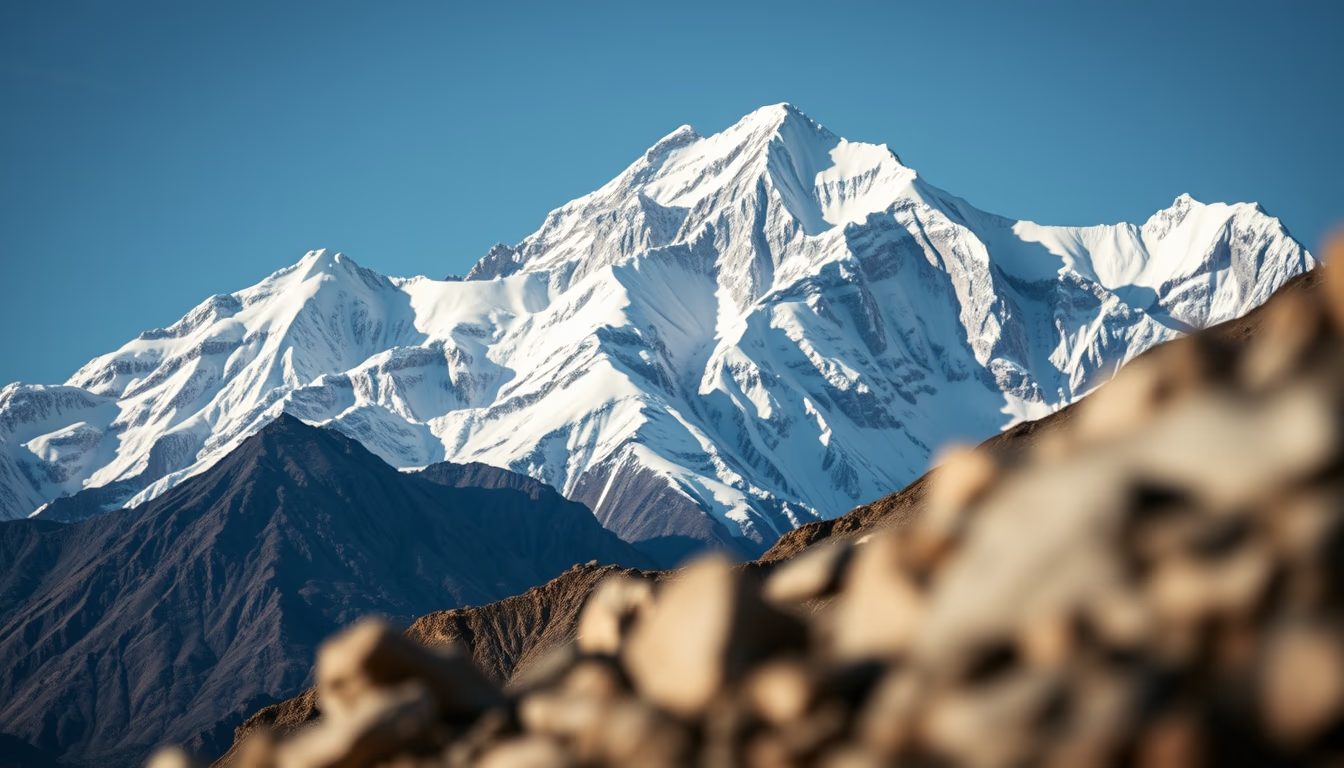
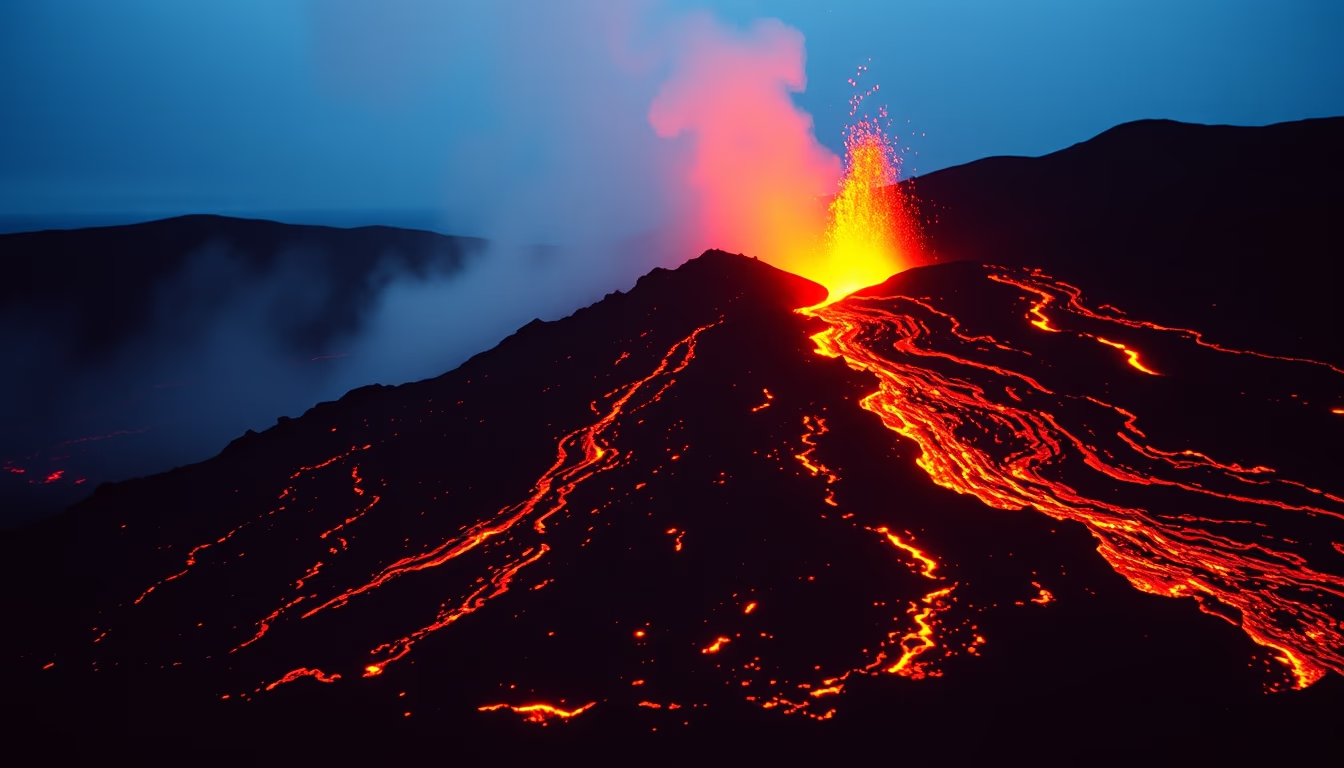
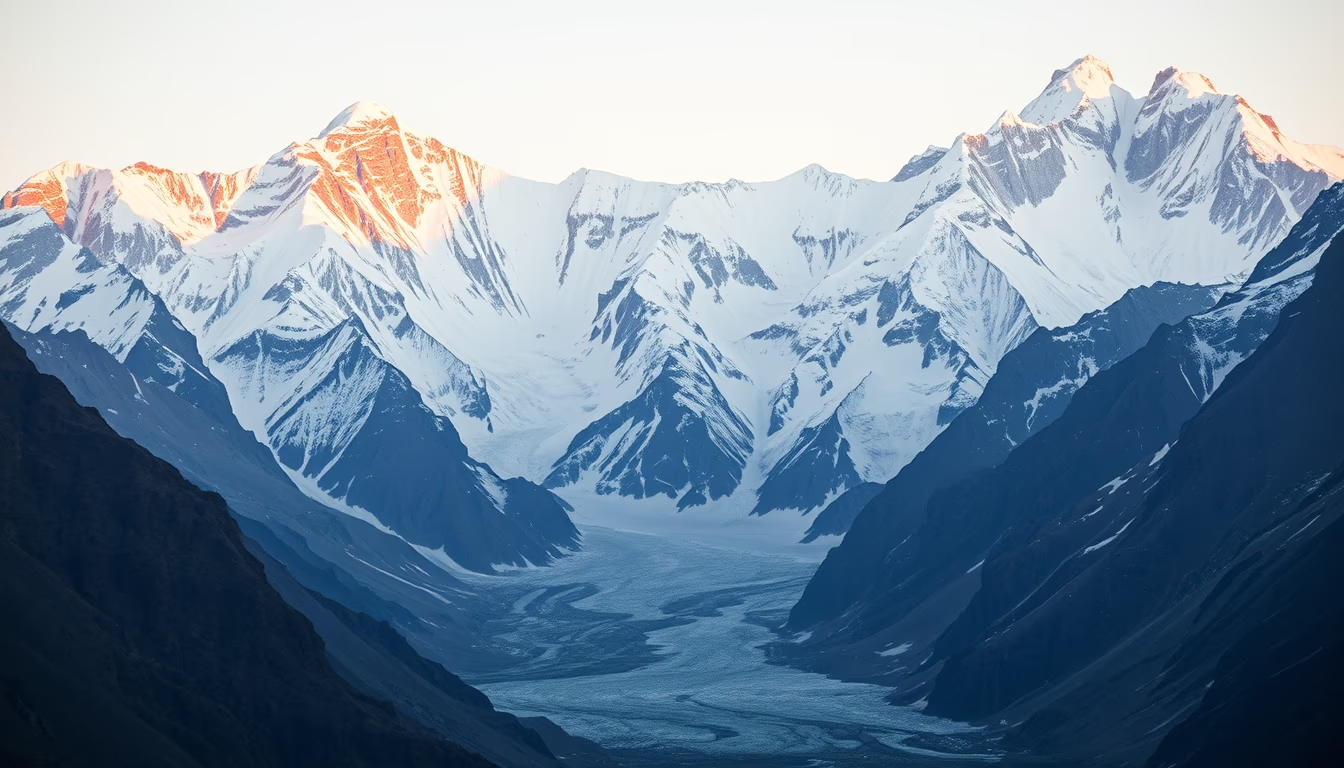
Geological formation of Mount Everest's base, composed of sedimentary and metamorphic rocks from the Ordovician Period, revealing the tectonic history of the Himalayas.
About this subject
The base of Mount Everest is a natural laboratory for studying Himalayan geology. The rocks exposed near Base Camp, at 5,364 meters elevation, are predominantly metamorphic, such as gneiss and schist, interbedded with sedimentary layers of limestone and shale. These formations are remnants of the ancient Tethys Ocean floor, subducted and uplifted during the collision between the Indian and Eurasian plates, which began about 50 million years ago. On a macro scale, structures like foliation and mineral banding are visible, resulting from high-grade metamorphism deep within the crust.
The rock sequence at Everest's foot belongs to the Tethyan Himalaya series, which includes marine fossils like crinoids and trilobites, indicating the region was submerged during the Paleozoic. The limestone of the Everest Formation, for example, contains shells and fragments of shallow-sea organisms. The presence of these fossils at over 5,000 meters altitude is striking evidence of tectonic uplift. Additionally, glacial erosion and physical weathering constantly shape the landscape, creating fracture patterns and rough textures on the rocks.
Another notable aspect is the diversity of minerals present. Biotite gneiss and hornblende are common, along with quartz and feldspar veins cutting through older layers. Macrophotography of these outcrops reveals details such as crystal orientation and tight folds, characteristic of high-pressure, high-temperature environments. Geological studies indicate that rocks at Everest's base experienced metamorphic conditions of amphibolite facies, with temperatures between 500°C and 700°C and pressures equivalent to depths of 20 to 30 kilometers.
The local context is also influenced by the Khumbu Glacier, which deposits moraines and glacial sediments at the mountain's base. These deposits, mixed with rock fragments, form the rugged terrain of Base Camp. The combination of tectonic, metamorphic, and glacial processes makes Everest's base a unique point of interest for geologists and mountaineers, offering a window into the processes that built the highest mountain range on Earth.
Frequently Asked Questions
What types of rocks are found at the base of Mount Everest?
Metamorphic rocks like gneiss and schist dominate, along with sedimentary layers of limestone and shale, all derived from the ancient Tethys Ocean floor.
How did marine fossils reach over 5,000 meters altitude on Everest?
The fossils indicate the region was submerged in the Paleozoic. The collision of tectonic plates uplifted these rocks to great heights over millions of years.
Why is macrophotography important for studying Everest's base geology?
Macrophotography reveals textures such as foliation, mineral banding, and folds, which show the metamorphic and deformation conditions that occurred at depth.
Direct URL
https://pub-c7d6a6ea828543ac903a74a341ccb2e1.r2.dev/imagens/mountains-everest-base-macro-closeup-p5.avifHow to credit
Include a visible link back to UtilizAí. Copy one of the snippets below:
<a href="https://xn--utiliza-eza.com/en/midia/imagens/mountains-everest-base-macro-closeup-p5">Mountains everest base</a> by <a href="https://xn--utiliza-eza.com">UtilizAí</a>, licensed under <a href="https://creativecommons.org/licenses/by/4.0/">CC BY 4.0</a>.
[Mountains everest base](https://xn--utiliza-eza.com/en/midia/imagens/mountains-everest-base-macro-closeup-p5) by [UtilizAí](https://xn--utiliza-eza.com), CC BY 4.0
License: CC-BY-4.0