Maya glyphs codex
1344×768 · AVIF · CC BY 4.0
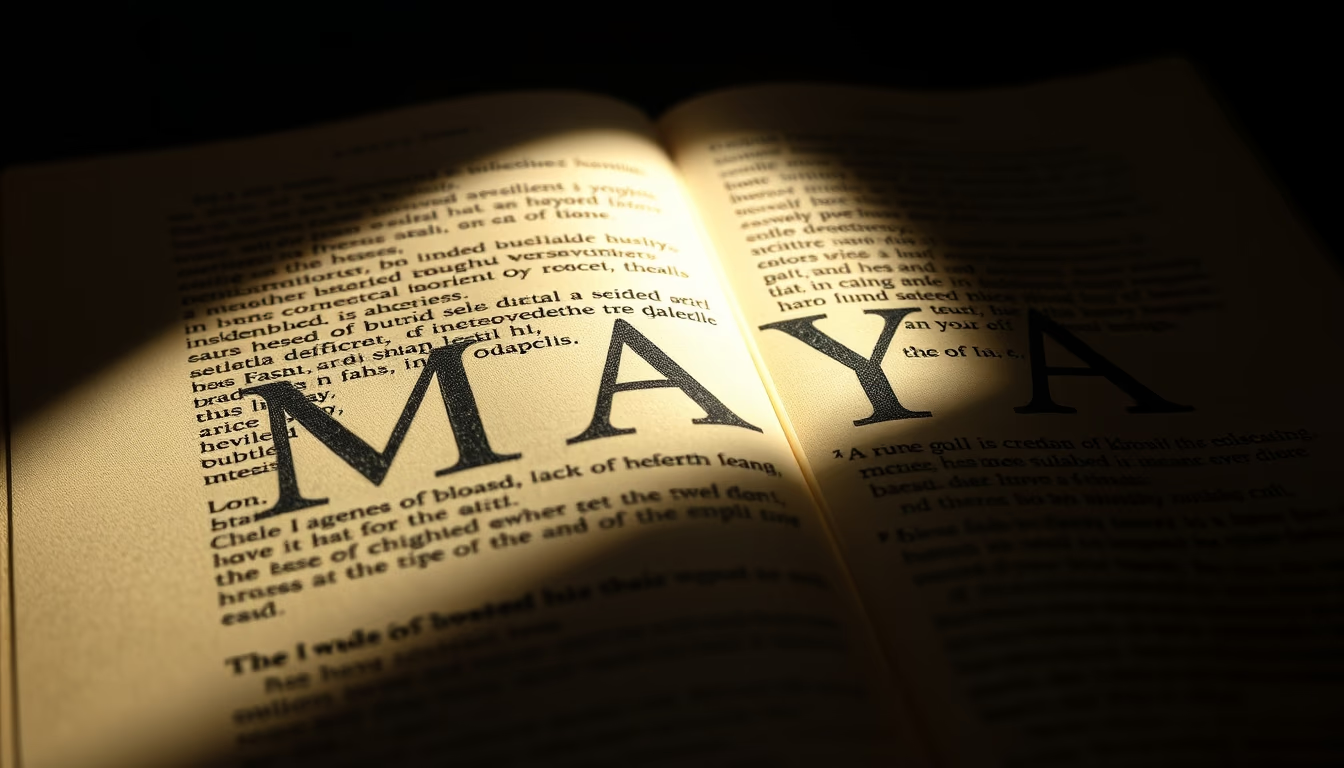
Mayan glyphs in codices represent one of the most complex writing systems in Mesoamerica, combining logograms and syllabic signs.
About this subject
Mayan glyphs form a logosyllabic writing system, composed of about 800 signs, including logograms (representing words) and syllabograms (representing syllables). This system was used for over 1,500 years, from the Preclassic period until the Spanish arrival, recording historical events, rituals, genealogies, and astronomical knowledge.
Mayan codices are books made from fig bark (amate) or deer skin, folded in a screenfold format and painted with natural pigments. Only three or four pre-Columbian codices survived colonial destruction: the Dresden Codex, the Madrid Codex, the Paris Codex, and the fragmentary Grolier Codex. The most famous is the Dresden Codex, which contains highly accurate astronomical tables, including the Venus cycle and eclipse predictions.
The decipherment of Mayan glyphs advanced significantly in the 20th century thanks to the work of Soviet epigrapher Yuri Knórosov, who demonstrated that the system was phonetic, not purely ideographic as previously believed. Today, about 60-70% of known glyphs have been deciphered, allowing the reading of historical texts that reveal rulers' names, battle dates, and dynastic relationships.
Mayan glyphs are not limited to codices: they appear on stelae, murals, ceramics, and monuments. Unlike Egyptian writing, which was deciphered with the Rosetta Stone, Mayan writing relied on comparisons between texts and modern Mayan languages, along with the work of scholars like Linda Schele and David Stuart. The richness of this system makes it one of humanity's most fascinating cultural legacies.
Frequently Asked Questions
How many Mayan codices have survived?
Only three or four authentic pre-Columbian codices exist: the Dresden Codex, the Madrid Codex, the Paris Codex, and the Grolier Codex (whose authenticity is still debated).
How were Mayan glyphs deciphered?
Soviet epigrapher Yuri Knórosov demonstrated in the 1950s that the glyphs represented sounds (syllabograms) and not just ideas, based on comparisons with modern Mayan languages and colonial texts.
What is the difference between Mayan glyphs and Egyptian writing?
While Egyptian writing was deciphered thanks to the Rosetta Stone (a bilingual text), Mayan writing relied on internal analysis and comparisons with living languages, without an equivalent bilingual document.
Direct URL
https://pub-c7d6a6ea828543ac903a74a341ccb2e1.r2.dev/imagens/maya-glyphs-codex-rembrandt-lighting-dramatic-shadows-fresh2.avifHow to credit
Include a visible link back to UtilizAí. Copy one of the snippets below:
<a href="https://xn--utiliza-eza.com/en/midia/imagens/maya-glyphs-codex-rembrandt-lighting-dramatic-shadows-fresh2">Maya glyphs codex</a> by <a href="https://xn--utiliza-eza.com">UtilizAí</a>, licensed under <a href="https://creativecommons.org/licenses/by/4.0/">CC BY 4.0</a>.
[Maya glyphs codex](https://xn--utiliza-eza.com/en/midia/imagens/maya-glyphs-codex-rembrandt-lighting-dramatic-shadows-fresh2) by [UtilizAí](https://xn--utiliza-eza.com), CC BY 4.0
License: CC-BY-4.0