Maya glyphs codex
1344×768 · AVIF · CC BY 4.0
Maya glyphs constitute one of the most advanced writing systems in Mesoamerica, preserved in codices that reveal astronomical knowledge and rituals.
About this subject
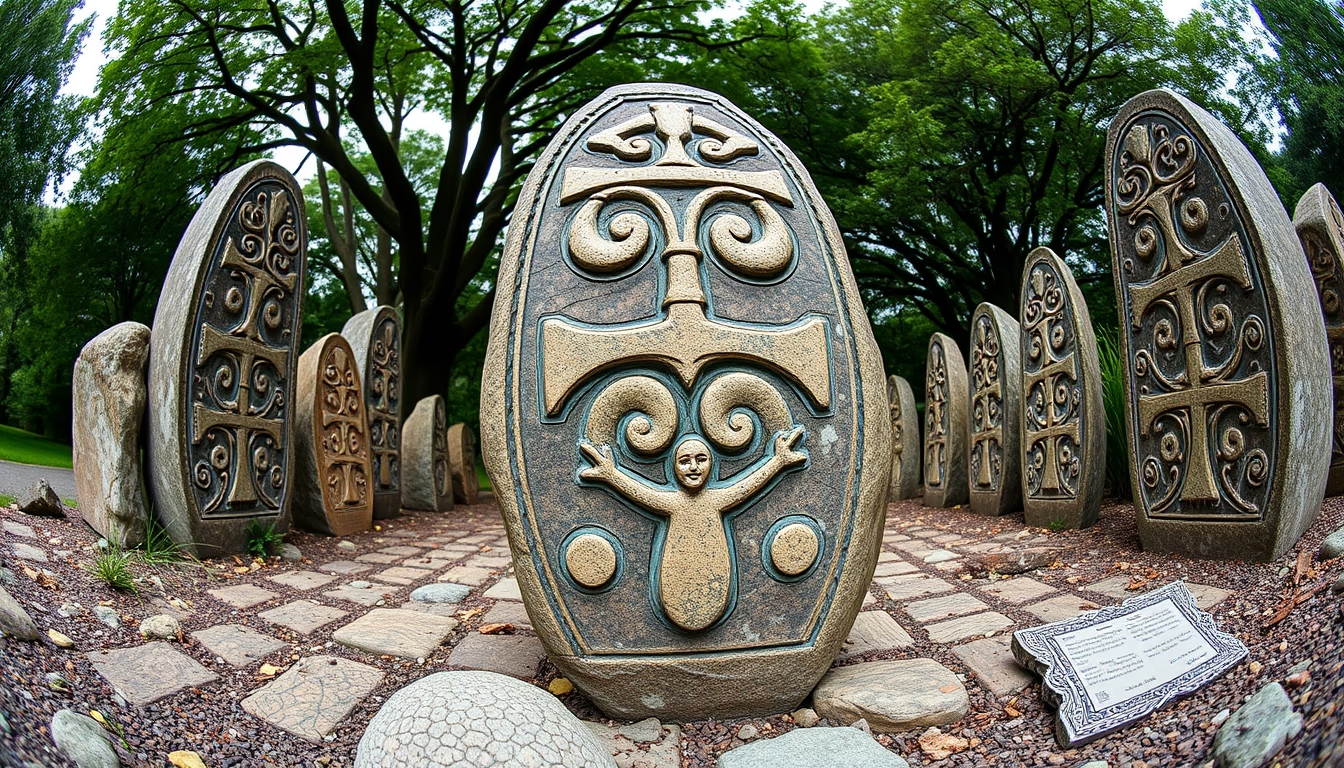
Maya glyphs form a logosyllabic writing system that combines logograms (symbols representing whole words) and syllabic signs. It was used for about 2,000 years, from the Preclassic period (c. 300 BC) until the Spanish conquest in the 16th century. The Maya recorded their history, astronomy, calendars, and rituals on supports such as stelae, pottery, and especially codices made from beaten fig bark coated with lime plaster.
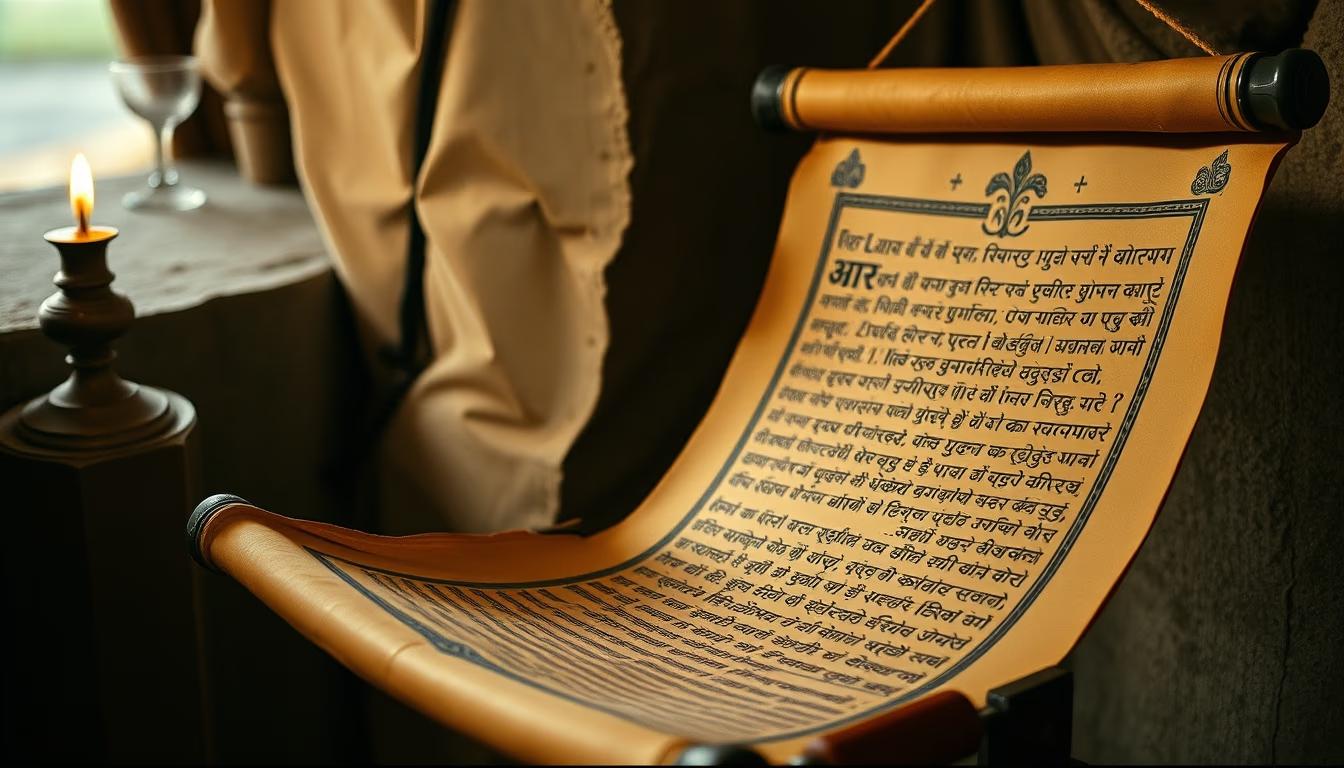
Maya codices are folding screen-like books, painted in vibrant colors. Unfortunately, only four pre-Columbian codices survive: Dresden, Madrid, Paris, and Grolier (the last of debated authenticity). The Dresden Codex is the most complete and famous, containing detailed astronomical tables on the cycles of Venus, eclipses, and lunar movements. These documents are essential primary sources for understanding the Maya worldview.
The decipherment of Maya glyphs was a long process that began in the 19th century with the work of Cyrus Thomas and Ernst Förstemann, but advanced significantly from the 1950s when Yuri Knorosov demonstrated that the system was phonetic. Today, about 90% of known Maya texts can be read, although cultural and ritual nuances still challenge epigraphers.
Interestingly, Maya writing is one of the few fully deciphered scripts among Pre-Columbian civilizations. The combination of logograms and syllables allowed scribes to create flexible and poetic texts. Glyphs were often arranged in square or rectangular blocks, placed in double columns that should be read from left to right and top to bottom.
Frequently Asked Questions
What is a Maya codex?
A Maya codex is a book made from beaten fig bark, folded like a screen, with painted texts and images. They recorded astronomical knowledge, rituals, and history.
How many original Maya codices exist?
Only four pre-Columbian codices survive: Dresden, Madrid, Paris, and Grolier. They are considered treasures of Maya culture.
Have Maya glyphs been fully deciphered?
About 90% of Maya glyphs can now be read thanks to the work of Yuri Knorosov and other epigraphers. Challenges remain in ritual contexts and proper names.
Direct URL
https://pub-c7d6a6ea828543ac903a74a341ccb2e1.r2.dev/imagens/maya-glyphs-codex-commercial-product-photography-fresh11.avifHow to credit
Include a visible link back to UtilizAí. Copy one of the snippets below:
<a href="https://xn--utiliza-eza.com/en/midia/imagens/maya-glyphs-codex-commercial-product-photography-fresh11">Maya glyphs codex</a> by <a href="https://xn--utiliza-eza.com">UtilizAí</a>, licensed under <a href="https://creativecommons.org/licenses/by/4.0/">CC BY 4.0</a>.
[Maya glyphs codex](https://xn--utiliza-eza.com/en/midia/imagens/maya-glyphs-codex-commercial-product-photography-fresh11) by [UtilizAí](https://xn--utiliza-eza.com), CC BY 4.0
License: CC-BY-4.0