Maya glyphs codex
1344×768 · AVIF · CC BY 4.0

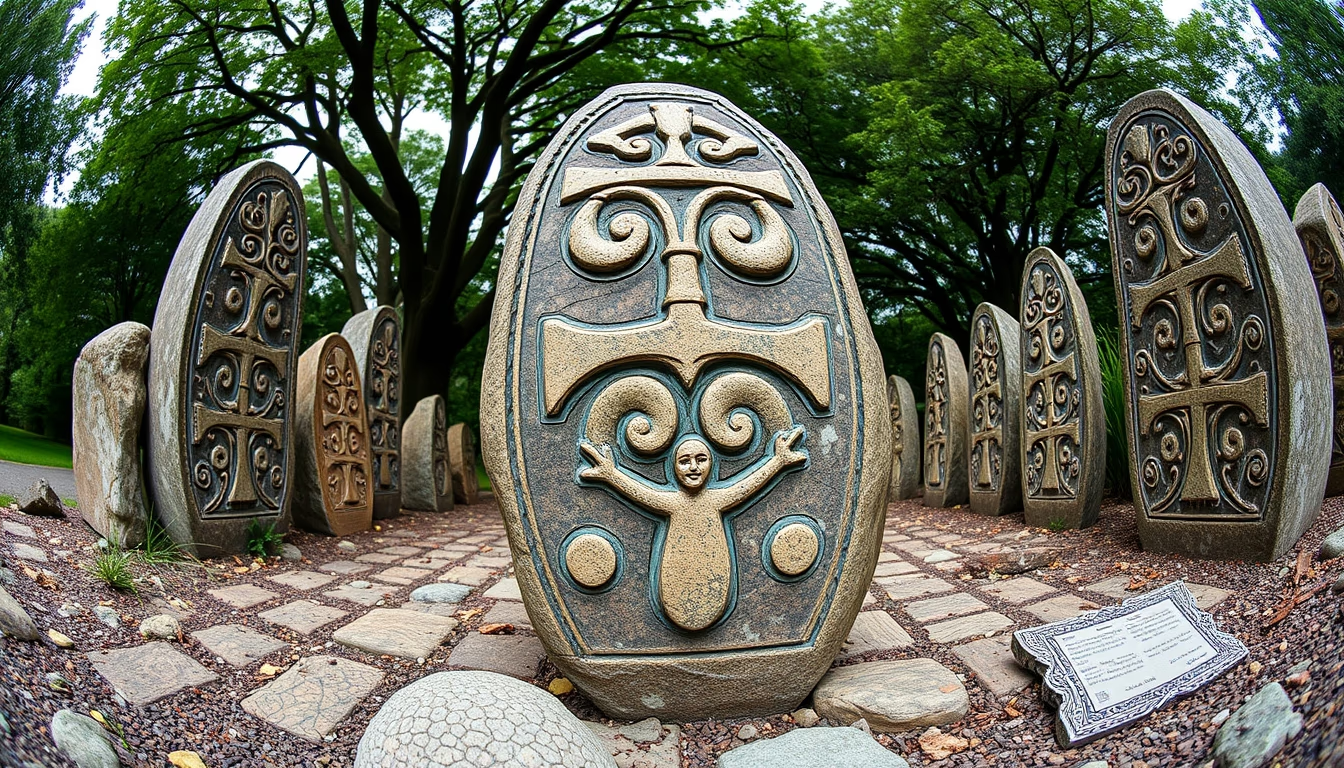
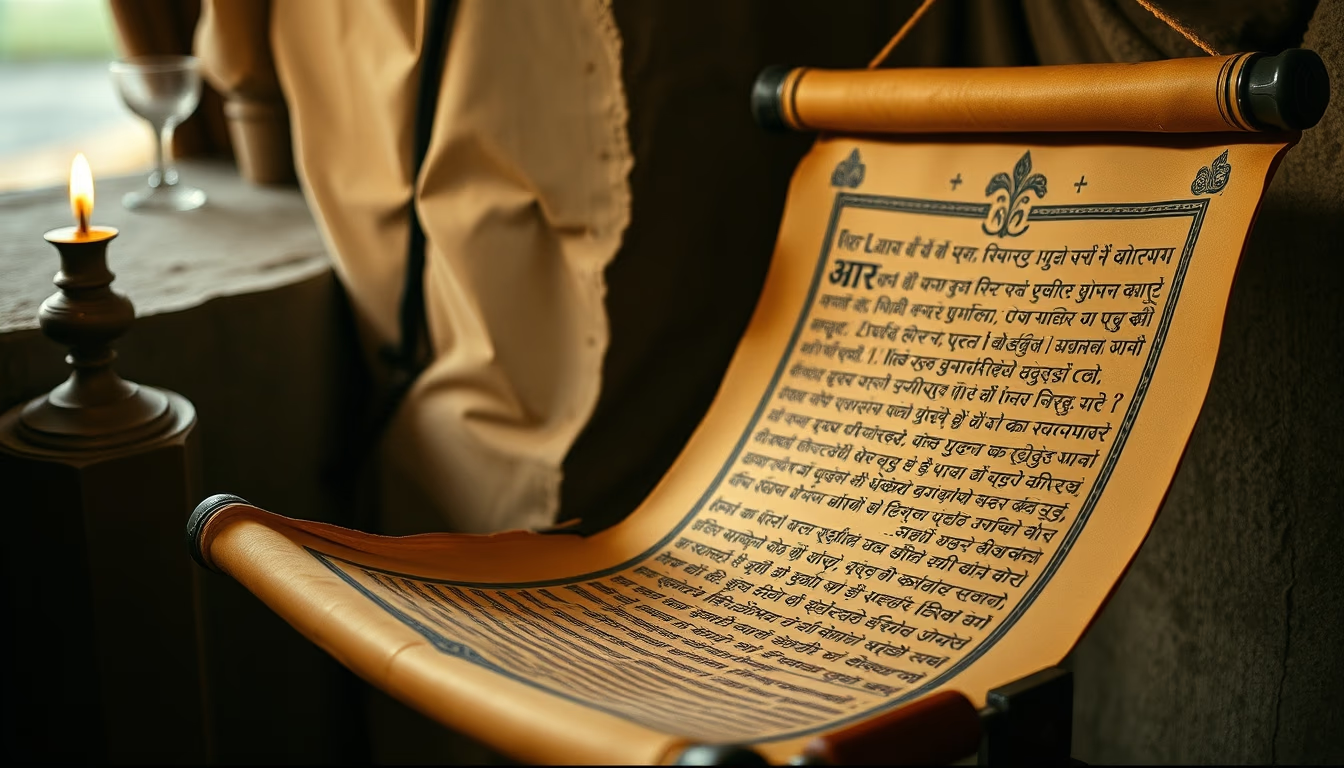
Maya glyphs in codices: hieroglyphic writing of the Maya civilization, partially deciphered, reveals astronomical knowledge, calendars, and rituals.
About this subject
Maya glyphs constitute one of the most complex writing systems in Mesoamerica, developed around 300 BCE and used until the colonial period. These symbols combine logograms (word signs) and syllabograms (sound signs), totaling roughly 800 distinct signs. Maya codices, books made from fig bark or amate paper, were folded like a screen and painted with vegetal and mineral pigments. Unfortunately, only four pre-Columbian codices survived time and colonial destruction: the Dresden, Madrid, Paris, and Grolier codices (the latter's authenticity is disputed).
The decipherment of Maya glyphs advanced significantly in the 20th century, thanks to contributions by Yuri Knorozov and Tatiana Proskouriakoff, who demonstrated that Maya writing recorded historical events, royal genealogies, and precise dates. About 60% of glyphs can now be read, though many still challenge epigraphers. The texts cover astronomy, Venus cycles, eclipses, the Long Count calendar, and rituals associated with gods. The Dresden Codex, for instance, contains tables of lunar and solar eclipses, as well as predictions for the planet Venus.
Glyphs appear not only in codices but also on stone monuments (stelae), pottery, and murals. They were written by specialized scribes, members of the Maya elite, who combined art with mathematical knowledge. Maya writing is considered one of the few independently invented writing systems in the world, and its preservation is crucial for understanding the worldview and history of this civilization. UNESCO recognizes Maya sites as World Heritage, and museums such as the National Museum of Anthropology in Mexico City and the Popol Vuh Museum in Guatemala display facsimiles and originals of the codices.
Frequently Asked Questions
How many Maya glyphs exist?
The Maya writing system has about 800 signs, including logograms and syllabograms, but the exact number varies depending on epigraphers' classification.
What did Maya codices record?
Codices contained astronomical information, calendars, eclipse tables, religious rituals, and historical records such as royal genealogies.
How many Maya codices survived?
Only four pre-Columbian codices are recognized: Dresden, Madrid, Paris, and Grolier, the last being disputed in authenticity by some experts.
Direct URL
https://pub-c7d6a6ea828543ac903a74a341ccb2e1.r2.dev/imagens/maya-glyphs-codex-architectural-photography-fresh14.avifHow to credit
Include a visible link back to UtilizAí. Copy one of the snippets below:
<a href="https://xn--utiliza-eza.com/en/midia/imagens/maya-glyphs-codex-architectural-photography-fresh14">Maya glyphs codex</a> by <a href="https://xn--utiliza-eza.com">UtilizAí</a>, licensed under <a href="https://creativecommons.org/licenses/by/4.0/">CC BY 4.0</a>.
[Maya glyphs codex](https://xn--utiliza-eza.com/en/midia/imagens/maya-glyphs-codex-architectural-photography-fresh14) by [UtilizAí](https://xn--utiliza-eza.com), CC BY 4.0
License: CC-BY-4.0