Martian colony dome
1344×768 · AVIF · CC BY 4.0
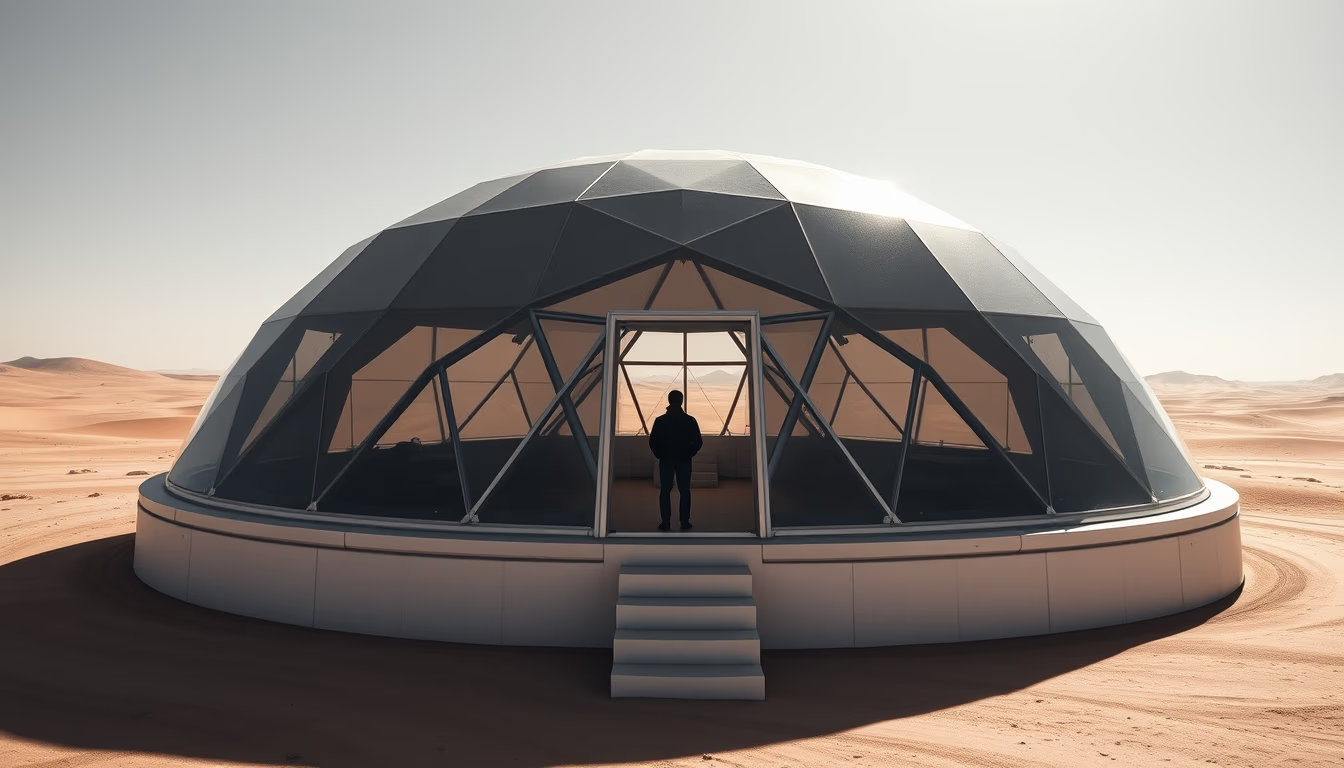
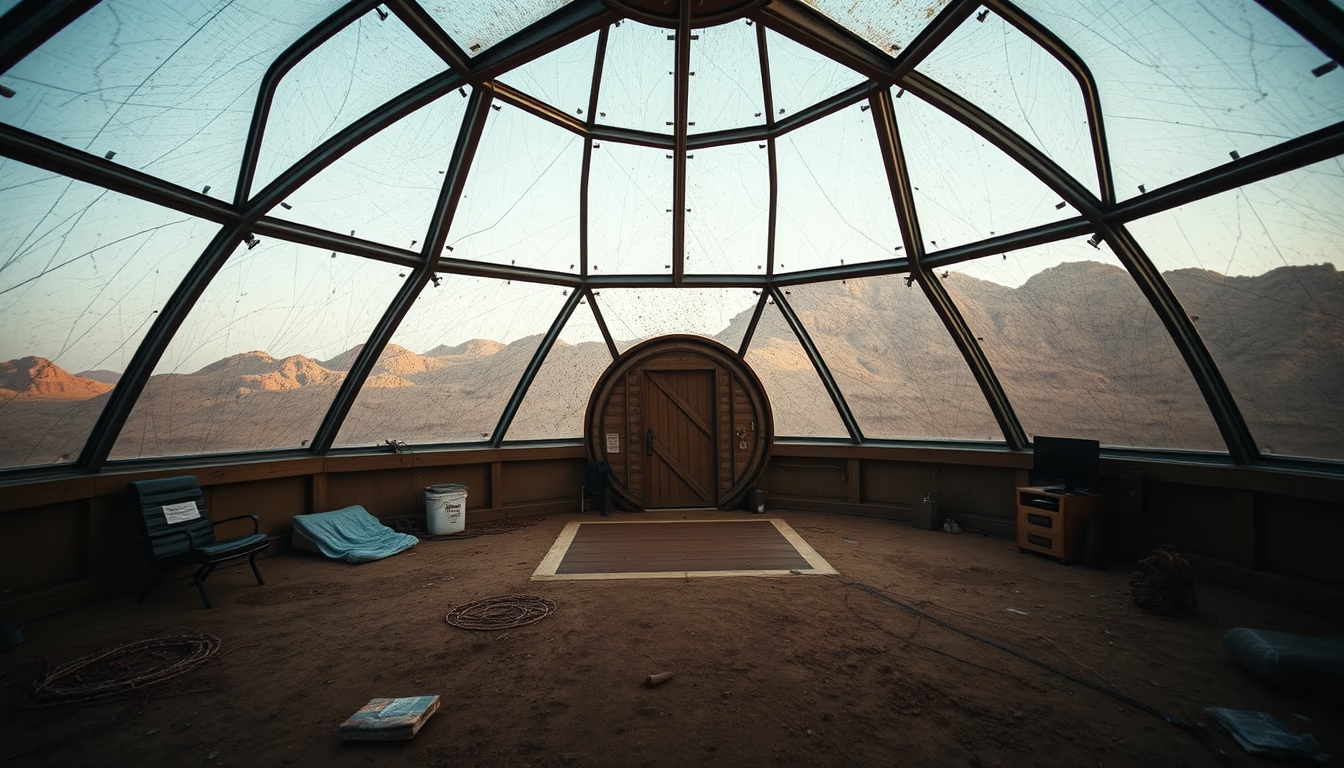
Martian colony domes: pressurized structures protecting humans from Mars' thin atmosphere, enabling sustainable agriculture and habitation.
About this subject
Mars colonization depends on pressurized habitats to protect humans from the thin atmosphere, composed of 95% carbon dioxide, and cosmic radiation. Domes are often designed with transparent or semi-transparent materials, such as reinforced polymers or silica glass, to allow sunlight in and simulate a day-night cycle. Structures proposed by NASA and SpaceX use inflatable modules or 3D-printed regolith to minimize weight transported from Earth.
The primary function of domes is to maintain an internal pressure around 1 atm and a breathable atmosphere with adequate oxygen and temperature control. Internal gardens or hydroponic greenhouses can supply food and recycle CO2. Ideal locations are equatorial regions or plains like Utopia Planitia, where average temperature is -60°C, requiring efficient thermal insulation. Projects like the Mars Ice Dome use water ice as radiation shielding and structural material.
Challenges include maintaining pressure against micrometeorite leaks and local production of water and oxygen. Backup systems and robotic repair are essential. The geodesic dome concept, similar to the BIOS-3 project in Russia or Biosphere 2 in the US, serves as a reference for closed life-support systems. In the long term, domes could expand into interconnected cities under double-walled cupolas for enhanced safety.
Frequently Asked Questions
What is the ideal pressure inside a Martian dome?
The ideal pressure is about 1 atmosphere (101.3 kPa), similar to Earth's, to avoid physiological issues for colonists. However, lower pressures (e.g., 0.5 atm) could reduce structural stress if oxygen concentration is adjusted.
How do domes protect against radiation?
Domes can use layers of regolith, water ice, or thick plastic materials to absorb radiation. They are also placed in regions with weak local magnetic fields, but additional protection comes from dome design and compacted Martian soil.
What materials are used to build a dome on Mars?
Common materials include fiber-reinforced polymers, fused silica glass, aluminum, and 3D-printed regolith. Water ice is also considered for translucent structures that allow light entry.
Direct URL
https://pub-c7d6a6ea828543ac903a74a341ccb2e1.r2.dev/imagens/martian-colony-dome-minimalist-composition-fresh3.avifHow to credit
Include a visible link back to UtilizAí. Copy one of the snippets below:
<a href="https://xn--utiliza-eza.com/en/midia/imagens/martian-colony-dome-minimalist-composition-fresh3">Martian colony dome</a> by <a href="https://xn--utiliza-eza.com">UtilizAí</a>, licensed under <a href="https://creativecommons.org/licenses/by/4.0/">CC BY 4.0</a>.
[Martian colony dome](https://xn--utiliza-eza.com/en/midia/imagens/martian-colony-dome-minimalist-composition-fresh3) by [UtilizAí](https://xn--utiliza-eza.com), CC BY 4.0
License: CC-BY-4.0