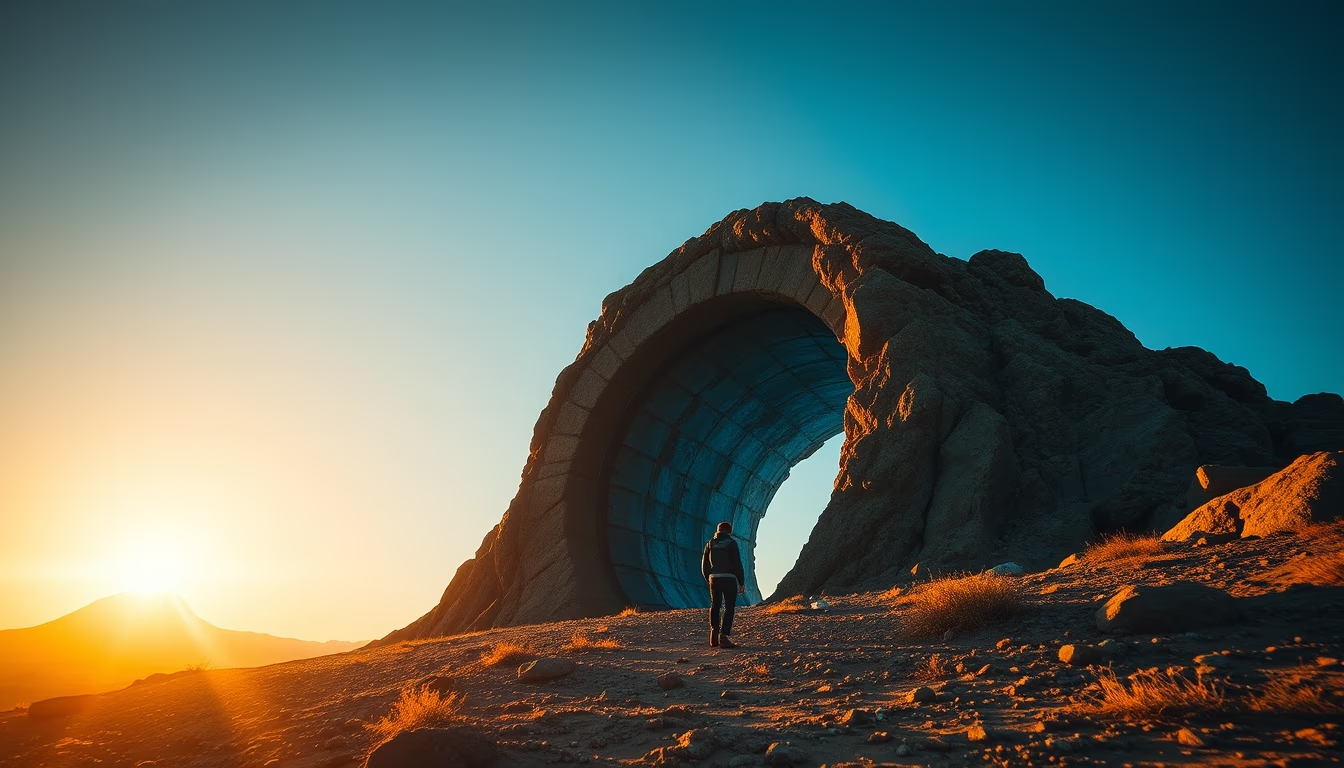
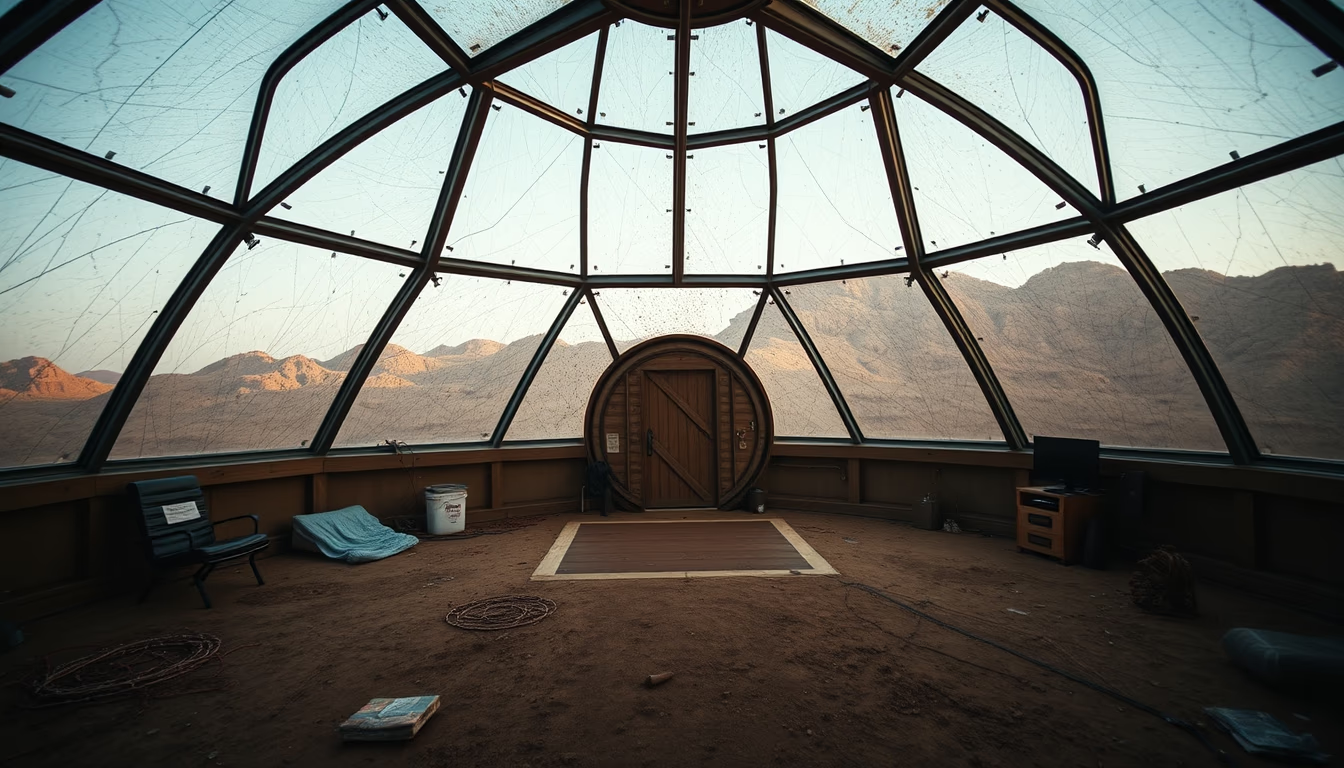
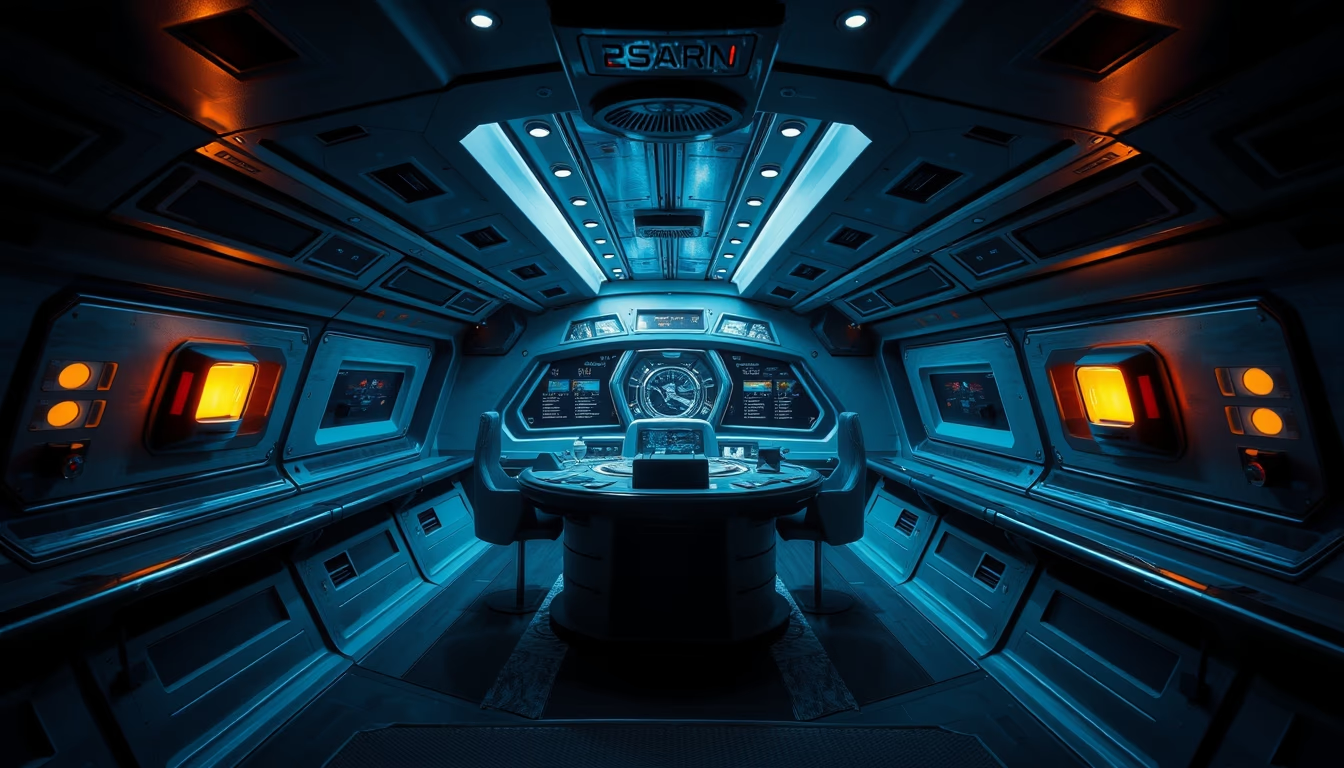
Martian colony dome
1344×768 · AVIF · CC BY 4.0
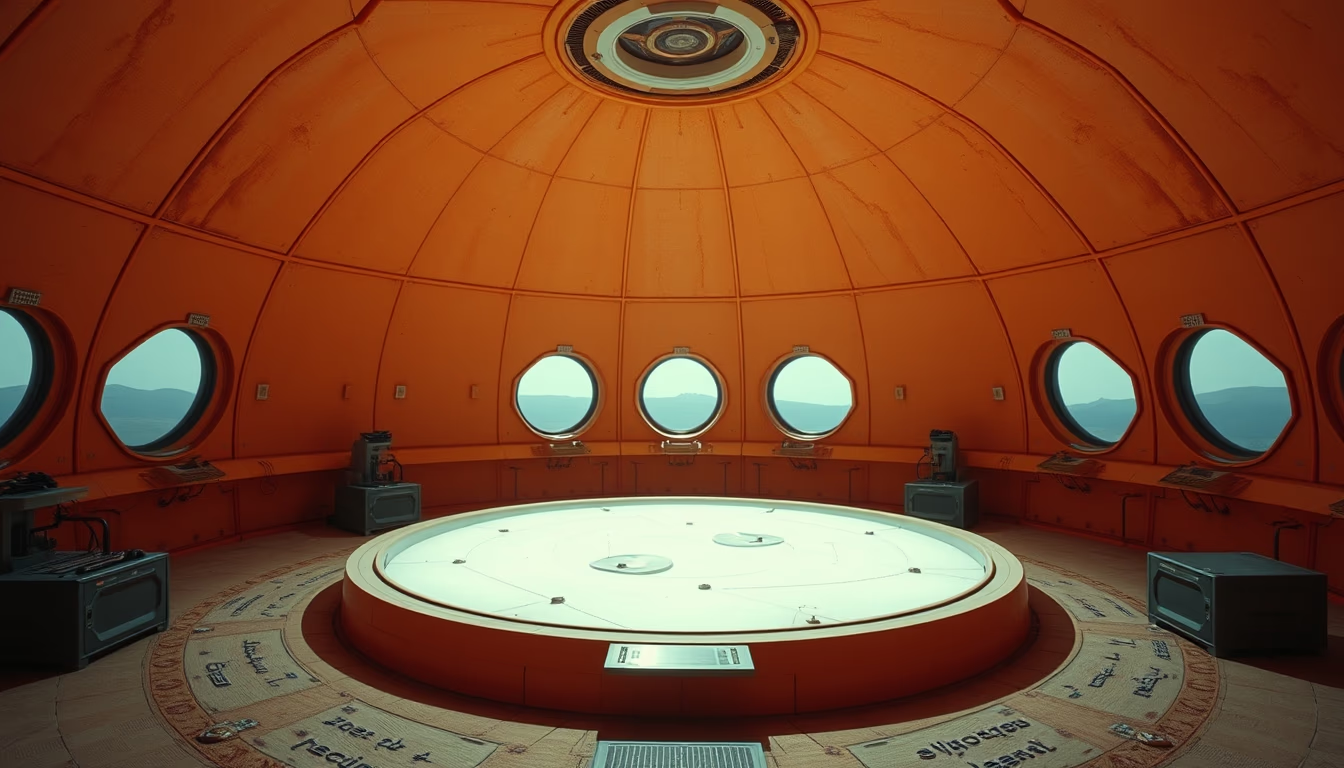
Pressurized domes are proposed habitats on Mars to shield colonists from radiation and the planet's thin atmosphere.
About this subject
Domes are frequently depicted in Mars colonization concepts, serving as pressurized environments that enable human survival on the surface. The Martian atmosphere is 95% carbon dioxide with less than 1% of Earth's pressure, requiring sealed habitats. Domes must withstand cosmic and solar radiation, as Mars lacks a global magnetic field. Materials like Martian regolith or translucent polymers are being studied for construction.
One NASA proposal, the Mars Ice Home, uses water ice as a radiation shield combined with an inflatable dome. The Mars City Design project suggests domes made of fiberglass and steel, partially buried. Internal pressure inside a dome would be maintained at around 101 kPa (similar to Earth), achievable with oxygen and nitrogen generated locally via water electrolysis or atmosphere extraction.
Agricultural domes could grow crops using LED lighting and nutrient recycling. The film 'The Martian' popularized inflatable habitats, but reality demands robust engineering solutions. SpaceX, with its Starship, plans to send the first colonists in the 2030s, and domes are central to mission simulations like HI-SEAS in Hawaii.
Interestingly, the word 'dome' comes from Latin 'domus', meaning house. On Mars, gravity is 38% of Earth's, affecting dome structure, they can be taller and lighter than on Earth.
Frequently Asked Questions
Why are domes preferred for habitats on Mars?
Domes allow creating a pressurized environment with breathable atmosphere, protecting colonists from radiation and vacuum. They can be built with local or imported materials and offer flexibility for expansion.
How do domes withstand radiation on Mars?
They use layers of regolith, ice, or special polymers to absorb radiation. For instance, the Mars Ice Home uses a 0.5 m thick water ice wall, which also provides drinking water.
What is the difference between an inflatable and a rigid dome?
Inflatable domes are lighter and easier to transport but less impact-resistant. Rigid domes (metal, fiberglass) offer more structural protection but are heavier and require more assembly resources.
Direct URL
https://pub-c7d6a6ea828543ac903a74a341ccb2e1.r2.dev/imagens/martian-colony-dome-lo-fi-disposable-camera-fresh11.avifHow to credit
Include a visible link back to UtilizAí. Copy one of the snippets below:
<a href="https://xn--utiliza-eza.com/en/midia/imagens/martian-colony-dome-lo-fi-disposable-camera-fresh11">Martian colony dome</a> by <a href="https://xn--utiliza-eza.com">UtilizAí</a>, licensed under <a href="https://creativecommons.org/licenses/by/4.0/">CC BY 4.0</a>.
[Martian colony dome](https://xn--utiliza-eza.com/en/midia/imagens/martian-colony-dome-lo-fi-disposable-camera-fresh11) by [UtilizAí](https://xn--utiliza-eza.com), CC BY 4.0
License: CC-BY-4.0