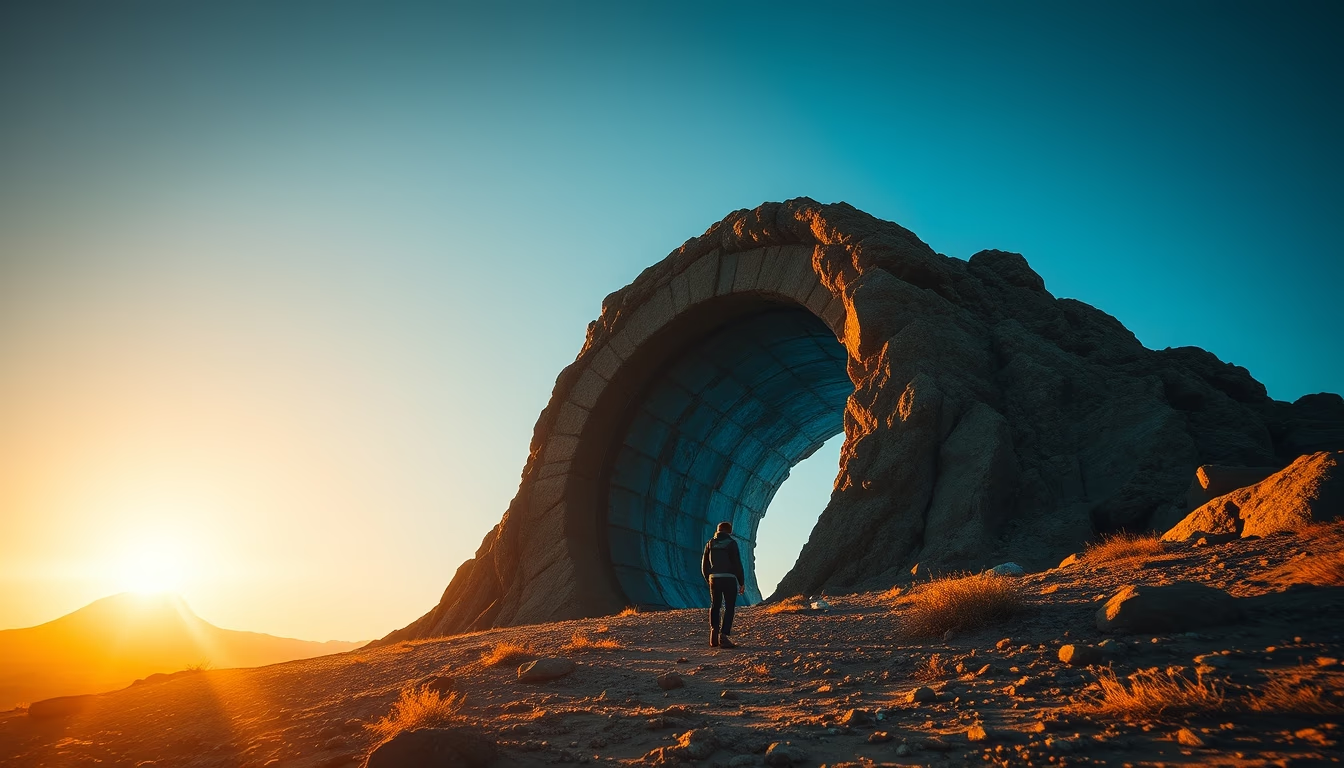
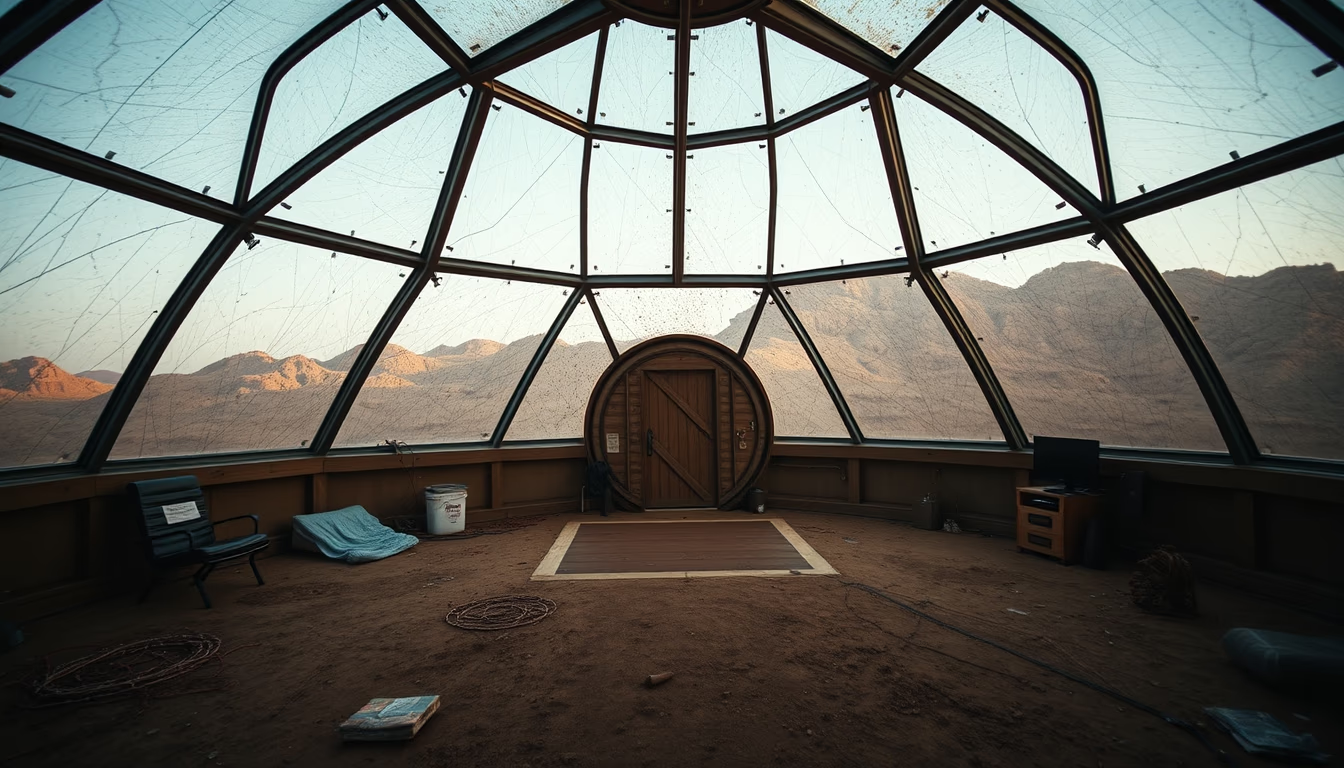
Martian colony dome
1344×768 · AVIF · CC BY 4.0

Mars colony domes are proposed structures to shelter human settlements, protecting against radiation and thin atmosphere.
About this subject
Colonizing Mars is one of space exploration's greatest challenges. Pressurized domes would be essential to create habitable environments on the Martian surface, where atmospheric pressure is less than 1% of Earth's and cosmic radiation is intense. Concepts like NASA's Mars Base Camp and SpaceX's Mars City State envision inflatable domes or structures built with local regolith for additional shielding.
These structures must withstand global dust storms, extreme thermal swings (from, 125°C to 20°C), and provide full life support. Materials such as reinforced polymers and Martian concrete (made with molten sulfur) are being tested. The first dome would likely be small, for 4-6 astronauts, but future colonies could house thousands in interconnected complexes.
Culturally, Martian domes symbolize human resilience and expansion to other worlds. Films like The Martian have popularized the idea, but reality requires decades of research. The Mars Society runs simulations in the Utah desert to test dome life protocols. SpaceX plans its first crewed missions in the 2030s, using Starship ships as initial modules.
Fun fact: the biggest challenge is not building the dome, but maintaining internal pressure and recycling air and water. Life support systems like those on the International Space Station are a baseline, but they must operate with Martian resources, such as extracting water from subsurface ice.
Frequently Asked Questions
What materials would Mars domes be made of?
Domes could be built with inflatable polymers covered by Martian regolith or sulfur concrete, which offers radiation resistance. NASA also studies 3D-printed structures using local soil.
How long would it take to build a dome on Mars?
Construction would be automated, with rovers and 3D printers sent ahead of humans. A basic dome for 4 people is estimated to take 1 to 2 years to assemble after equipment arrives.
Would domes protect against radiation on Mars?
Yes, if they have a thick regolith layer (2-3 meters) or hydrogen-rich materials like plastics. Water pipes in walls can also absorb radiation.
Direct URL
https://pub-c7d6a6ea828543ac903a74a341ccb2e1.r2.dev/imagens/martian-colony-dome-film-grain-authentic-fresh10.avifHow to credit
Include a visible link back to UtilizAí. Copy one of the snippets below:
<a href="https://xn--utiliza-eza.com/en/midia/imagens/martian-colony-dome-film-grain-authentic-fresh10">Martian colony dome</a> by <a href="https://xn--utiliza-eza.com">UtilizAí</a>, licensed under <a href="https://creativecommons.org/licenses/by/4.0/">CC BY 4.0</a>.
[Martian colony dome](https://xn--utiliza-eza.com/en/midia/imagens/martian-colony-dome-film-grain-authentic-fresh10) by [UtilizAí](https://xn--utiliza-eza.com), CC BY 4.0
License: CC-BY-4.0