Maritime knots rope
1344×768 · AVIF · CC BY 4.0
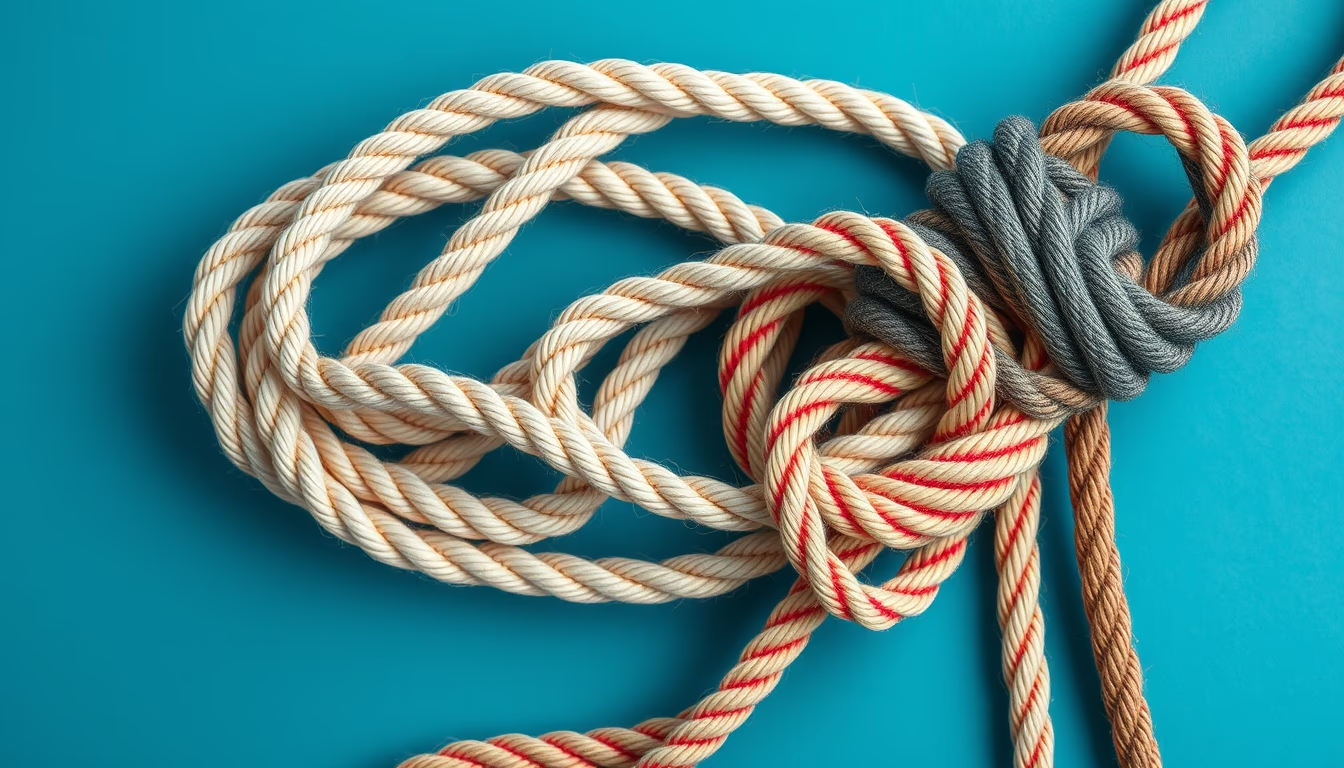
Maritime knots are ancient rope binding techniques essential for navigation, fishing, and onboard safety, with dozens of specific variations.
About this subject
Maritime knots represent a set of binding techniques developed over centuries of navigation. Each knot type has a specific purpose, from securing ropes on vessels to joining two cords or creating safety loops. Among the most well-known are the square knot (or reef knot), used to tie two ropes of equal diameter, and the sheet bend, ideal for binding ropes of different thicknesses. The figure-eight knot, in turn, is widely used as a stopper knot, preventing the rope from slipping through a hole, while the bowline creates a fixed loop that does not tighten under load.
The art of knot tying dates back to antiquity, with archaeological evidence of knots in plant fibers found thousands of years old. During the Age of Exploration, knot knowledge was indispensable for maintaining sails and rigging. Even with the advent of synthetic materials, the fundamental principles remain unchanged. A knot's strength depends on the rope type, bend angle, and correct execution, with some knots reducing the original rope strength by up to 40%. Therefore, choosing the right knot is crucial for safety.
Interestingly, many maritime knots have names that reflect their function or origin, such as the clove hitch, fisherman's knot, and Scout knot. The figure-eight knot is often used in climbing and diving, not just in nautical contexts. The square knot, despite its simplicity, can slip if not properly tightened and is recommended only for light loads. The bowline, in turn, is valued for its security and ease of untying even after bearing heavy tension.
Learning maritime knots is a practical skill that remains part of training for sailors, boaters, and safety professionals. In many yacht clubs, specific workshops teach from basic knots to complex combinations used in dock mooring. Although there is no universal knot standard, regional traditions vary, for example between the Mediterranean and the North Atlantic. Knowing and correctly executing a knot can mean the difference between a secure vessel and an accident.
Frequently Asked Questions
What is the most important maritime knot for beginners?
The figure-eight knot is often recommended for its simplicity and security, serving as a stopper knot in various situations.
Do maritime knots reduce rope strength?
Yes, most knots reduce the original rope strength, in some cases by up to 40%. The reduction depends on the knot type and execution quality.
Is there a difference between maritime knots and climbing knots?
Many knots are shared, such as the figure-eight and bowline. However, maritime knots often prioritize ease of untying after load, while climbing knots prioritize dynamic strength.
Direct URL
https://pub-c7d6a6ea828543ac903a74a341ccb2e1.r2.dev/imagens/maritime-knots-rope-isometric-flat-lay-p11.avifHow to credit
Include a visible link back to UtilizAí. Copy one of the snippets below:
<a href="https://xn--utiliza-eza.com/en/midia/imagens/maritime-knots-rope-isometric-flat-lay-p11">Maritime knots rope</a> by <a href="https://xn--utiliza-eza.com">UtilizAí</a>, licensed under <a href="https://creativecommons.org/licenses/by/4.0/">CC BY 4.0</a>.
[Maritime knots rope](https://xn--utiliza-eza.com/en/midia/imagens/maritime-knots-rope-isometric-flat-lay-p11) by [UtilizAí](https://xn--utiliza-eza.com), CC BY 4.0
License: CC-BY-4.0