Maritime knots rope
1344×768 · AVIF · CC BY 4.0
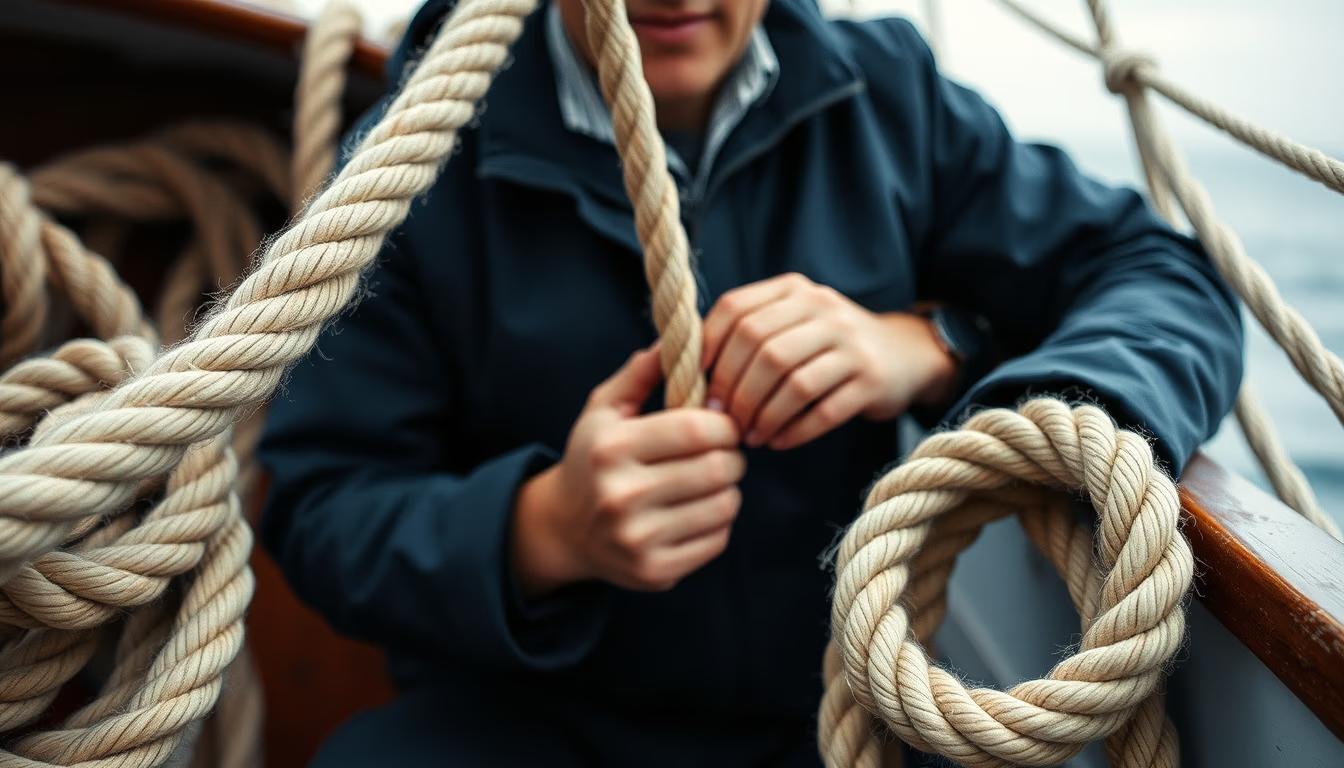
Maritime knots are ancient binding techniques essential for safety, efficiency, and maneuvers on vessels and nautical activities.
About this subject
Maritime knots represent a set of binding techniques developed over centuries of navigation. Each knot has a specific purpose, such as joining two ropes, securing a rope to a fixed point, or shortening a line. Among the most well-known are the reef knot, used to join ropes of equal diameter; the bowline, ideal for creating a fixed loop that does not slip; and the sheet bend, used to connect ropes of different thicknesses. Choosing the right knot can mean the difference between safety and accident, especially in adverse sea conditions.
Historically, maritime knots were so valued that skilled sailors were recognized for their dexterity. Civilizations like the Phoenicians, Greeks, and Vikings mastered techniques that were passed down orally and later recorded in manuals. The introduction of synthetic fibers in the 20th century, such as polypropylene and nylon, changed properties like elasticity and abrasion resistance, requiring adaptations in traditional methods. Still, classic knots like the figure-eight remain standard in climbing and maritime rescue.
Culturally, maritime knots transcend practical function. They appear in naval family crests, sailors' tattoos (each knot symbolizing an experience or achievement), and even in competitions, such as world knot-tying championships. Learning basic knots is a tradition in nautical schools and sailing courses, being a requirement for certifications like Light Sail and Arrais Amador. Even with technological advances, such as steel cables and automatic mooring systems, knowledge of hand-tied knots continues to be a valued and necessary skill in the nautical world.
It is worth noting that the choice of rope and knot depends on factors such as load, humidity, and the need to untie quickly. For example, the running knot (or slip knot) is useful for temporarily securing a rope to a mast but can be dangerous if used in loads requiring absolute safety. The bowline, also called the rescue knot, is often employed in water rescues because it does not come undone under tension. Mastering these techniques is therefore a combination of science, art, and tradition.
Frequently Asked Questions
What is the most versatile maritime knot?
The bowline is considered one of the most versatile because it creates a fixed loop that does not slip and is easy to untie even after being tensioned. It is widely used in mooring, rescues, and climbing.
How can I learn to tie maritime knots correctly?
Consistent practice is essential. There are manuals, video tutorials, and interactive apps. Sailing courses and nautical schools also teach fundamental knots for certifications like Arrais Amador and Light Sail.
Which rope materials are best for maritime knots?
It depends on the use: for fixed moorings, polypropylene or nylon ropes are common due to their strength and elasticity. For contact with saltwater, synthetic fibers that do not rot, such as coated polyester, are preferred.
Direct URL
https://pub-c7d6a6ea828543ac903a74a341ccb2e1.r2.dev/imagens/maritime-knots-rope-film-grain-authentic-p7.avifHow to credit
Include a visible link back to UtilizAí. Copy one of the snippets below:
<a href="https://xn--utiliza-eza.com/en/midia/imagens/maritime-knots-rope-film-grain-authentic-p7">Maritime knots rope</a> by <a href="https://xn--utiliza-eza.com">UtilizAí</a>, licensed under <a href="https://creativecommons.org/licenses/by/4.0/">CC BY 4.0</a>.
[Maritime knots rope](https://xn--utiliza-eza.com/en/midia/imagens/maritime-knots-rope-film-grain-authentic-p7) by [UtilizAí](https://xn--utiliza-eza.com), CC BY 4.0
License: CC-BY-4.0