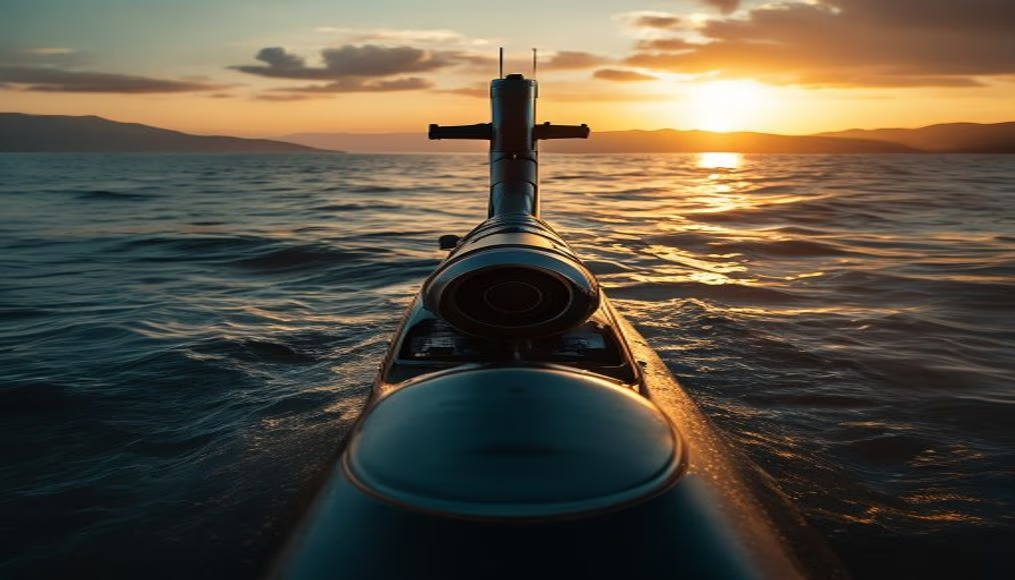
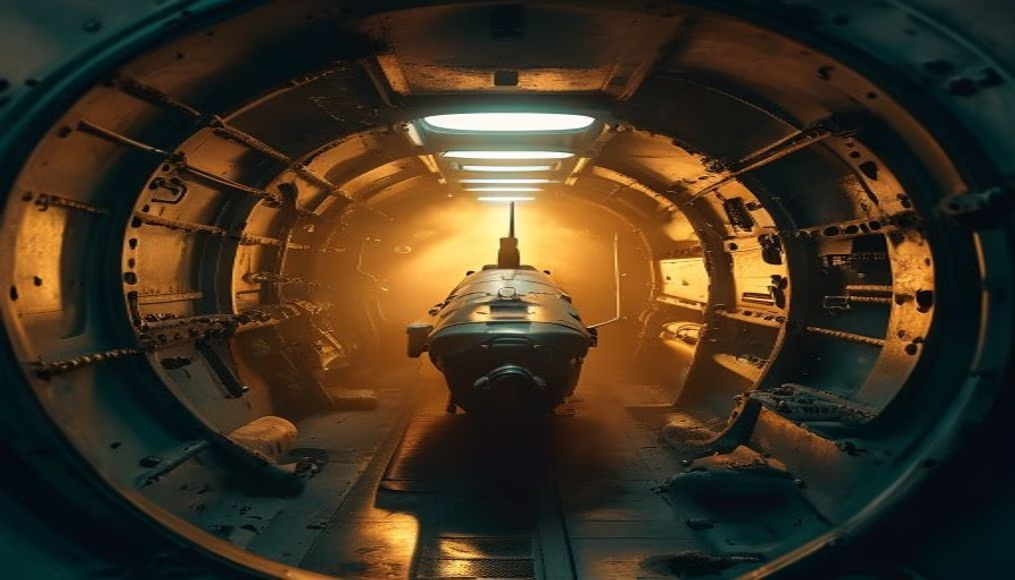
Lifeboat rescue ocean
1344×768 · AVIF · CC BY 4.0
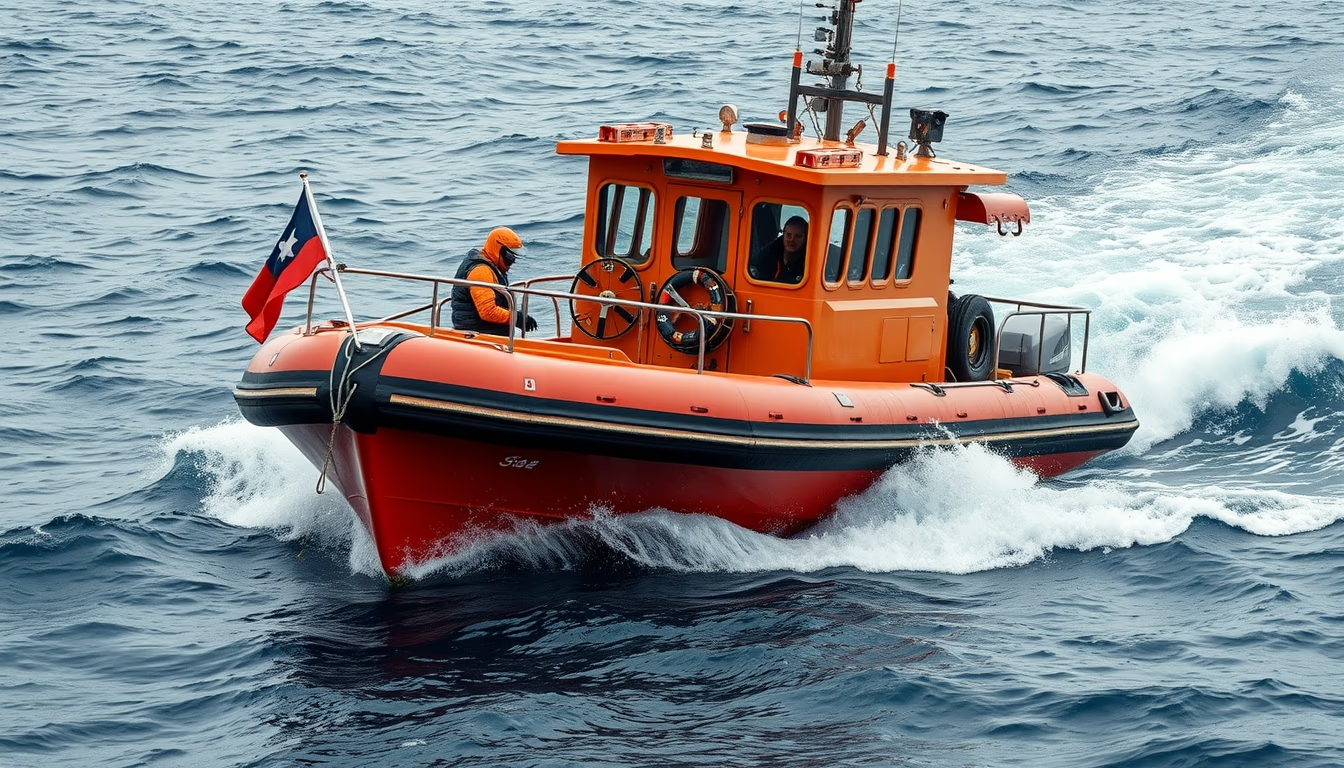
Lifeboat rescue operations on the open ocean demand extreme training, self-righting vessels, and coordination with maritime rescue coordination centers.
About this subject
Lifeboats are vessels specifically designed for search and rescue operations in adverse sea conditions. Unlike ordinary boats, they have self-righting hulls that allow them to return to an upright position even after capsizing, a critical feature in storms with waves up to 15 meters. Low center of gravity and watertight compartments ensure buoyancy even when fully flooded.
The history of modern maritime rescues dates back to the 19th century, with the founding of the Royal National Lifeboat Institution (RNLI) in the United Kingdom in 1824, which inspired similar organizations worldwide. In Brazil, the Navy's Search and Rescue Service (SALVAMAR) coordinates operations with lifeboats along a coastline of over 7,400 km. Modern lifeboats, such as the Shannon or Tamar classes, reach speeds over 25 knots and have an operational range of hundreds of kilometers.
Ocean rescue operations involve multiple agents: coordination centers, helicopters, and support vessels. The process begins with the activation of a distress signal via radio or EPIRB (Emergency Position-Indicating Radio Beacon). Lifeboat crew undergo rigorous training including capsize simulations, towing techniques, and maritime first aid. The International Maritime Organization (IMO) sets global guidelines for these operations, such as the Global Maritime Distress and Safety System (GMDSS).
Notably, many lifeboats are operated by volunteers, especially in coastal regions of Europe, Australia, and the United States. They risk themselves in conditions most sailors would avoid. In 2023, the RNLI launched its lifeboats over 8,500 times, saving hundreds of lives. Technology is also evolving: unmanned surface vehicles (USVs) are being tested for initial rescues in high-risk situations, but the human factor remains irreplaceable in judging sea conditions and executing precise maneuvers.
Frequently Asked Questions
What is a self-righting lifeboat?
It is a rescue vessel designed to return to an upright position after capsizing, thanks to a very low center of gravity and watertight compartments that generate buoyancy. Even when keel-up, it rights itself automatically, allowing the crew to continue the operation.
Who coordinates maritime rescues in Brazil?
The Brazilian Navy's Search and Rescue Service (SALVAMAR) coordinates operations, operating 24/7 from Maritime Rescue Coordination Centers (MRCCs). They can deploy lifeboats, helicopters, and Navy ships as needed.
How does a lifeboat locate shipwreck survivors in the ocean?
Beyond radio signals and EPIRBs, lifeboats use radar, Automatic Identification Systems (AIS), and night-vision binoculars. In low visibility like fog, they employ side-scan sonars and thermal cameras to detect people in the water.
Direct URL
https://pub-c7d6a6ea828543ac903a74a341ccb2e1.r2.dev/imagens/lifeboat-rescue-ocean-national-geographic-style-p10.avifHow to credit
Include a visible link back to UtilizAí. Copy one of the snippets below:
<a href="https://xn--utiliza-eza.com/en/midia/imagens/lifeboat-rescue-ocean-national-geographic-style-p10">Lifeboat rescue ocean</a> by <a href="https://xn--utiliza-eza.com">UtilizAí</a>, licensed under <a href="https://creativecommons.org/licenses/by/4.0/">CC BY 4.0</a>.
[Lifeboat rescue ocean](https://xn--utiliza-eza.com/en/midia/imagens/lifeboat-rescue-ocean-national-geographic-style-p10) by [UtilizAí](https://xn--utiliza-eza.com), CC BY 4.0
License: CC-BY-4.0