Last supper detail
1344×768 · AVIF · CC BY 4.0
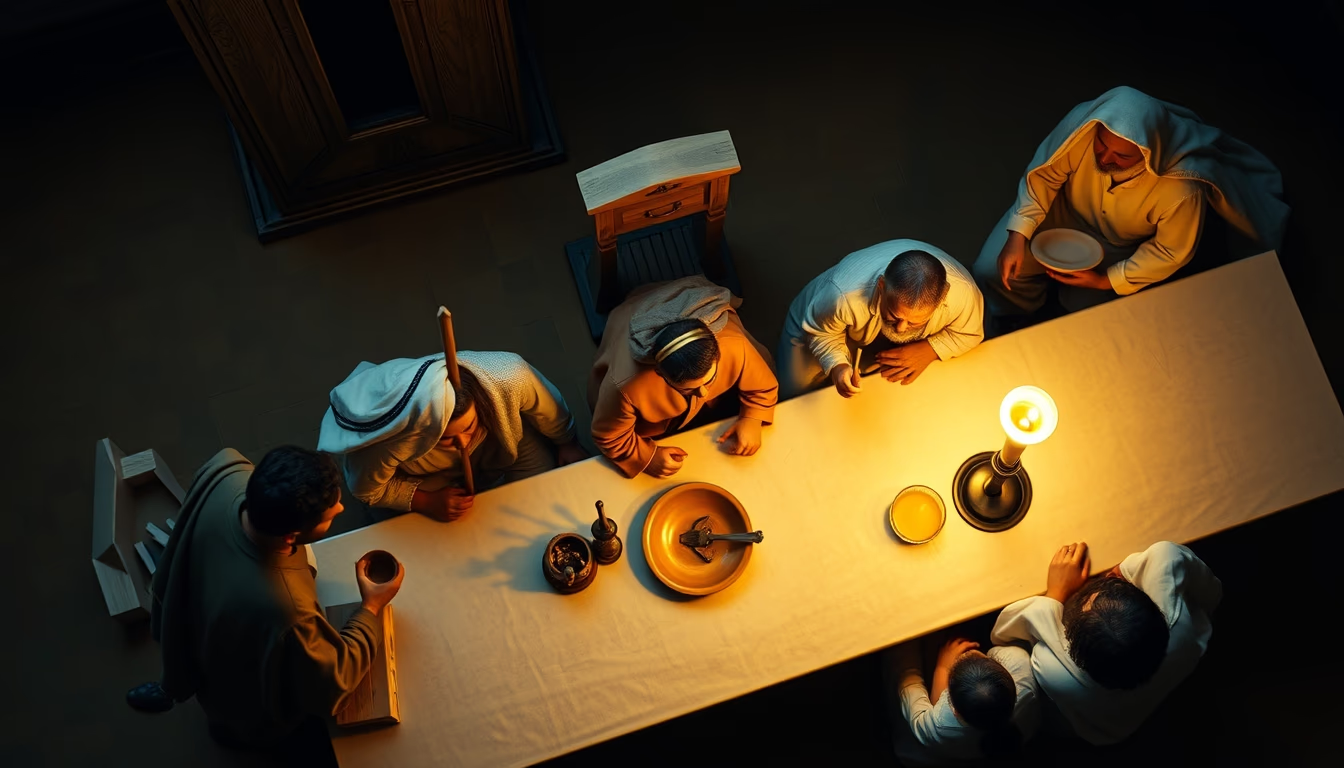
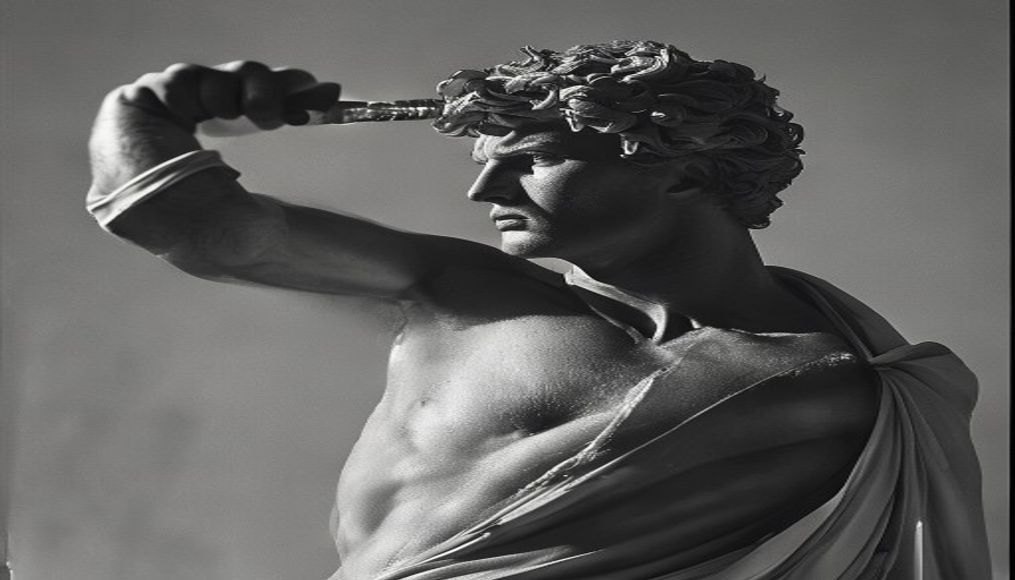
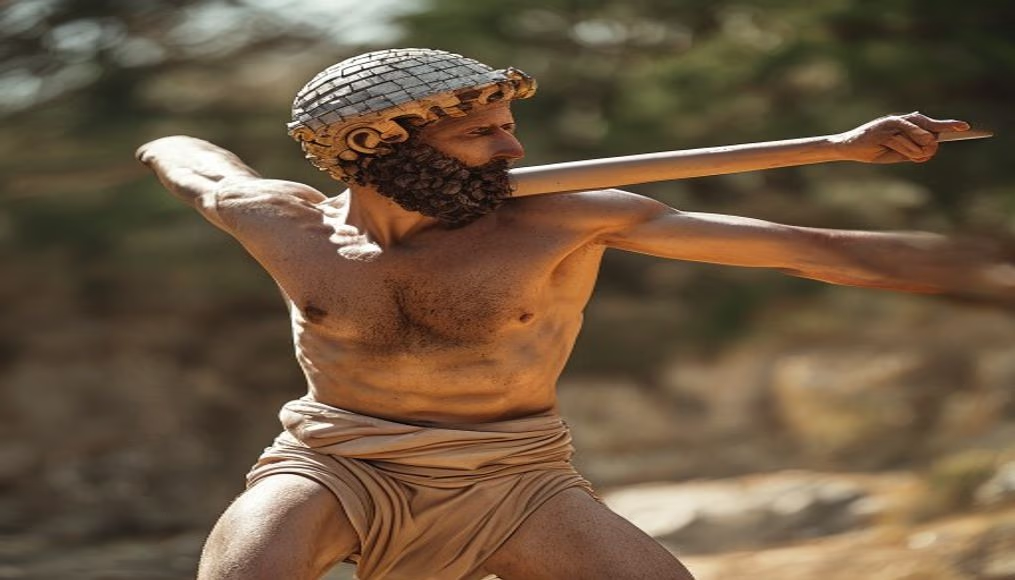
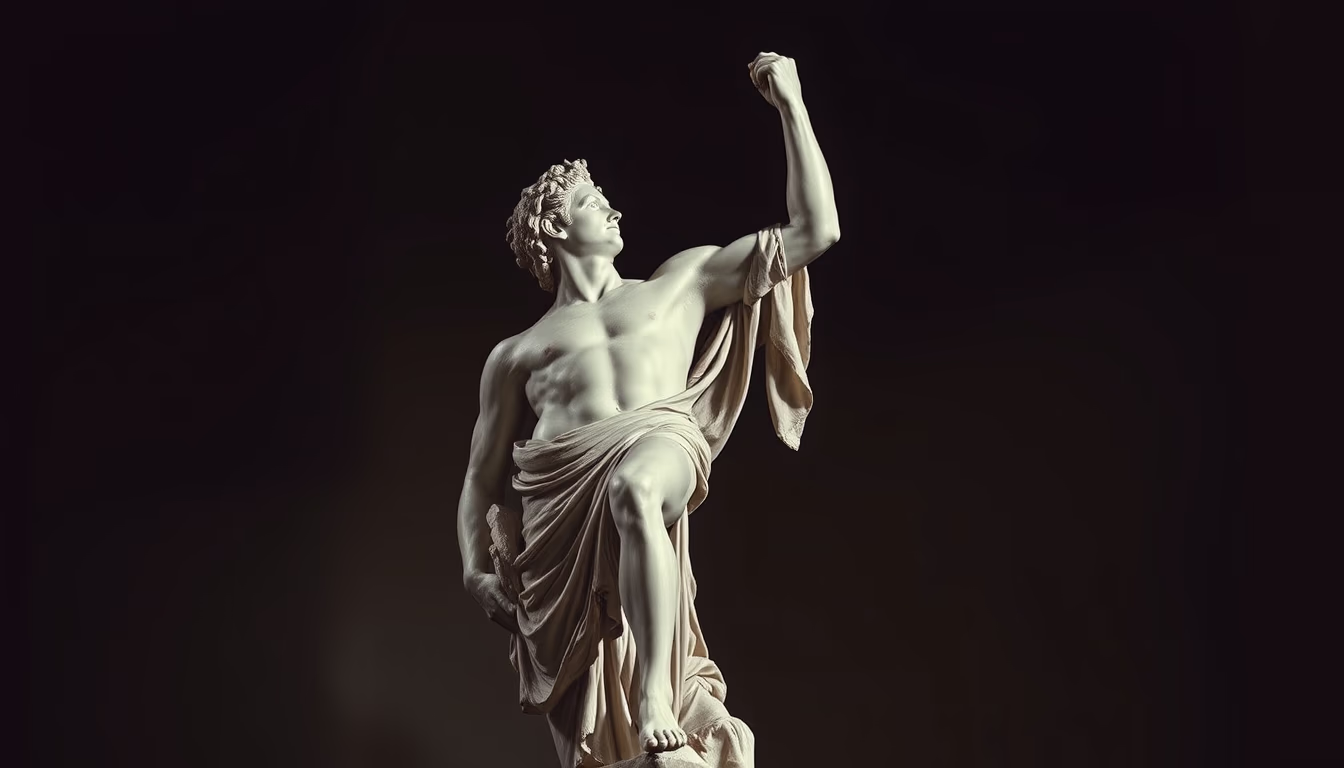
A detail of Leonardo da Vinci's Last Supper reveals the innovative technique that made the work a milestone of the Italian Renaissance.
About this subject
The Last Supper, painted by Leonardo da Vinci between 1495 and 1498 in the refectory of the Convent of Santa Maria delle Grazie in Milan, depicts the biblical moment when Jesus announces that one of the apostles will betray him. The scene captures the individual reaction of each disciple, exploring emotions such as shock, disbelief, and fear. Leonardo used an experimental technique called tempera on gesso, rather than traditional fresco, which allowed greater detail and subtlety in expressions and colors. However, this choice made the painting extremely fragile, and it began to flake as early as the 16th century. The composition is famous for its masterful use of linear perspective: all lines converge on Christ's head at the center, creating a deep sense of harmony and focus. The apostles are arranged in groups of three, forming a dynamic visual narrative. Each gesture is symbolic, such as Peter's hand holding a knife, foreshadowing the kiss of Judas and Peter's later denial. The work has undergone several controversial restorations over the centuries, with the most recent completed in 1999, removing layers of dirt and overpainting to reveal Leonardo's original colors. The painting measures approximately 460 cm by 880 cm and covers an entire wall of the refectory. Despite its deteriorated state, the Last Supper remains one of the most iconic images in Western art, studied for its technical innovation, symbolic richness, and lasting influence on culture and art history. The detail of the image, likely focusing on one of the apostles or the center of the composition, highlights Leonardo's meticulous work in depicting human emotions.
Frequently Asked Questions
Why is Leonardo da Vinci's Last Supper so damaged?
The painting suffered early degradation due to Leonardo's experimental technique: instead of traditional fresco, he used tempera on gesso, which did not adhere well to the wall. Additionally, humidity, World War II bombings, and poorly executed restorations over the centuries worsened the damage.
How many apostles are depicted in the Last Supper and how are they arranged?
The painting shows the 12 apostles plus Jesus, totaling 13 figures. They are grouped into four clusters of three, with Jesus at the center. The groups react in waves of emotion to the news of betrayal, creating a symmetrical yet dynamic composition.
What does Peter's gesture in the painting signify?
Peter holds a knife pointed away from Jesus, symbolizing his future act of cutting off the ear of the high priest's servant in Gethsemane. It also represents his impulsive nature and the denial that would follow Christ's arrest.
Direct URL
https://pub-c7d6a6ea828543ac903a74a341ccb2e1.r2.dev/imagens/last-supper-detail-isometric-flat-lay-p4.avifHow to credit
Include a visible link back to UtilizAí. Copy one of the snippets below:
<a href="https://xn--utiliza-eza.com/en/midia/imagens/last-supper-detail-isometric-flat-lay-p4">Last supper detail</a> by <a href="https://xn--utiliza-eza.com">UtilizAí</a>, licensed under <a href="https://creativecommons.org/licenses/by/4.0/">CC BY 4.0</a>.
[Last supper detail](https://xn--utiliza-eza.com/en/midia/imagens/last-supper-detail-isometric-flat-lay-p4) by [UtilizAí](https://xn--utiliza-eza.com), CC BY 4.0
License: CC-BY-4.0