Last supper detail
1344×768 · AVIF · CC BY 4.0
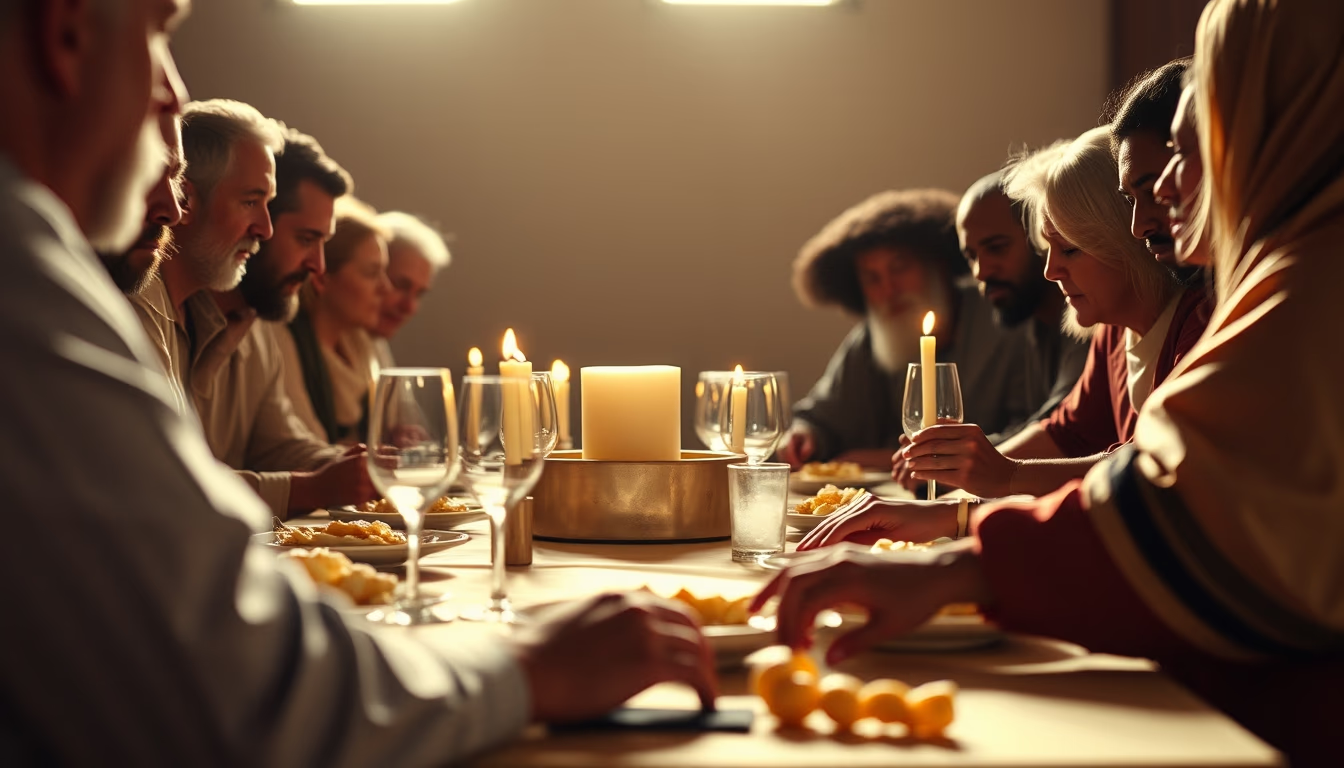
Detail of Leonardo da Vinci's The Last Supper, a Renaissance mural in the refectory of the Convent of Santa Maria delle Grazie, Milan, painted between 1495 and 1498.
About this subject
Leonardo da Vinci's The Last Supper, painted between 1495 and 1498, is one of the most iconic works of the Italian Renaissance. Located in the refectory of the Convent of Santa Maria delle Grazie in Milan, the mural measures approximately 460 cm by 880 cm. Unlike traditional fresco technique, Leonardo used tempera and oil on a gesso ground, which led to early deterioration. The detail often captured in photography shows the moment Jesus announces that one of his apostles will betray him, eliciting uniquely studied facial expressions and gestures. Each apostle reacts distinctly, conveyed through posture and hand placement. Leonardo broke with tradition by not isolating Judas; instead, he places him among the others in shadow, with Peter making a threatening gesture. Linear perspective draws the eye to Christ's head as the vanishing point. The painting suffered from humidity, botched restorations, and bomb damage during World War II. A modern restoration completed in 1999 revealed vibrant colors and hidden details. The work is not a true fresco but a mural painting, explaining its fragility. Visitors must book tickets months in advance to view it in groups of 25 for 15 minutes in a climate-controlled room.
Frequently Asked Questions
Why did Leonardo's Last Supper deteriorate so quickly?
Leonardo did not use the traditional fresco technique (pigment on wet plaster). Instead, he applied tempera and oil on a dry gesso base, which did not bond well to the wall, causing flaking and early deterioration.
How many times has the Last Supper been restored?
The painting has undergone several interventions. The most recent and comprehensive restoration lasted from 1978 to 1999, led by Pinin Brambilla Barcilon, removing overpaints and dirt to reveal original colors.
Which detail is most photographed in the Last Supper?
The most famous detail shows Christ's and Judas's hands on the table, with Judas leaning back. Also common is the group of apostles reacting to the betrayal announcement, emphasizing facial expressions and hand gestures.
Direct URL
https://pub-c7d6a6ea828543ac903a74a341ccb2e1.r2.dev/imagens/last-supper-detail-documentary-photography-p7.avifHow to credit
Include a visible link back to UtilizAí. Copy one of the snippets below:
<a href="https://xn--utiliza-eza.com/en/midia/imagens/last-supper-detail-documentary-photography-p7">Last supper detail</a> by <a href="https://xn--utiliza-eza.com">UtilizAí</a>, licensed under <a href="https://creativecommons.org/licenses/by/4.0/">CC BY 4.0</a>.
[Last supper detail](https://xn--utiliza-eza.com/en/midia/imagens/last-supper-detail-documentary-photography-p7) by [UtilizAí](https://xn--utiliza-eza.com), CC BY 4.0
License: CC-BY-4.0