Lake baikal frozen
1344×768 · AVIF · CC BY 4.0
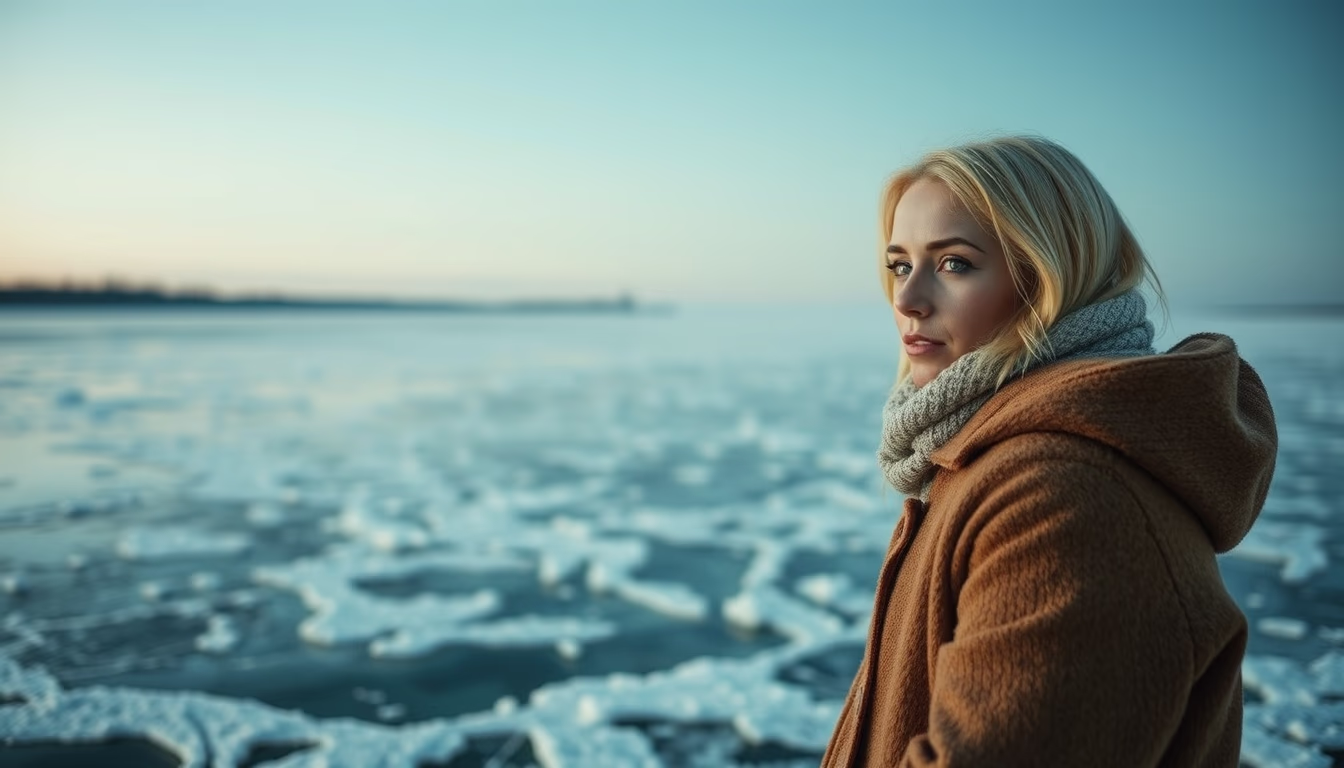
Lake Baikal in Siberia freezes annually, creating one of the world's most iconic landscapes with clear ice up to 2 meters thick.
About this subject
Lake Baikal, located in Eastern Siberia, Russia, is the world's deepest and oldest freshwater lake, estimated at 25 million years old with a maximum depth of 1,642 meters. During winter, its waters completely freeze, forming an ice layer that can reach 2 meters thick. This natural phenomenon transforms the lake into a vast ice plain, often marked by fissures and unique crystalline shapes called ice hummocks.
The exceptionally pure water of Baikal allows the ice to become transparent, revealing striking blue hues and textures. This freezing process occurs between January and May, with February and March being the prime months for observation. The frozen surface becomes so robust that it supports vehicles and even the famous Baikal-Amur railway passing through the region.
Beyond its geological significance, Lake Baikal hosts unique biodiversity, with about 80% of its species endemic. During the freeze, life continues beneath the ice, including the Baikal seal (Pusa sibirica), the only exclusively freshwater seal in the world. The ice also holds cultural importance for local communities, who hold festivals and pilgrimages on the frozen surface.
Lake Baikal has been a UNESCO World Heritage site since 1996 and holds approximately 20% of the world's unfrozen freshwater. Its preservation is vital for global ecological balance, and the seasonal ice attracts scientists and tourists keen to study and witness this rare and impressive natural phenomenon.
Frequently Asked Questions
How thick does the ice on Lake Baikal get in winter?
The ice thickness ranges from 1 to 2 meters, reaching up to 2 meters in the coldest areas.
Is it safe to walk on the ice of Lake Baikal?
Yes, during peak winter (February and March) the ice is safe, but it's essential to follow local advice and avoid areas with currents or cracks.
What endemic species live in Lake Baikal?
About 80% of species are endemic, including the Baikal seal, the omul fish, and various crustaceans.
Direct URL
https://pub-c7d6a6ea828543ac903a74a341ccb2e1.r2.dev/imagens/lake-baikal-frozen-studio-editorial-portrait-p0.avifHow to credit
Include a visible link back to UtilizAí. Copy one of the snippets below:
<a href="https://xn--utiliza-eza.com/en/midia/imagens/lake-baikal-frozen-studio-editorial-portrait-p0">Lake baikal frozen</a> by <a href="https://xn--utiliza-eza.com">UtilizAí</a>, licensed under <a href="https://creativecommons.org/licenses/by/4.0/">CC BY 4.0</a>.
[Lake baikal frozen](https://xn--utiliza-eza.com/en/midia/imagens/lake-baikal-frozen-studio-editorial-portrait-p0) by [UtilizAí](https://xn--utiliza-eza.com), CC BY 4.0
License: CC-BY-4.0