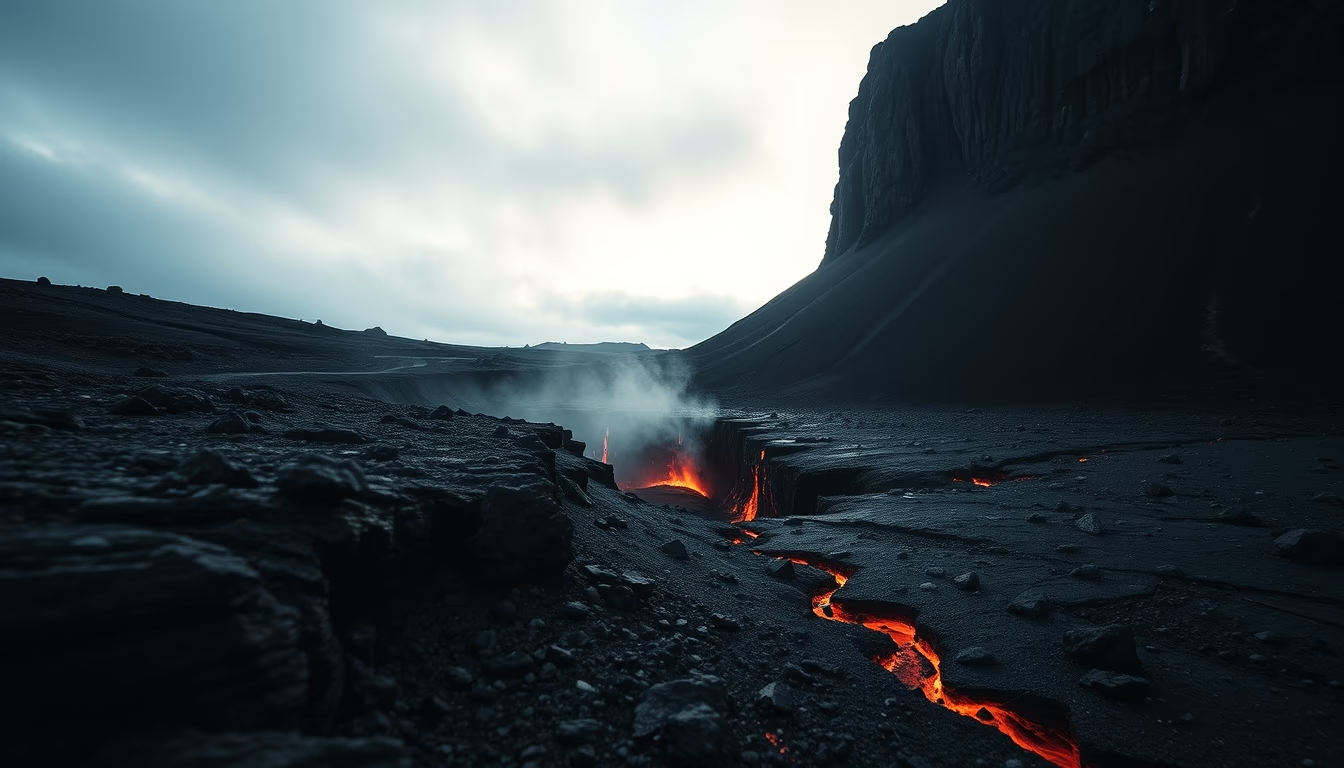
Kilauea hawaii lava flow
1344×768 · AVIF · CC BY 4.0
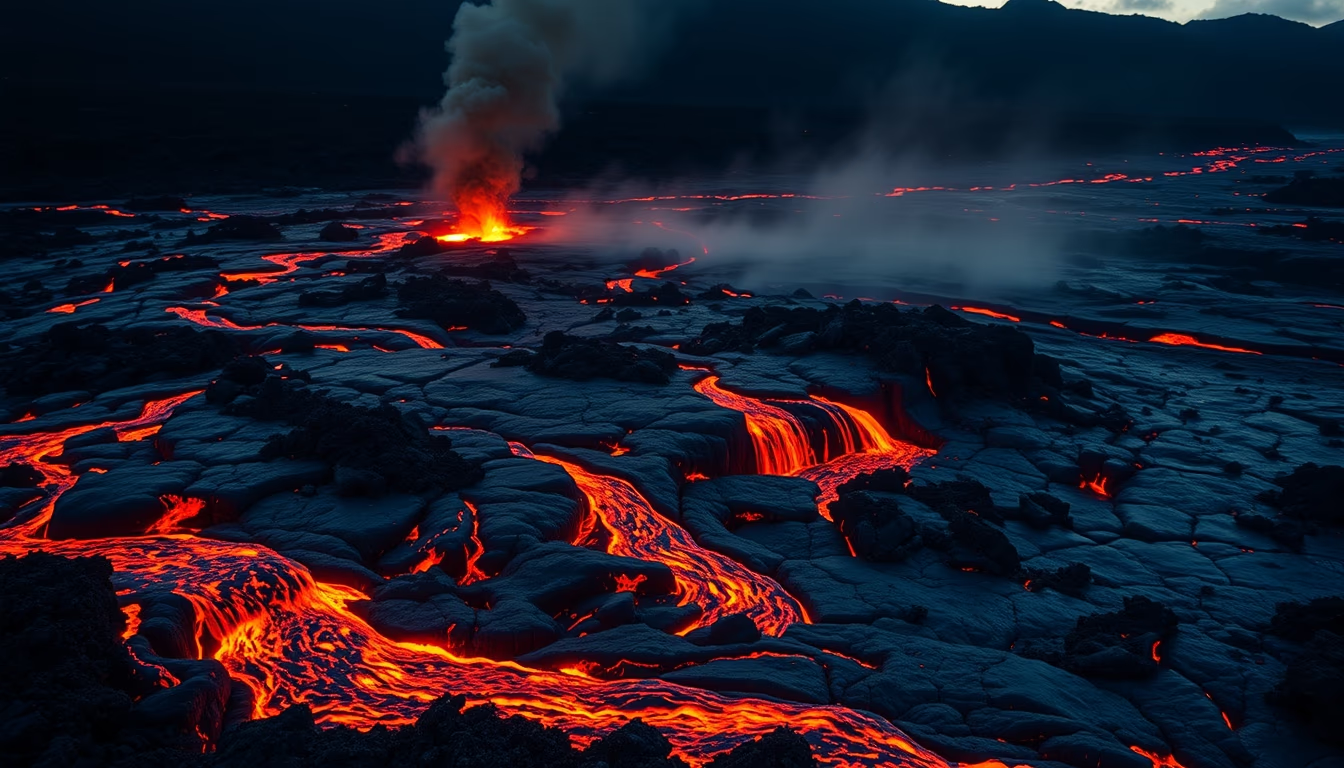
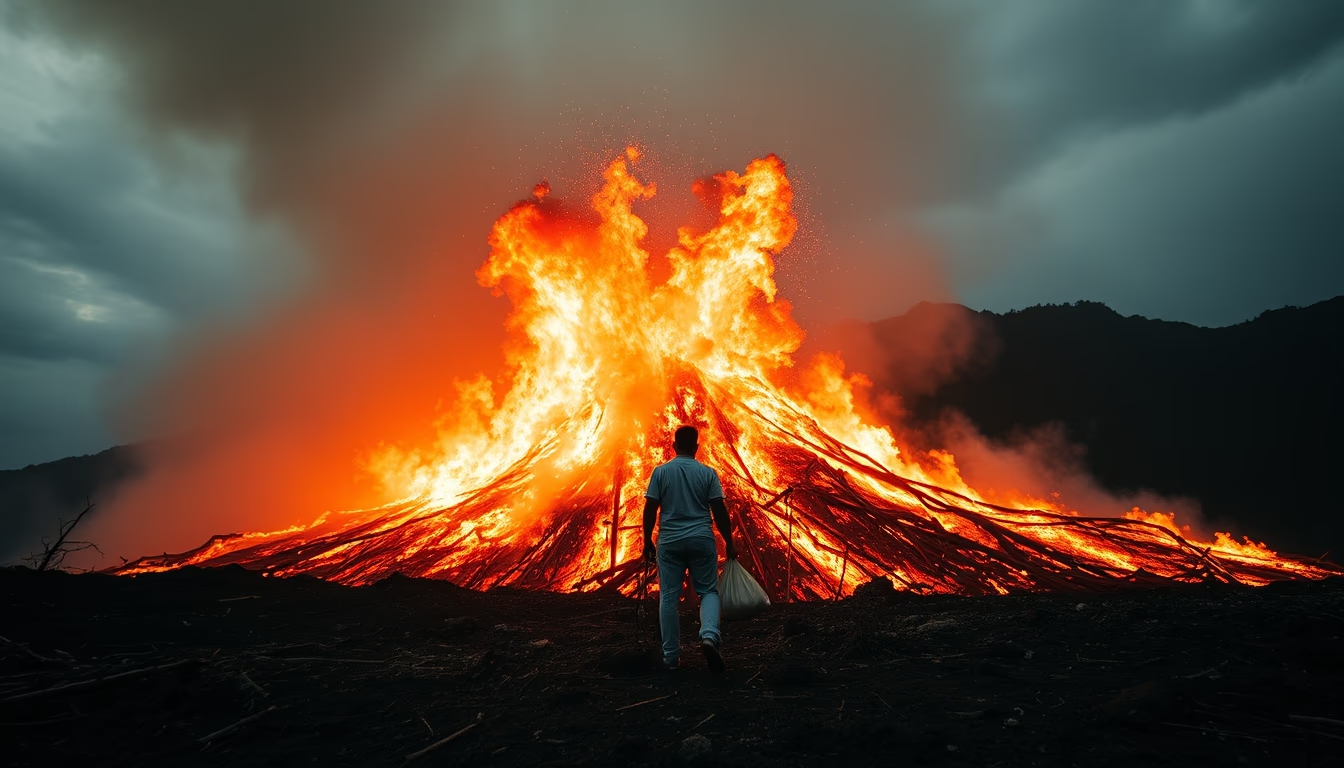
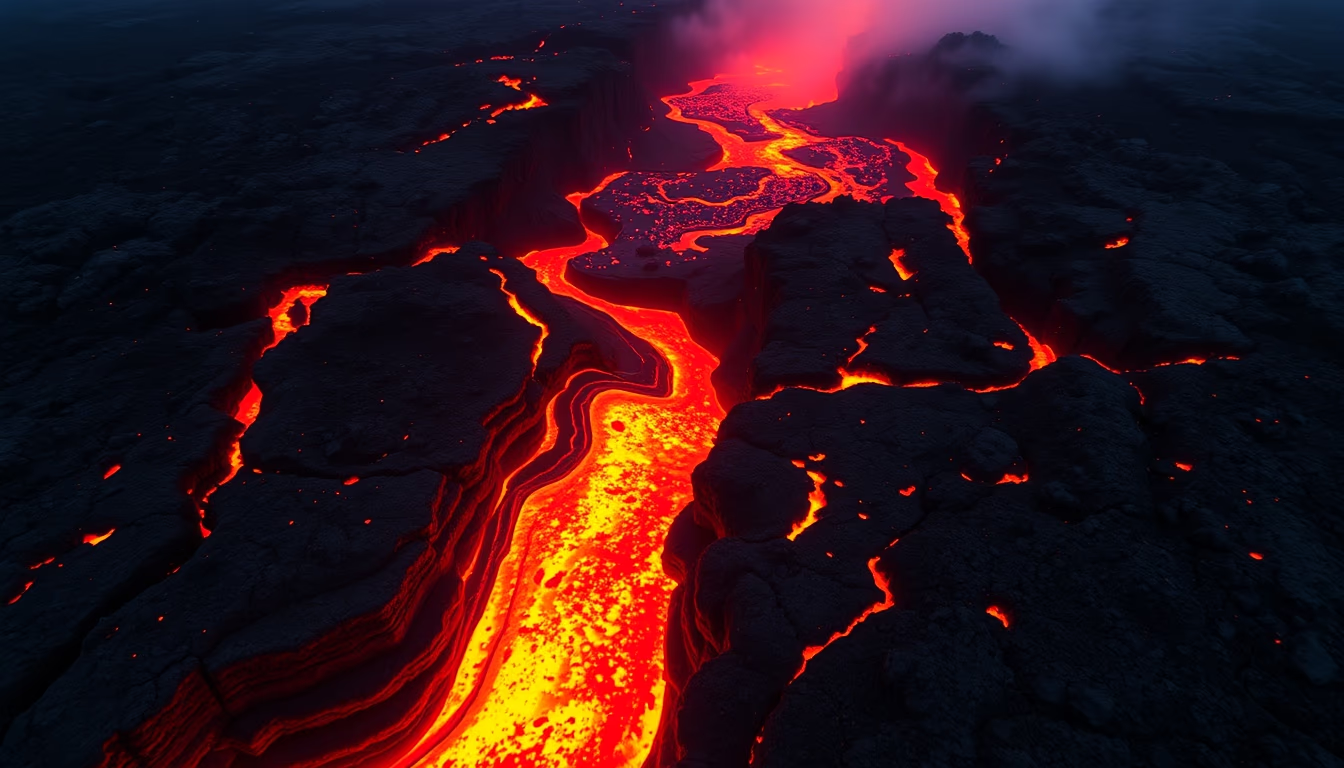
Lava flow from Kilauea volcano in Hawaii, one of the most active volcanoes on Earth, shaping the Big Island's landscape with continuous eruptions since 1983.
About this subject
Kilauea is a shield volcano located on the southeastern side of Hawaii's Big Island, within Hawaii Volcanoes National Park. Its nearly continuous eruptive activity since 1983 makes it one of the most monitored and studied volcanoes in the world. Unlike explosive volcanoes such as Vesuvius, Kilauea produces effusive eruptions, with low-viscosity basaltic lava that flows over long distances, creating vast lava fields and, upon reaching the ocean, forming new land.
The most recent major eruption occurred in 2018 along the lower East Rift Zone, destroying hundreds of homes in the Leilani Estates subdivision and dramatically altering the coastline. The event released enormous amounts of sulfur dioxide and generated a volcanic plume that affected air quality across the archipelago. The lava meeting the sea produced laze clouds (hydrochloric acid and steam), a health hazard. Currently, Kilauea remains active, with eruptions confined to the Halemaʻumaʻu crater at the summit, attracting scientists and tourists worldwide.
Culturally, Kilauea is sacred to Native Hawaiians, associated with the goddess Pele, who is believed to dwell in the crater. Legends tell of her fury and creative power, and many visitors still leave offerings such as flowers and liquor at the crater's edge. The volcano also serves as a natural laboratory for geology: studies of lava composition and gases help predict eruptions and understand planetary processes, such as the formation of Earth's early crust. The surrounding landscape, with lava deserts and regenerated tropical forests, illustrates the cycle of destruction and renewal typical of these volcanic islands.
Frequently Asked Questions
How often does Kilauea erupt?
Kilauea has been erupting almost continuously since 1983, with periods of heightened activity and pauses. Currently, the eruption is confined to Halemaʻumaʻu crater, with lava in lakes and fountains.
Is it safe to visit Hawaii Volcanoes National Park during an eruption?
Yes, provided visitors follow ranger guidance and avoid closed areas. Volcanic gas emissions can be hazardous, and ocean lava interactions produce acidic clouds. The park constantly monitors conditions and adjusts access.
What happened to the homes destroyed in 2018?
The 2018 eruption destroyed over 700 homes in the Leilani Estates subdivision. Much of the area was covered by thick lava, making rebuilding unfeasible. The site remains a solidified lava field, and some roads are permanently blocked.
Direct URL
https://pub-c7d6a6ea828543ac903a74a341ccb2e1.r2.dev/imagens/kilauea-hawaii-lava-flow-cinematic-wide-shot-fresh12.avifHow to credit
Include a visible link back to UtilizAí. Copy one of the snippets below:
<a href="https://xn--utiliza-eza.com/en/midia/imagens/kilauea-hawaii-lava-flow-cinematic-wide-shot-fresh12">Kilauea hawaii lava flow</a> by <a href="https://xn--utiliza-eza.com">UtilizAí</a>, licensed under <a href="https://creativecommons.org/licenses/by/4.0/">CC BY 4.0</a>.
[Kilauea hawaii lava flow](https://xn--utiliza-eza.com/en/midia/imagens/kilauea-hawaii-lava-flow-cinematic-wide-shot-fresh12) by [UtilizAí](https://xn--utiliza-eza.com), CC BY 4.0
License: CC-BY-4.0