Kayak sea ocean
1344×768 · AVIF · CC BY 4.0
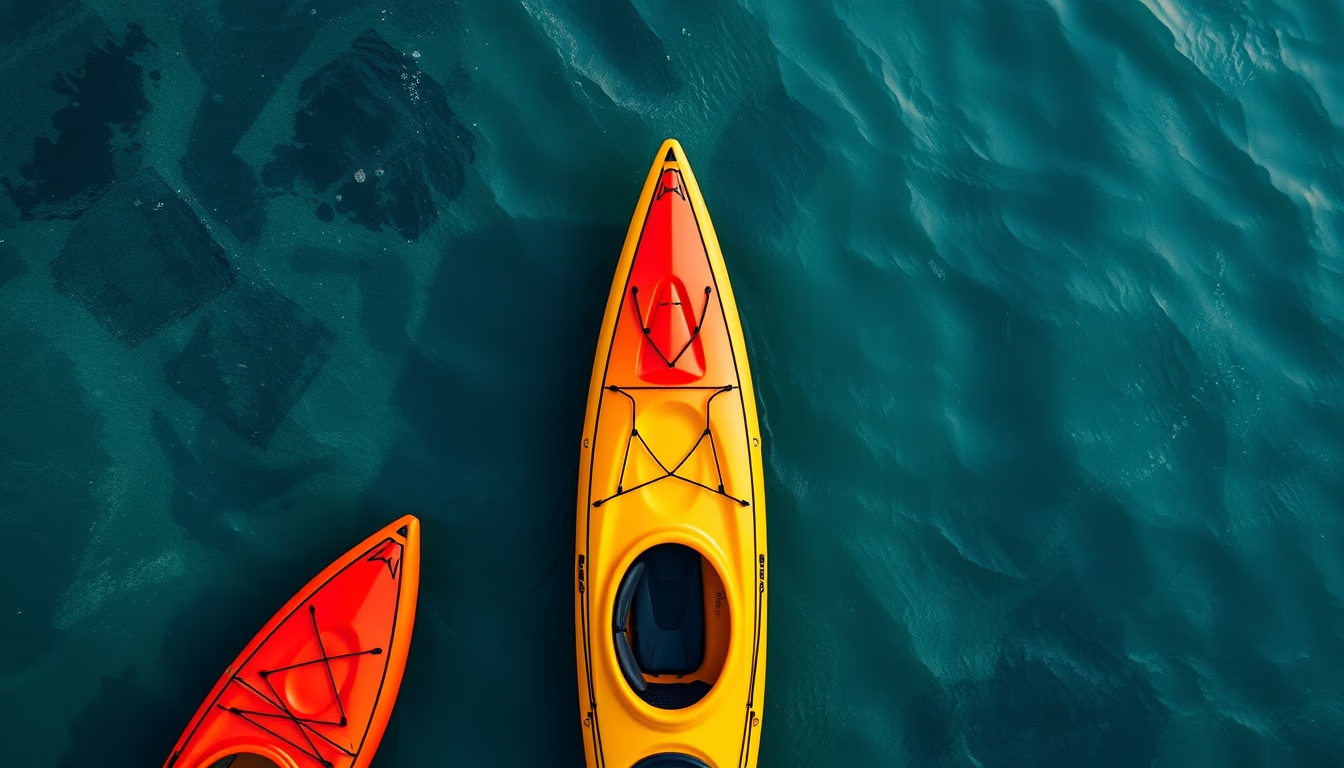
The kayak is a lightweight and versatile vessel used for recreation, sport, and exploration in seas, rivers, and lakes worldwide.
About this subject
The kayak is a small watercraft traditionally used by indigenous peoples of the Arctic, such as the Inuit and Aleut, for hunting and fishing. Originally made of wood and sealskin, it has evolved to modern materials like plastic, fiberglass, and Kevlar, becoming accessible for recreational and sporting activities. There are various types, including the sea kayak, designed for long crossings in open waters, and the ocean kayak, which offers stability and cargo capacity for coastal expeditions. The kayak is also used in speed competitions, whitewater slalom, and even disciplines like kayak polo.
Kayaking requires skills in paddling, balance, and reading water conditions. Safety equipment such as a life jacket, spare paddle, and bilge pump are essential, especially at sea where winds and currents can be unpredictable. In Brazil, kayaking is popular in coastal regions like Florianópolis, Paraty, and Fernando de Noronha, as well as rivers like the Amazon and São Francisco. It is estimated that over 10 million people regularly practice kayaking worldwide, according to the International Canoe Federation.
Historically, the kayak has millennia-old roots, with archaeological evidence of similar vessels dating back over 4,000 years. Its versatility has allowed adaptations for different environments: from inflatable kayaks for light travel to rigid high-performance models for surf waves. The popularization of kayaking as an adventure sport grew from the 1970s, with the development of synthetic materials and paddling techniques such as the roll (self-rescue).
Fun fact: the world's longest kayak, the "Long Kayak" at 15 meters, was built in Canada in 2014 and can carry 12 people. Additionally, the kayak is one of the most energy-efficient means of transportation, as a paddler can cover considerable distances with low effort thanks to its hydrodynamic design.
Frequently Asked Questions
What is the difference between a kayak and a canoe?
The main difference is in the paddler's position and the paddle type. In a kayak, the paddler sits with legs extended forward and uses a double-bladed paddle. In a canoe, the paddler sits or kneels and uses a single-bladed paddle. Kayaks are typically enclosed (with a deck) and offer more protection from the water.
Is sea kayaking dangerous?
It can be safe with proper precautions and equipment. Essential items include a life jacket, checking weather and tide conditions, carrying a spare paddle, and knowing self-rescue techniques (like the roll). It is recommended to practice with experienced instructors before venturing into open sea.
What are the best kayaks for beginners?
Recreational kayaks made of rotomolded plastic, with good stability and a wide cockpit, are ideal for beginners. Sit-on-top models are easy to board and exit. Brands like Perception, Wilderness Systems, and Dagger offer good options. It is important to test the kayak before purchasing.
Direct URL
https://pub-c7d6a6ea828543ac903a74a341ccb2e1.r2.dev/imagens/kayak-sea-ocean-isometric-flat-lay-p3.avifHow to credit
Include a visible link back to UtilizAí. Copy one of the snippets below:
<a href="https://xn--utiliza-eza.com/en/midia/imagens/kayak-sea-ocean-isometric-flat-lay-p3">Kayak sea ocean</a> by <a href="https://xn--utiliza-eza.com">UtilizAí</a>, licensed under <a href="https://creativecommons.org/licenses/by/4.0/">CC BY 4.0</a>.
[Kayak sea ocean](https://xn--utiliza-eza.com/en/midia/imagens/kayak-sea-ocean-isometric-flat-lay-p3) by [UtilizAí](https://xn--utiliza-eza.com), CC BY 4.0
License: CC-BY-4.0