Kayak sea ocean
1344×768 · AVIF · CC BY 4.0
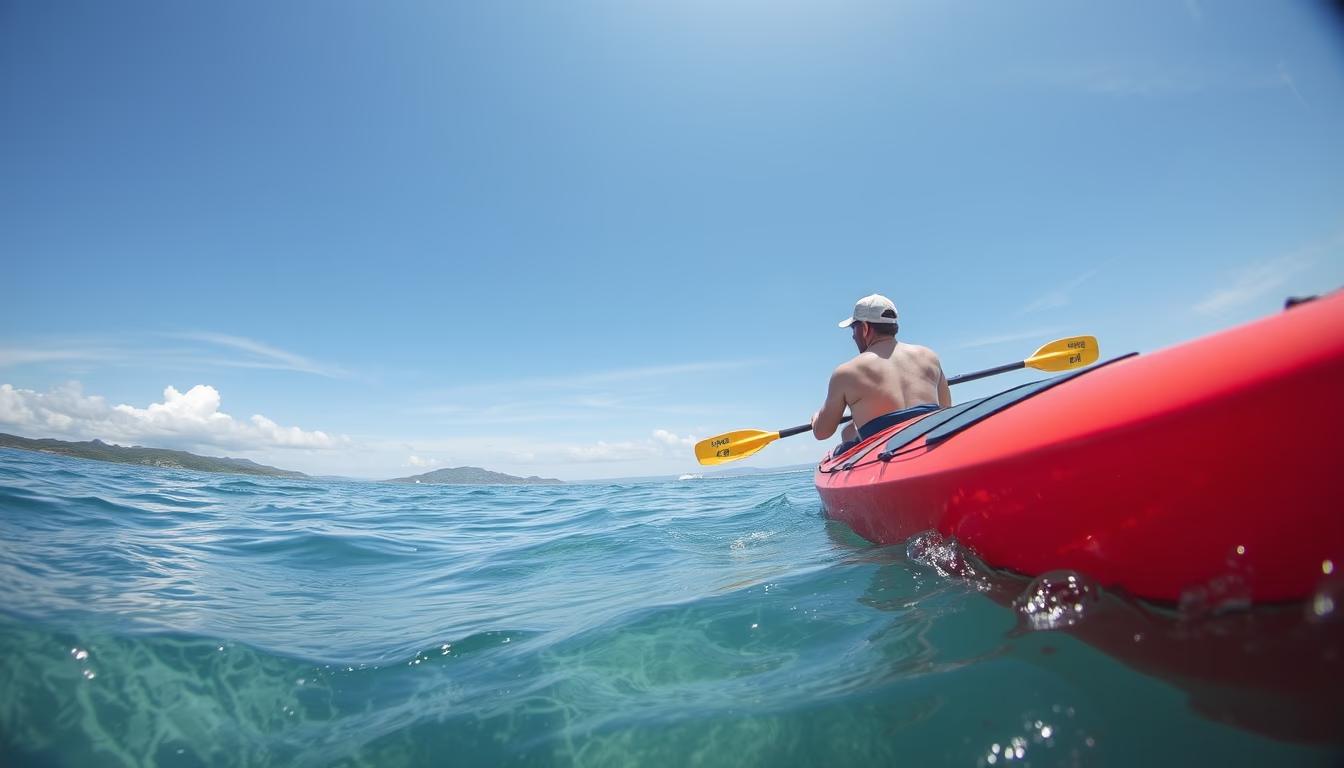
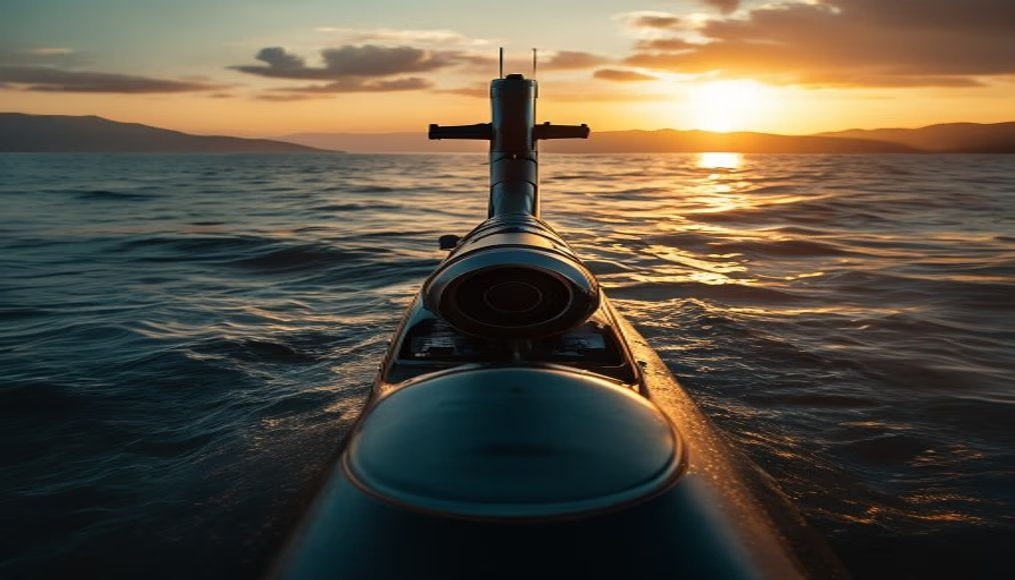
Kayaks are ancient watercraft adapted for ocean navigation, offering a unique perspective of adventure and contact with the sea.
About this subject
The kayak, originating from the Inuit peoples of the Arctic, was traditionally built with wood and animal skins for hunting and transport in icy waters. Today, modern versions in rotomolded plastic or fiberglass are used globally for leisure, tourism, and sports. Ocean kayaking, known as sea kayaking, requires specific skills due to waves, currents, and winds. Sea kayaks are longer and narrower than flatwater ones, with watertight bulkheads for storage and better stability in rough conditions.
In Brazil, ocean kayaking has grown in regions like the coast of Santa Catarina, Rio de Janeiro, and the Northeast. Destinations such as Fernando de Noronha and the Green Coast offer trips that combine marine wildlife observation, like sea turtles and dolphins, with overcoming natural challenges. Photography with a fisheye lens amplifies the sense of immersion, capturing the curved horizon and the vastness of the sea, making images more dramatic.
Interestingly, the kayak has been in the Olympic Games since 1936, but open-water kayaking is not an Olympic discipline. Safety is paramount: use of life jackets, paddle leashes, and VHF radio communication are recommended. The self-rescue technique (Eskimo roll) is essential for navigating waves. Sea kayaking provides not only physical exercise but also a deep connection with the marine environment, demanding respect for weather and tide conditions.
Frequently Asked Questions
What is the difference between a sea kayak and a river kayak?
A sea kayak is longer and narrower, with watertight compartments and better stability in waves. A river kayak is shorter and more maneuverable for rapids.
Is experience needed for ocean kayaking?
Yes, prior training in calm waters is recommended, along with learning self-rescue techniques and understanding winds and tides.
What is a fisheye lens and why is it used in kayak photos?
It's an ultra-wide-angle lens that distorts the image, creating a curved effect. In kayak photos, it emphasizes the vastness of the ocean and the sense of immersion.
Direct URL
https://pub-c7d6a6ea828543ac903a74a341ccb2e1.r2.dev/imagens/kayak-sea-ocean-fish-eye-wide-angle-p4.avifHow to credit
Include a visible link back to UtilizAí. Copy one of the snippets below:
<a href="https://xn--utiliza-eza.com/en/midia/imagens/kayak-sea-ocean-fish-eye-wide-angle-p4">Kayak sea ocean</a> by <a href="https://xn--utiliza-eza.com">UtilizAí</a>, licensed under <a href="https://creativecommons.org/licenses/by/4.0/">CC BY 4.0</a>.
[Kayak sea ocean](https://xn--utiliza-eza.com/en/midia/imagens/kayak-sea-ocean-fish-eye-wide-angle-p4) by [UtilizAí](https://xn--utiliza-eza.com), CC BY 4.0
License: CC-BY-4.0