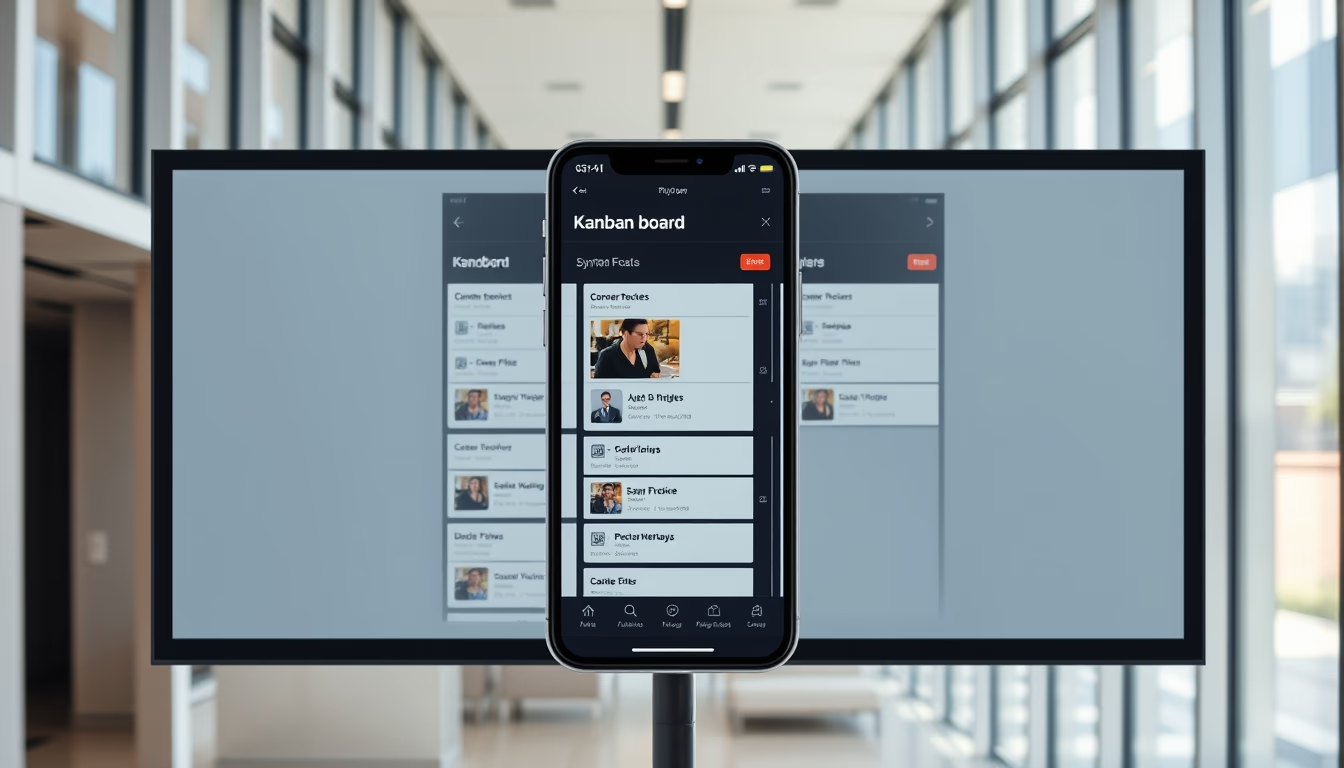
Kanban board app screen
1344×768 · AVIF · CC BY 4.0
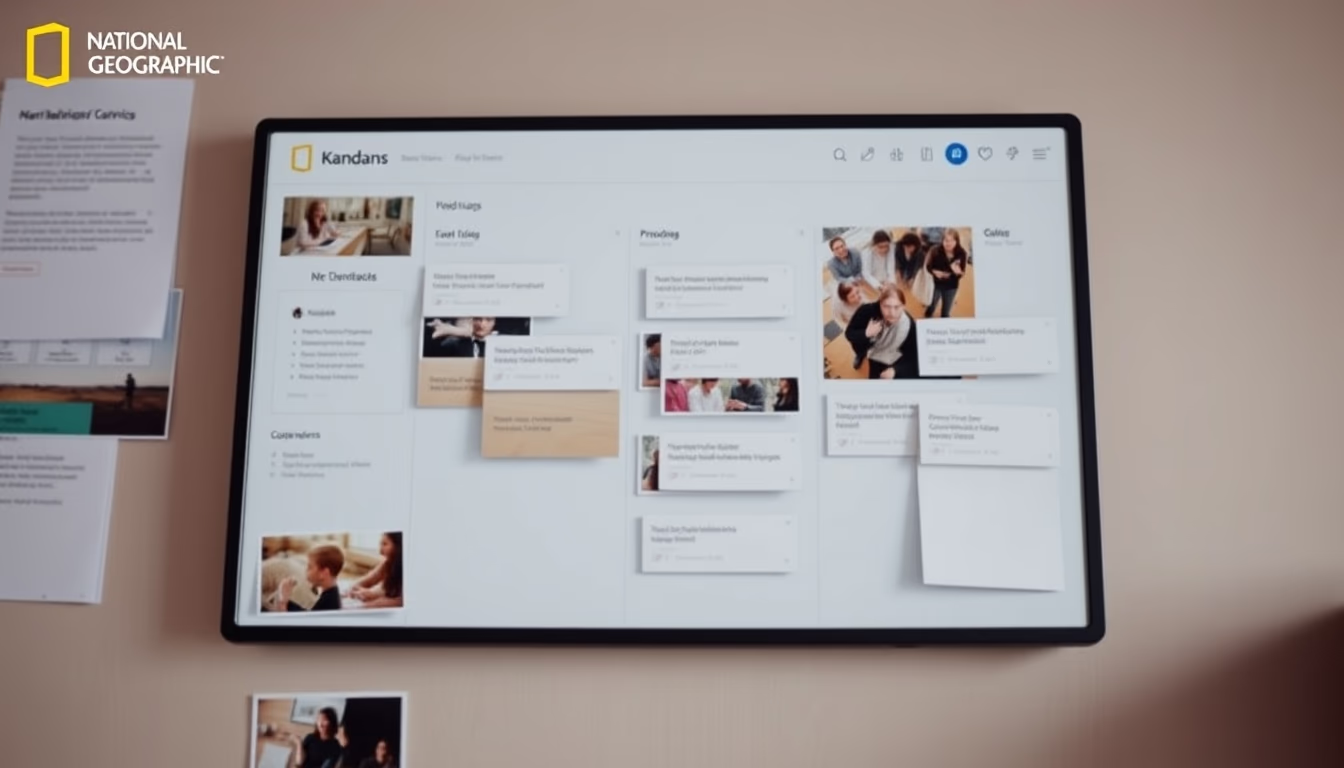
Kanban is a visual workflow management method, originated from the Toyota production system, widely adopted in software development teams.
About this subject
Kanban is a workflow management method that uses cards and columns to represent tasks and process stages. It originated from the Toyota production system in the 1940s as a tool for inventory and production control. The term "kanban" means "card" or "visual signal" in Japanese.
In software development, Kanban was popularized around 2004 with the application of lean principles to knowledge work. The method is based on four core principles: visualize the workflow, limit work in progress (WIP), manage flow, and make process policies explicit. Digital boards, as shown in modern apps, enable distributed teams to collaborate in real time, with typical columns like "To Do", "In Progress", and "Done".
Kanban is widely used in agile teams but differs from Scrum by not having fixed sprints; the focus is on continuous delivery. Companies like Spotify and Microsoft have adopted Kanban at scale. Studies show that limiting WIP reduces cycle time by up to 30% and improves predictability. Beyond IT, Kanban is applied in marketing, HR, and logistics.
Interestingly, Toyota's original system used physical cards with barcodes to signal part replenishment. Today, digital tools like Trello, Jira, and Asana offer virtual boards with advanced features like rule automation and flow metrics, enabling teams to continuously improve their processes.
Frequently Asked Questions
What is the difference between Kanban and Scrum?
Scrum uses fixed iterations (sprints) and defined roles, while Kanban focuses on continuous flow without sprints, limiting work in progress (WIP). Both are agile, but Kanban is more flexible for changes.
What does WIP mean in Kanban?
WIP stands for Work In Progress. Limiting WIP is essential to avoid bottlenecks and improve flow. Each column on the board has a maximum number of cards allowed simultaneously in that stage.
Can I use Kanban in non-IT areas?
Yes, Kanban is applicable to any process involving workflow, such as marketing, HR, logistics, and even personal tasks. Visualization and WIP limits help identify bottlenecks and prioritize tasks.
Direct URL
https://pub-c7d6a6ea828543ac903a74a341ccb2e1.r2.dev/imagens/kanban-board-app-screen-national-geographic-style-p3.avifHow to credit
Include a visible link back to UtilizAí. Copy one of the snippets below:
<a href="https://xn--utiliza-eza.com/en/midia/imagens/kanban-board-app-screen-national-geographic-style-p3">Kanban board app screen</a> by <a href="https://xn--utiliza-eza.com">UtilizAí</a>, licensed under <a href="https://creativecommons.org/licenses/by/4.0/">CC BY 4.0</a>.
[Kanban board app screen](https://xn--utiliza-eza.com/en/midia/imagens/kanban-board-app-screen-national-geographic-style-p3) by [UtilizAí](https://xn--utiliza-eza.com), CC BY 4.0
License: CC-BY-4.0