Kanban board app screen
1344×768 · AVIF · CC BY 4.0
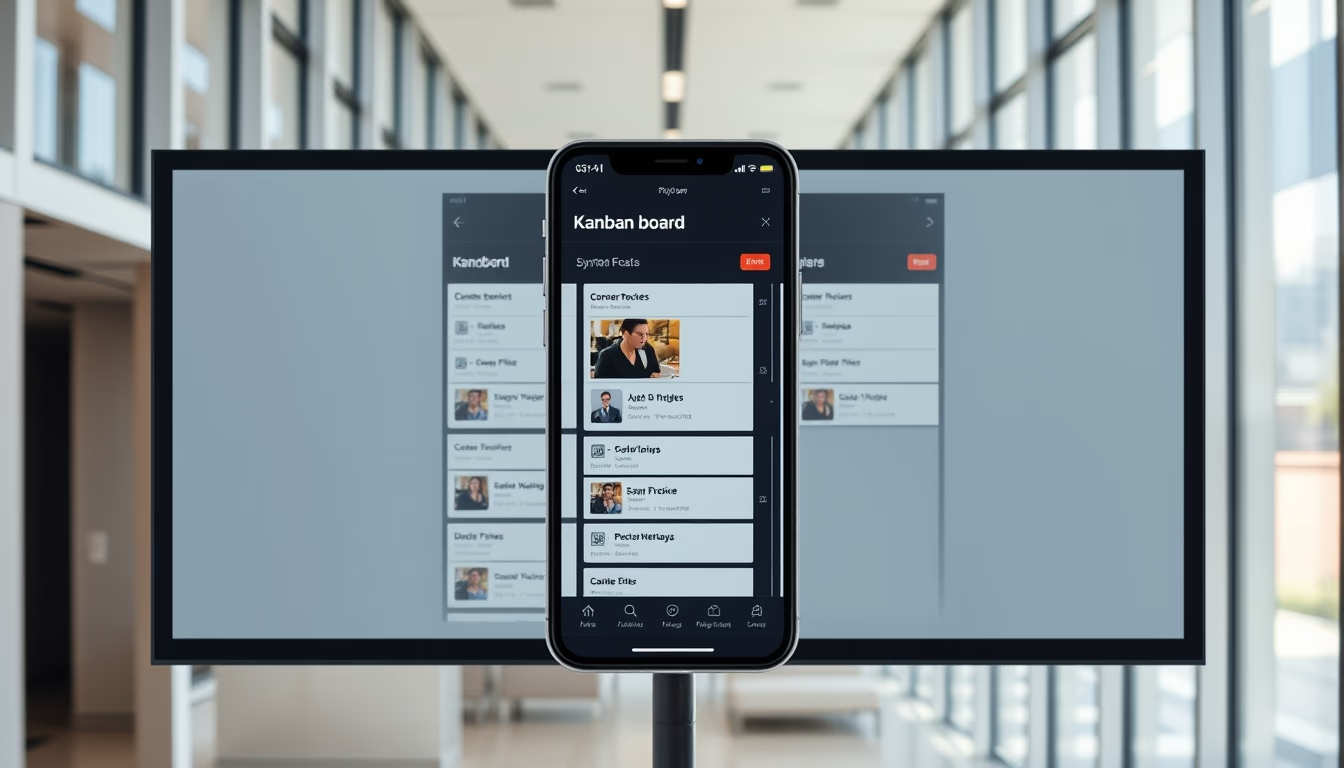
Kanban is a visual workflow management method originated from the Toyota Production System, now widely used in SaaS productivity apps and agile development.
About this subject
The Kanban method was developed in the 1940s by Toyota as part of the Toyota Production System, inspired by the supermarket supply system. The word "kanban" means "card" or "signal" in Japanese, referring to physical cards that indicated when an item should be produced or moved. The main goal was to reduce waste and improve efficiency through a continuous pull flow.
In software development and project management, Kanban was adapted by figures like David J. Anderson in the 2000s. Unlike Scrum, Kanban does not require fixed iterations (sprints); it focuses on limiting work in progress (WIP) and optimizing continuous flow. Digital Kanban boards in apps like Trello, Jira, or Asana replicate original principles with columns such as "To Do", "In Progress", and "Done", enabling teams to visualize bottlenecks and prioritize tasks collaboratively.
A core concept is the pull system: new tasks only enter the workflow when capacity is available, avoiding overload. Additionally, Kanban promotes transparency and continuous improvement (kaizen). In agile teams, it is often combined with other practices like Scrum (Scrumban) to offer flexibility without losing predictability. Companies like Spotify and Microsoft have adopted Kanban variations to manage software deliveries.
With the rise of SaaS tools, Kanban has become accessible to teams across various fields, not just IT. Today, it is used in marketing, HR, logistics, and even education. The trend for 2026 includes integration with artificial intelligence to predict cycle times and suggest optimizations, reinforcing Kanban's role as an agile and adaptable method.
Frequently Asked Questions
What is a Kanban board?
A Kanban board is a visual tool divided into columns representing workflow stages, such as "To Do", "In Progress", and "Done". Each task is a card that moves across columns, allowing the team to see progress and identify bottlenecks.
What are the principles of the Kanban method?
The principles include: visualizing the workflow, limiting work in progress (WIP), managing flow, making policies explicit, implementing feedback loops, and improving collaboratively (kaizen).
How is Kanban used in agile teams?
Agile teams use Kanban to plan and track tasks continuously. Unlike Scrum, there are no fixed sprints; tasks are pulled as capacity permits. Common metrics include lead time and throughput to measure efficiency.
Direct URL
https://pub-c7d6a6ea828543ac903a74a341ccb2e1.r2.dev/imagens/kanban-board-app-screen-architectural-photography-p5.avifHow to credit
Include a visible link back to UtilizAí. Copy one of the snippets below:
<a href="https://xn--utiliza-eza.com/en/midia/imagens/kanban-board-app-screen-architectural-photography-p5">Kanban board app screen</a> by <a href="https://xn--utiliza-eza.com">UtilizAí</a>, licensed under <a href="https://creativecommons.org/licenses/by/4.0/">CC BY 4.0</a>.
[Kanban board app screen](https://xn--utiliza-eza.com/en/midia/imagens/kanban-board-app-screen-architectural-photography-p5) by [UtilizAí](https://xn--utiliza-eza.com), CC BY 4.0
License: CC-BY-4.0