Kanban board app screen
1344×768 · AVIF · CC BY 4.0
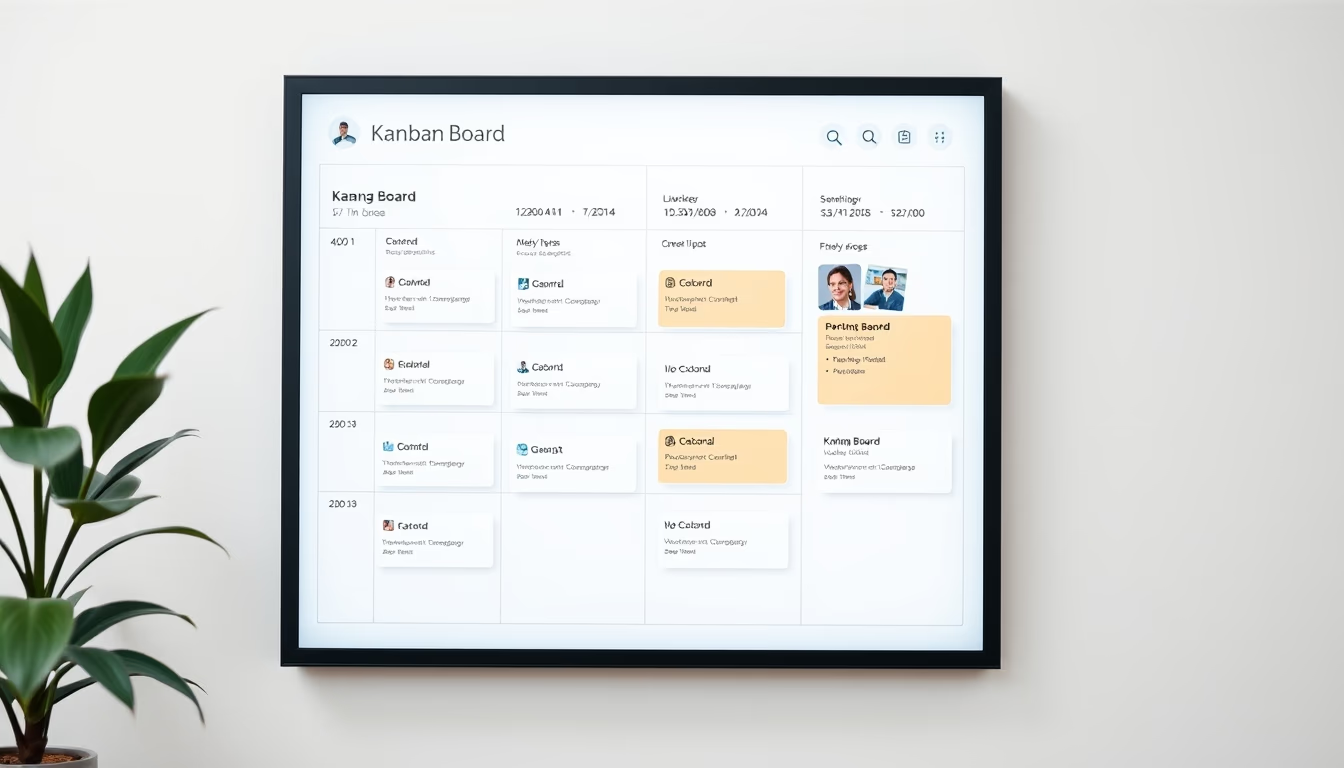
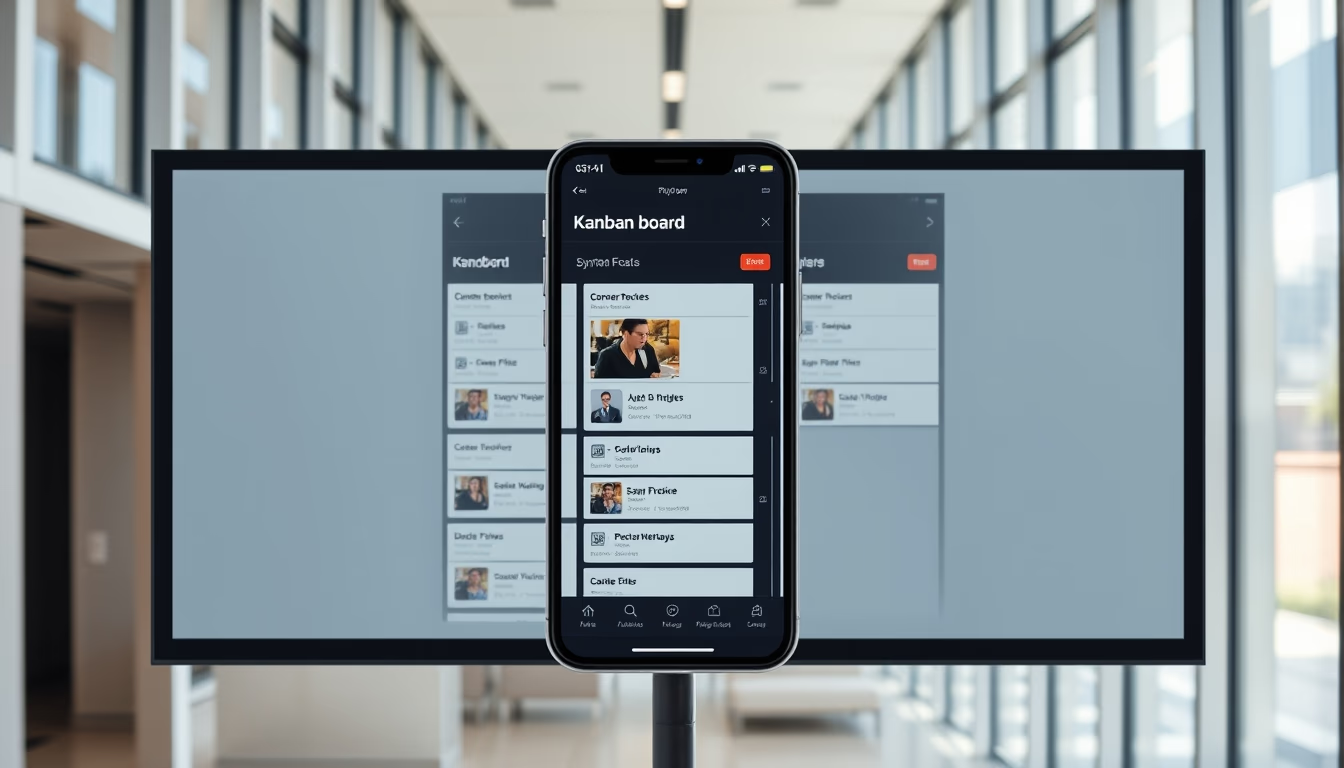
Screen of a Kanban board app, a visual workflow management tool inspired by the Toyota Production System.
About this subject
Kanban is a workflow management method that originated from the Toyota Production System in the 1940s. The Japanese term means "card" or "signal". Initially used for inventory and process control in manufacturing, it was adapted for software development and other fields by a Microsoft team in the early 2000s, popularized by David J. Anderson in his book "Kanban: Successful Evolutionary Change for Your Technology Organization".
A digital Kanban board displays columns representing process stages such as "To Do", "In Progress", and "Done". Each task is shown as a card that moves horizontally. Modern apps offer features like Work in Progress (WIP) limits, lead time and cycle time metrics, movement automation, and integrations with other tools. Platforms like Trello, Jira, and Asana have popularized the interface, but the original concept remains: visualize work, limit simultaneous items, and optimize flow.
In Brazil, Kanban is widely used in startups and large corporations, especially in IT and digital marketing. The methodology stands out for its flexibility: it does not require fixed sprints like Scrum, enabling continuous delivery. Studies show that teams adopting Kanban reduce delivery time by up to 40% and increase schedule predictability. The image depicts a typical interface with customizable columns, cards with priority labels, and integrated burndown charts, reflecting the digital evolution of the method.
Frequently Asked Questions
What is the difference between Kanban and Scrum?
Kanban is a continuous flow method with no fixed sprints, while Scrum uses time-boxed iterations and defined roles. Kanban is more flexible for priority changes.
What does WIP mean in Kanban?
WIP (Work in Progress) is the maximum number of tasks allowed simultaneously in a column. It helps reduce bottlenecks and improve workflow.
Is Kanban only suitable for IT?
No. Kanban is used in marketing, HR, logistics, and even education. Any repetitive or flow-based process can benefit from visualization and work-in-progress limits.
Direct URL
https://pub-c7d6a6ea828543ac903a74a341ccb2e1.r2.dev/imagens/kanban-board-app-screen-commercial-product-photography-p1.avifHow to credit
Include a visible link back to UtilizAí. Copy one of the snippets below:
<a href="https://xn--utiliza-eza.com/en/midia/imagens/kanban-board-app-screen-commercial-product-photography-p1">Kanban board app screen</a> by <a href="https://xn--utiliza-eza.com">UtilizAí</a>, licensed under <a href="https://creativecommons.org/licenses/by/4.0/">CC BY 4.0</a>.
[Kanban board app screen](https://xn--utiliza-eza.com/en/midia/imagens/kanban-board-app-screen-commercial-product-photography-p1) by [UtilizAí](https://xn--utiliza-eza.com), CC BY 4.0
License: CC-BY-4.0