Jigsaw puzzle pieces
1344×768 · AVIF · CC BY 4.0
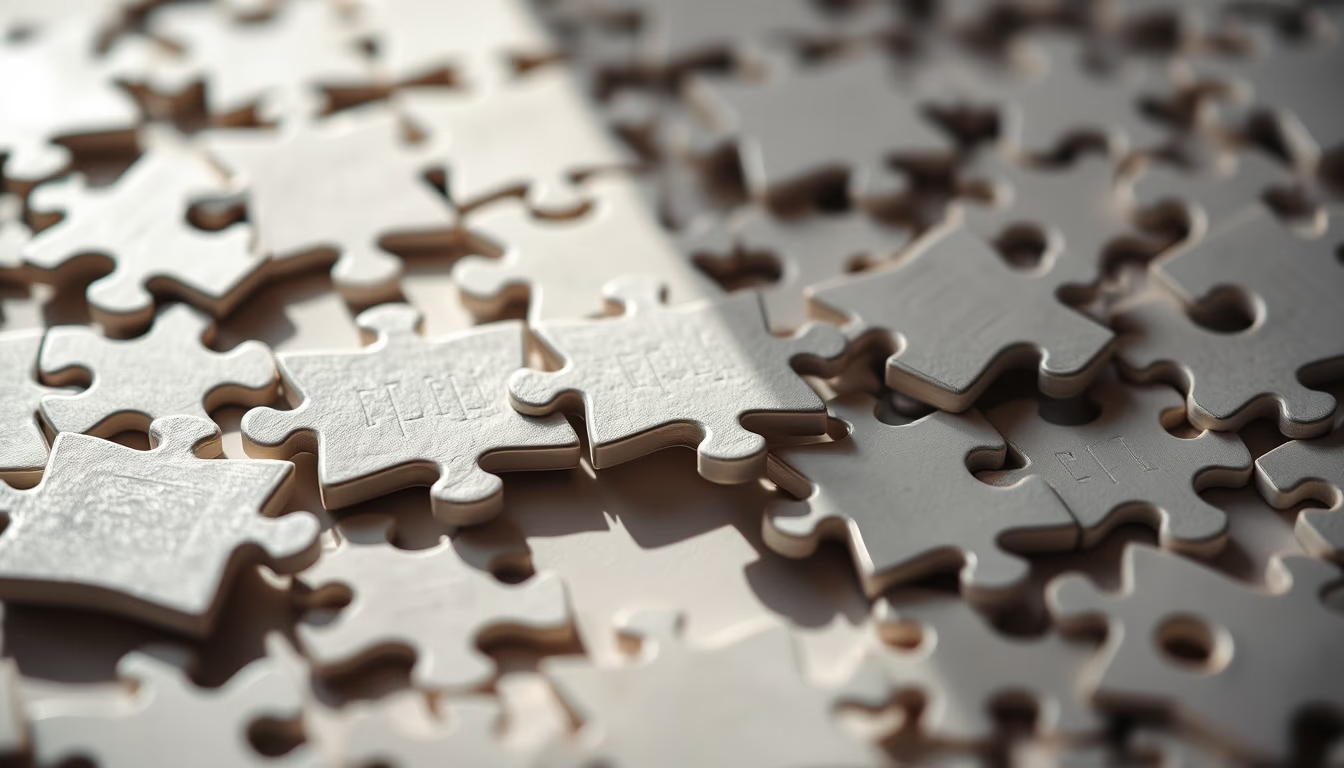
Jigsaw puzzles are a global pastime combining patience with spatial reasoning, offering proven cognitive benefits and a rich history.
About this subject
The modern jigsaw puzzle was invented in 1760 by English cartographer John Spilsbury, who mounted maps on wood and cut them along country borders. Initially used as an educational tool to teach geography, the pastime spread across Europe and gained popularity in the 20th century, especially during the Great Depression, when low cost and piece reusability attracted families. Today, the global puzzle market moves billions of dollars annually, with designs ranging from iconic landscapes to reproductions of fine art.
Jigsaw puzzle pieces are typically made from high-grammage cardboard, coated with a linen layer to reduce glare, but older versions used plywood. The traditional shape of a piece, with a tab and a blank, is called a 'tab and slot'. However, modern brands create random or themed cuts, such as animal silhouettes, to increase the challenge. Piece counts range from children's puzzles of 12 pieces to the world record: Ravensburger's 'Memorable Disney Moments' at 40,320 pieces.
Neuroscience studies indicate that assembling puzzles activates both brain hemispheres, improving short-term memory and fine motor coordination. The activity also reduces stress by inducing a mental flow state similar to meditation. In competitions, teams race to complete a 500-piece puzzle in the shortest time; the current record is under one hour. Piece-swapping clubs and specialized fairs, such as the World Puzzle Championship, keep the culture alive, especially among millennials seeking screen-free alternatives.
Interestingly, the word 'jigsaw' comes from a hand saw used to cut curved patterns, though industrial production today uses hydraulic presses and lasers. Brazil has an active puzzling community, with national brands like Toyster and Puzz producing images of Brazilian landscapes such as Christ the Redeemer and the Amazon. The COVID-19 pandemic boosted sales by over 40% globally, cementing the hobby as a low-cost, high-engagement family activity.
Frequently Asked Questions
What is the best way to store jigsaw puzzle pieces?
Store pieces in zip-lock bags or airtight containers, sorted by color or edges, to prevent loss and make reassembly easier.
How many pieces should a puzzle have to be challenging?
For adults, puzzles of 1000 to 2000 pieces offer a balance between difficulty and completion time. Above 3000 pieces, the challenge requires weeks or months of dedication.
Can jigsaw puzzles help prevent neurodegenerative diseases?
Studies suggest that brain-stimulating activities like puzzles may slow cognitive decline associated with Alzheimer's, but they do not prevent the disease on their own.
Direct URL
https://pub-c7d6a6ea828543ac903a74a341ccb2e1.r2.dev/imagens/jigsaw-puzzle-pieces-magazine-editorial-p0.avifHow to credit
Include a visible link back to UtilizAí. Copy one of the snippets below:
<a href="https://xn--utiliza-eza.com/en/midia/imagens/jigsaw-puzzle-pieces-magazine-editorial-p0">Jigsaw puzzle pieces</a> by <a href="https://xn--utiliza-eza.com">UtilizAí</a>, licensed under <a href="https://creativecommons.org/licenses/by/4.0/">CC BY 4.0</a>.
[Jigsaw puzzle pieces](https://xn--utiliza-eza.com/en/midia/imagens/jigsaw-puzzle-pieces-magazine-editorial-p0) by [UtilizAí](https://xn--utiliza-eza.com), CC BY 4.0
License: CC-BY-4.0