Jigsaw puzzle pieces
1344×768 · AVIF · CC BY 4.0
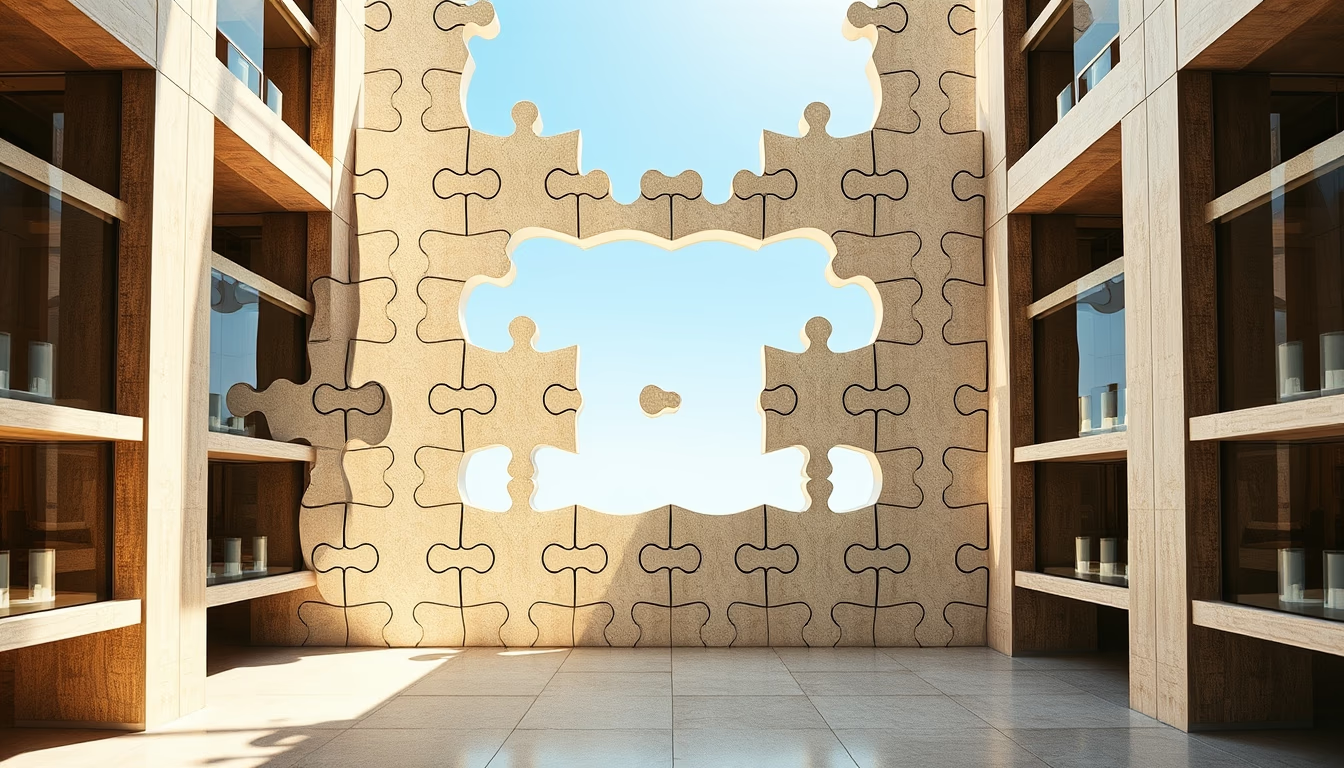
Jigsaw puzzle pieces interlock to form complete images, a pastime that stimulates the mind and dates back to the 18th century.
About this subject
Modern jigsaw puzzles originated in the 18th century when British cartographer John Spilsbury created the first "dissected map" in 1760, mounting a map on wood and cutting along country borders. Initially used as an educational tool for teaching geography, puzzles evolved into a popular pastime worldwide. Mass production began in the 20th century with cardboard and precision die-cutting, enabling complex and varied designs.
Beyond entertainment, assembling puzzles offers proven cognitive benefits: improved short-term memory, concentration, and problem-solving skills. Studies show the activity engages both brain hemispheres, exercising logic and creativity simultaneously. Competitive events like the World Jigsaw Puzzle Championship feature teams racing to complete thousands of pieces in record time.
The connection to architecture is significant: many puzzles depict famous landmarks such as the Taj Mahal, Eiffel Tower, or entire cityscapes, requiring attention to architectural details. The largest puzzle ever produced, by Ravensburger, contains 40,320 pieces and showcases 10 iconic scenes from New York, Tokyo, and other global cities. Collectors seek limited editions featuring photographs of historic buildings, blending the passion for puzzles and architecture.
Frequently Asked Questions
What is the origin of jigsaw puzzles?
The first jigsaw puzzle was created in 1760 by British cartographer John Spilsbury, who mounted a map on wood and cut it into pieces along country borders for educational purposes.
How many pieces does the largest jigsaw puzzle have?
The largest commercially available puzzle has 40,320 pieces, produced by Ravensburger, featuring images of 10 globally famous urban scenes.
What are the cognitive benefits of assembling jigsaw puzzles?
Assembling puzzles improves short-term memory, concentration, fine motor skills, and problem-solving abilities, engaging both brain hemispheres.
Direct URL
https://pub-c7d6a6ea828543ac903a74a341ccb2e1.r2.dev/imagens/jigsaw-puzzle-pieces-architectural-photography-p5.avifHow to credit
Include a visible link back to UtilizAí. Copy one of the snippets below:
<a href="https://xn--utiliza-eza.com/en/midia/imagens/jigsaw-puzzle-pieces-architectural-photography-p5">Jigsaw puzzle pieces</a> by <a href="https://xn--utiliza-eza.com">UtilizAí</a>, licensed under <a href="https://creativecommons.org/licenses/by/4.0/">CC BY 4.0</a>.
[Jigsaw puzzle pieces](https://xn--utiliza-eza.com/en/midia/imagens/jigsaw-puzzle-pieces-architectural-photography-p5) by [UtilizAí](https://xn--utiliza-eza.com), CC BY 4.0
License: CC-BY-4.0