Jet ski water spray
1344×768 · AVIF · CC BY 4.0
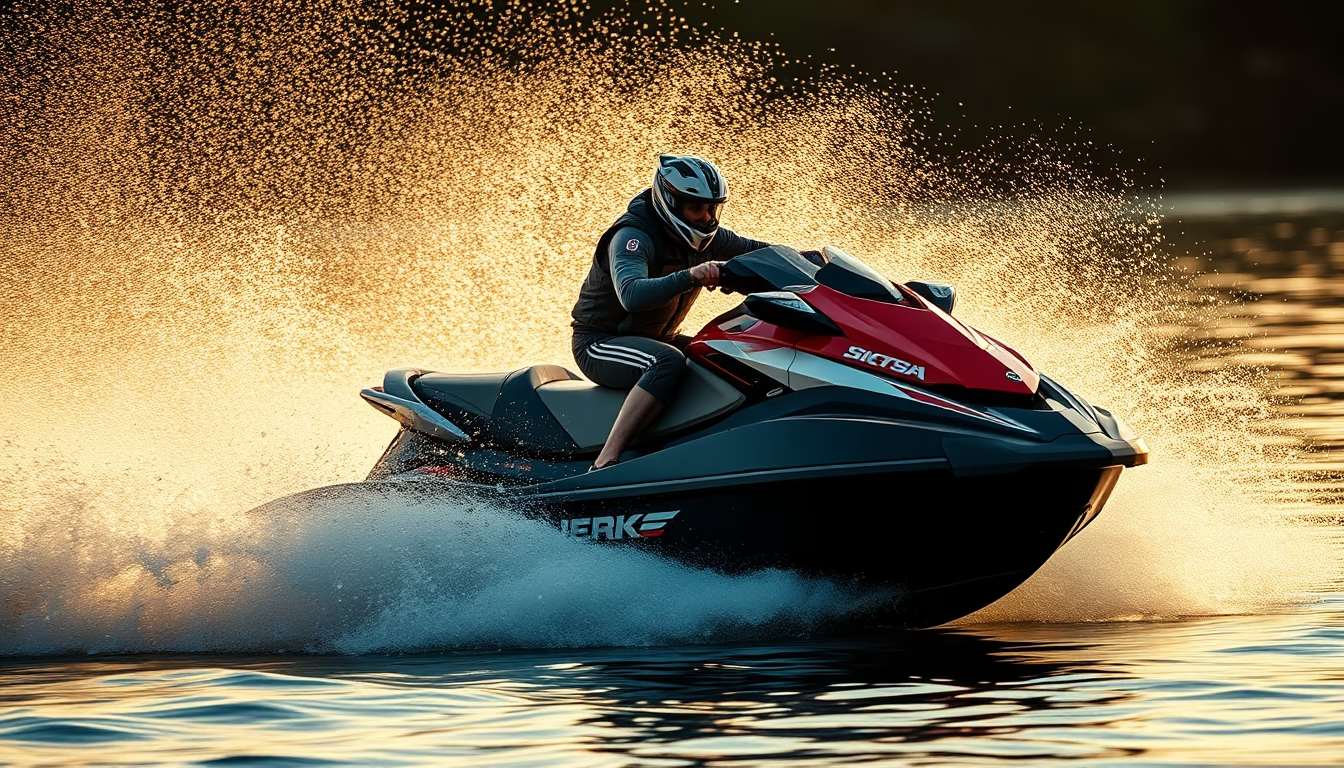
The water spray kicked up by a jet ski combines mechanical power and fluid dynamics, reflecting the adrenaline of water sports.
About this subject
A jet ski, also known as a personal watercraft (PWC), is a small vessel designed for high speed and maneuverability. Its operation relies on an internal combustion engine driving a jet pump: water is drawn through an intake in the hull and expelled at high pressure through a rear nozzle, generating thrust. When the rider accelerates or executes sharp turns, the turbulent flow breaks the surface, creating curtains of spray that can reach several meters in height. This visual display is both a byproduct of power and a performance indicator: experienced riders use the direction and intensity of the spray to adjust their posture and speed.
Jet skiing dates back to the 1970s, when Kawasaki launched the first commercial model, the JS400. Since then, the industry has evolved with more powerful, stable, and safer models. In Brazil, beaches such as those in Florianópolis and Rio de Janeiro are popular spots for rentals and tours, but recreational use requires adherence to naval regulations: wearing a life jacket, maintaining a safe distance from swimmers, and respecting speed limits near the coast. Although photogenic, the water spray can reduce visibility for the rider and other boaters, demanding extra caution.
Interestingly, the height and shape of the spray depend on factors such as engine power, nozzle angle (adjustable in some models), and sea conditions. In calm water, the jet tends to be higher and more dispersed; in waves, it fragments into fine droplets that evaporate quickly. For photographers, capturing this moment requires a shutter speed above 1/1000s to freeze the droplets, along with a low angle to highlight the contrast between white foam and blue water. This technique challenges and attracts action and fine art photography enthusiasts.
Frequently Asked Questions
What is the top speed of a recreational jet ski?
Most modern jet skis reach between 80 and 110 km/h (50, 68 mph), depending on the model and sea conditions. High-performance models can exceed 120 km/h (75 mph).
Do you need a license to ride a jet ski in Brazil?
Yes, it is mandatory to have an Amateur Sailor License (CHA) at the Arrais level or higher, plus vessel registration with the Brazilian Navy.
Why is the water spray from a jet ski so tall?
The tall spray results from the combination of high engine power and turbulent flow from the jet pump. Sharp maneuvers and rapid acceleration increase pressure and water projection.
Direct URL
https://pub-c7d6a6ea828543ac903a74a341ccb2e1.r2.dev/imagens/jet-ski-water-spray-fine-art-photography-p5.avifHow to credit
Include a visible link back to UtilizAí. Copy one of the snippets below:
<a href="https://xn--utiliza-eza.com/en/midia/imagens/jet-ski-water-spray-fine-art-photography-p5">Jet ski water spray</a> by <a href="https://xn--utiliza-eza.com">UtilizAí</a>, licensed under <a href="https://creativecommons.org/licenses/by/4.0/">CC BY 4.0</a>.
[Jet ski water spray](https://xn--utiliza-eza.com/en/midia/imagens/jet-ski-water-spray-fine-art-photography-p5) by [UtilizAí](https://xn--utiliza-eza.com), CC BY 4.0
License: CC-BY-4.0