Jet ski water spray
1344×768 · AVIF · CC BY 4.0
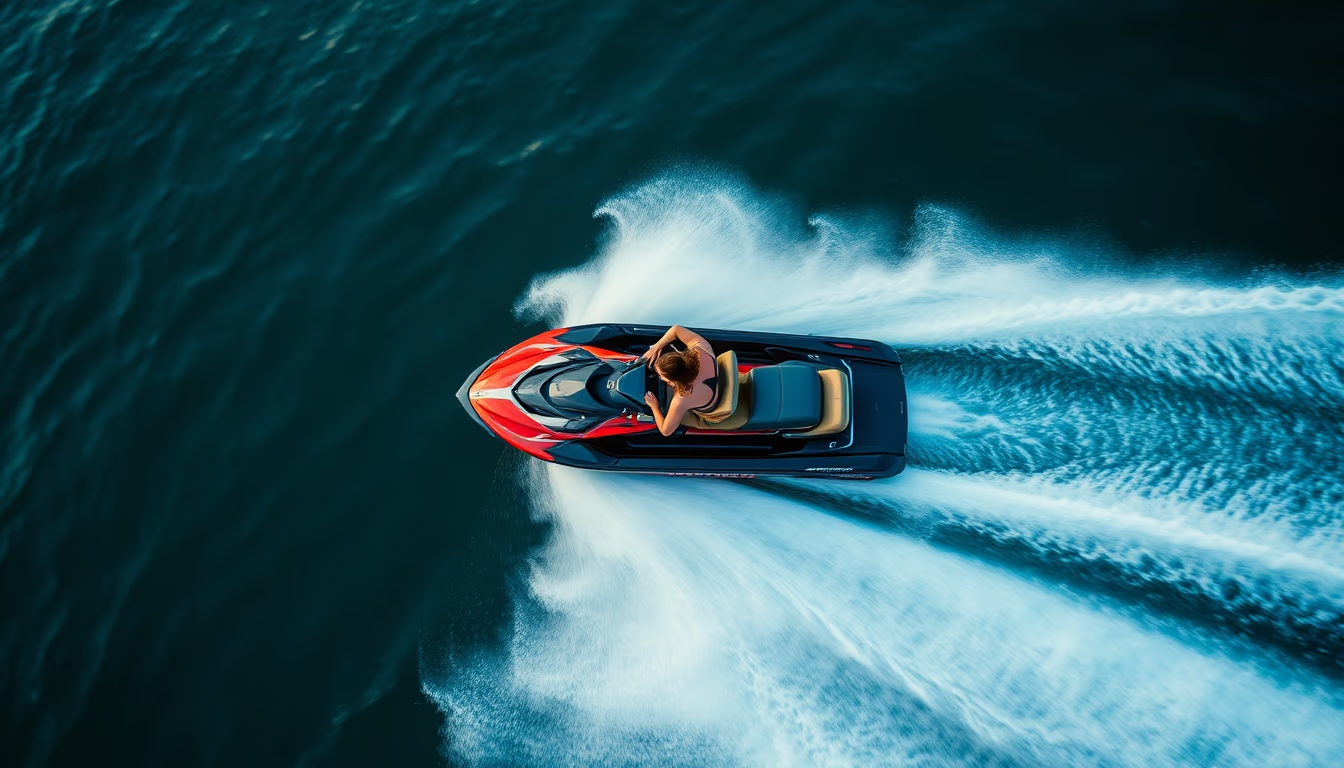
Jet ski lifting water spray at high speed, a common scene in water sports and motorized leisure.
About this subject
The jet ski, also known as a personal watercraft, gained popularity in the 1970s. Its design allows high maneuverability and speeds exceeding 100 km/h. The characteristic water spray forms when the motor's impeller pushes water backward, creating a jet that mixes with air and produces a curtain of droplets. This phenomenon intensifies during sharp turns or sudden accelerations, when the jet ski lifts its bow and water is thrown sideways.
Jet skis are widely used for recreation on lakes, rivers, and seas, as well as in competitive sports such as aquatic freestyle and endurance races. Modern models feature safety systems like a kill switch attached to the rider, which shuts off the engine if they fall off. Regular maintenance of the propulsion system is crucial to prevent engine damage and ensure proper spray formation, which helps cool internal components.
In Brazil, jet ski use is regulated by the Brazilian Navy, requiring licensing and registration. Busy beaches often have designated areas for the activity to avoid accidents with swimmers. The water spray is not just a visual effect; it indicates engine power and propulsion efficiency. Experienced riders use the spray angle to adjust posture and improve maneuver performance.
While jet skis offer excitement and freedom, there are environmental concerns regarding noise and water pollution from fuels and lubricants. Manufacturers have therefore invested in electric models, which reduce noise impact and eliminate direct emissions. The water spray in these models tends to be less intense due to the absence of exhaust gases, but is still present from the mechanical action of the impeller.
Frequently Asked Questions
Why does a jet ski kick up so much water?
A jet ski kicks up water because its engine drives an impeller that pushes water backward at high pressure. This jet of water mixes with air as it exits the nozzle, creating visible spray, especially during acceleration and turns.
What is the top speed of a jet ski?
Top speeds vary by model, but many high-performance jet skis can exceed 100 km/h. Common recreational models reach between 70 and 90 km/h.
Do you need a license to ride a jet ski in Brazil?
Yes, a Amateur Boating License (Carteira de Habilitação de Amador) issued by the Brazilian Navy is required to operate a jet ski in Brazilian waters. This requirement aims to ensure the safety of riders and swimmers.
Direct URL
https://pub-c7d6a6ea828543ac903a74a341ccb2e1.r2.dev/imagens/jet-ski-water-spray-aerial-drone-shot-p2.avifHow to credit
Include a visible link back to UtilizAí. Copy one of the snippets below:
<a href="https://xn--utiliza-eza.com/en/midia/imagens/jet-ski-water-spray-aerial-drone-shot-p2">Jet ski water spray</a> by <a href="https://xn--utiliza-eza.com">UtilizAí</a>, licensed under <a href="https://creativecommons.org/licenses/by/4.0/">CC BY 4.0</a>.
[Jet ski water spray](https://xn--utiliza-eza.com/en/midia/imagens/jet-ski-water-spray-aerial-drone-shot-p2) by [UtilizAí](https://xn--utiliza-eza.com), CC BY 4.0
License: CC-BY-4.0