Japanese kanji shodo
1344×768 · AVIF · CC BY 4.0
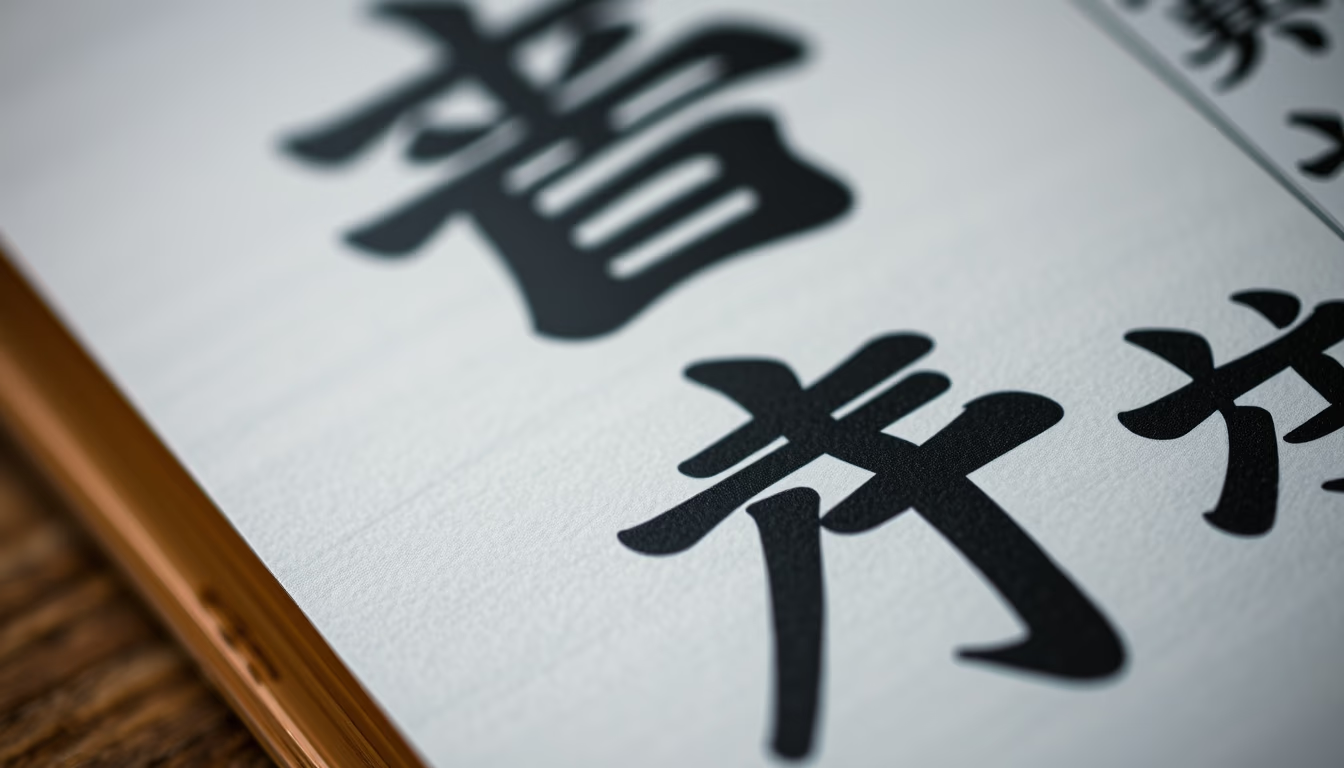
Shodō, the Japanese art of kanji calligraphy, combines ancient technique and spiritual expression in every brushstroke.
About this subject
Shodō is a traditional Japanese art form that involves the elegant writing of kanji, hiragana, or katakana characters using a brush and sumi ink. Originating in China over two thousand years ago, it was introduced to Japan alongside Buddhism and the writing system. The word shodō literally means the way of writing, reflecting its philosophical and meditative dimension. Unlike Western calligraphy, shodō values not only legibility but also the energy, rhythm, and personality of each stroke.
Each shodō session follows a careful ritual: the practitioner prepares the ink by grinding a sumi stick on a suzuri stone with water, then adjusts the brush and focuses the mind before executing the character in a single uninterrupted motion. Posture, breathing, and state of mind are considered essential for the final outcome. Several styles exist, such as kaisho (regular script), gyōsho (semi-cursive), and sōsho (cursive), each with increasing levels of abstraction and fluidity.
In Japan, shodō is taught in schools as a compulsory subject and also practiced as a hobby or artistic discipline. Exhibitions and competitions are common, and recognized masters receive titles like shihan. Beyond aesthetics, Japanese calligraphy is used in ceremonies, temple emblems, and even contemporary tattoos, though its original meaning is rooted in the pursuit of harmony between body and mind. A macro close-up of a brushstroke reveals details of the washi paper texture and ink distribution, highlighting the complexity hidden in a simple black line on white background.
Frequently Asked Questions
What are the basic materials needed for shodō?
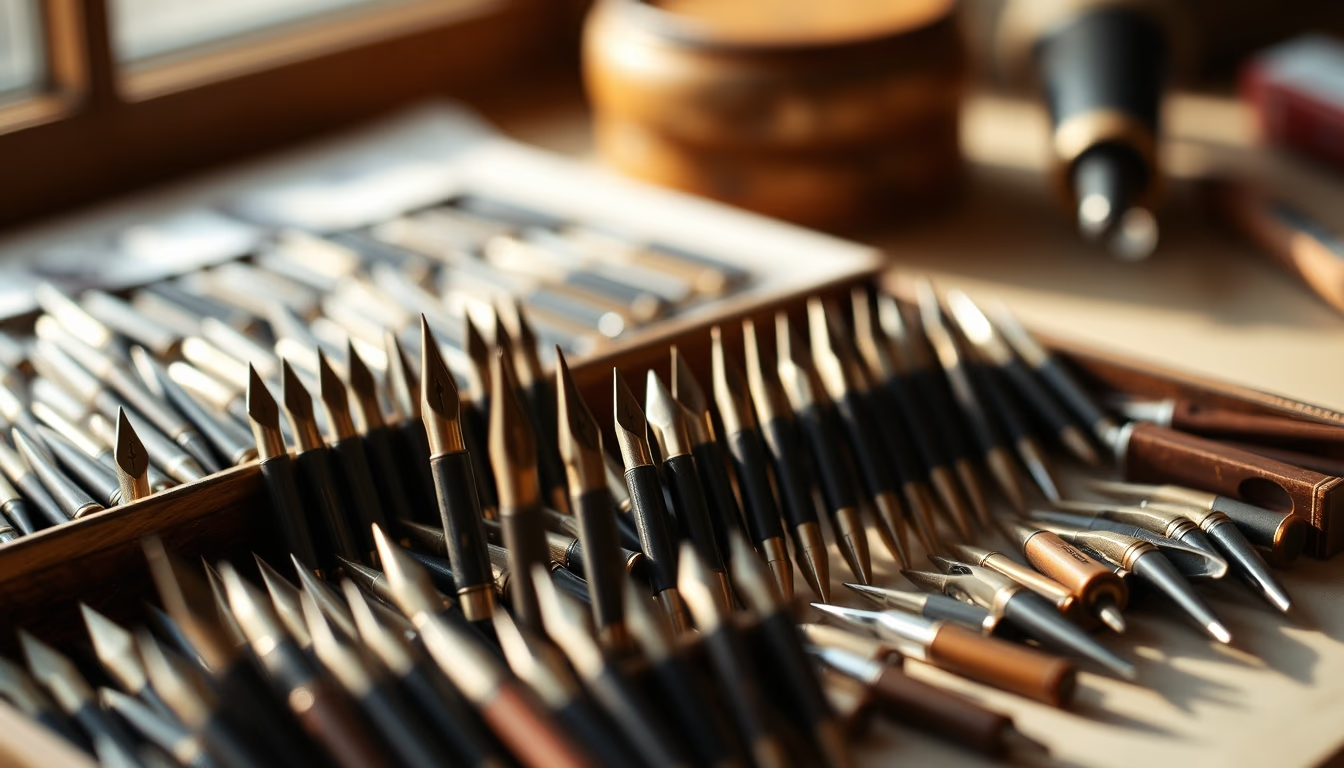
The four treasures of shodō are the brush (fude), paper (washi), ink stick (sumi), and ink stone (suzuri). Additionally, a paperweight (bunchin) and a felt mat (shitajiki) are used.
How is shodō different from Western calligraphy?
Shodō emphasizes continuous movement and the expression of life energy (ki), while Western calligraphy focuses more on form and legibility. In shodō, each stroke is made in one uninterrupted motion, and the artist's breathing influences the result.
Do I need to know Japanese to practice shodō?
It is not required, but understanding the meaning of characters helps with composition. Many foreign practitioners learn basic strokes and concentrate on technique and the meditative aspect.
Direct URL
https://pub-c7d6a6ea828543ac903a74a341ccb2e1.r2.dev/imagens/japanese-kanji-shodo-macro-closeup-fresh6.avifHow to credit
Include a visible link back to UtilizAí. Copy one of the snippets below:
<a href="https://xn--utiliza-eza.com/en/midia/imagens/japanese-kanji-shodo-macro-closeup-fresh6">Japanese kanji shodo</a> by <a href="https://xn--utiliza-eza.com">UtilizAí</a>, licensed under <a href="https://creativecommons.org/licenses/by/4.0/">CC BY 4.0</a>.
[Japanese kanji shodo](https://xn--utiliza-eza.com/en/midia/imagens/japanese-kanji-shodo-macro-closeup-fresh6) by [UtilizAí](https://xn--utiliza-eza.com), CC BY 4.0
License: CC-BY-4.0