Indian devanagari sanskrit
1344×768 · AVIF · CC BY 4.0
Devanagari is the script used to write Sanskrit, one of the oldest classical languages of India, originating in the 7th century.
About this subject
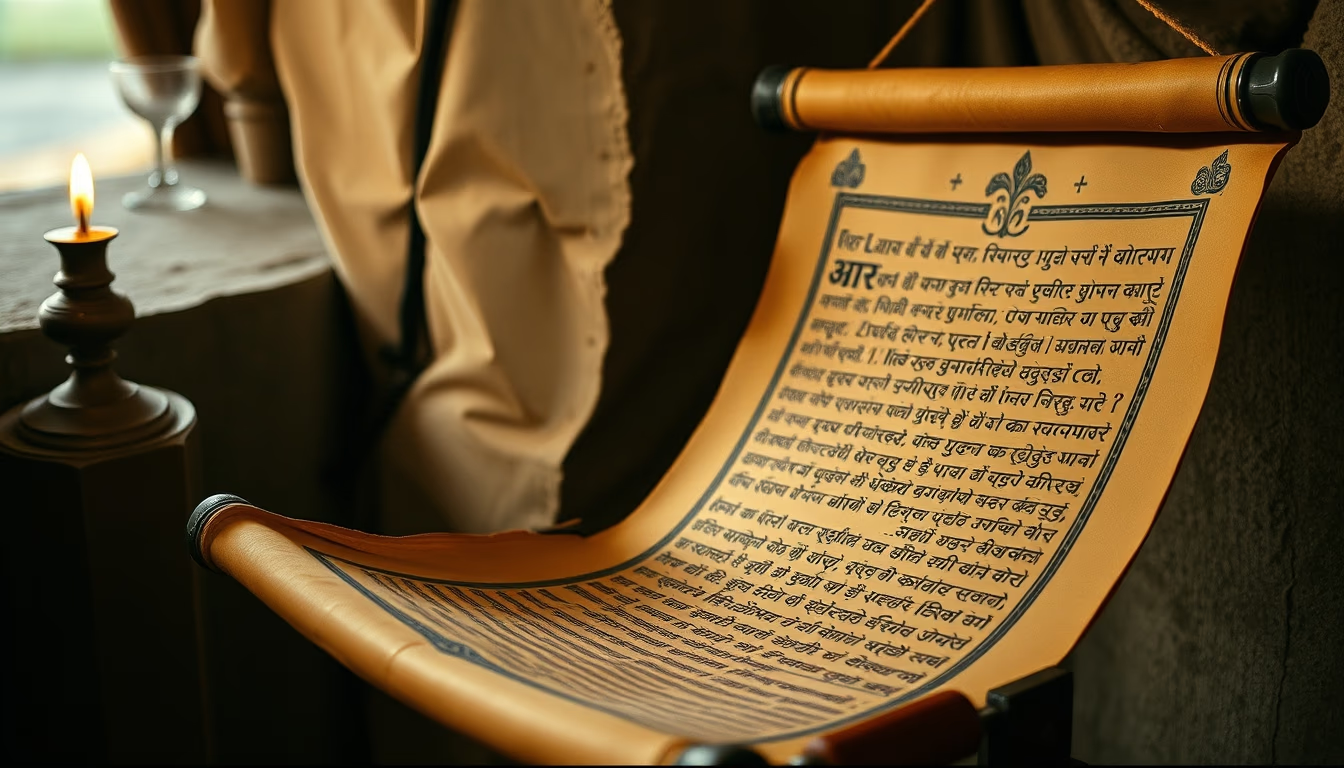
Devanagari is an abugida script that evolved from the Brahmi script around the 7th century CE. It is primarily used for Sanskrit, but also for Hindi, Marathi, Nepali, and other Indo-Aryan languages. Its most distinctive feature is the continuous horizontal line, called shirorekha, which connects the letters at the top. The script comprises 14 vowels and 33 consonants, each representing a complete syllable when combined with inherent vowels or diacritics.
The significance of Devanagari is deeply tied to Sanskrit, the liturgical language of Hinduism, Buddhism, and Jainism. Sacred texts such as the Vedas, Upanishads, Ramayana, and Mahabharata were originally composed in Sanskrit and later transcribed into Devanagari. This script preserved philosophical, scientific, and literary knowledge for millennia. Today, Devanagari is the official script for Hindi in India and is widely taught in schools, keeping the tradition alive.
Calligraphy in Devanagari is a refined art, with regional and stylistic variations. Unlike the Latin alphabet, each character has a unique structure and specific proportions, requiring precision and fluidity. The script is written left-to-right and has no uppercase or lowercase letters, but aesthetics depend on the balance between curvilinear forms and the horizontal line. Master calligraphers develop personal styles, combining tradition and modernity to create works ranging from religious manuscripts to contemporary designs.
Interestingly, the name Devanagari means 'divine city script', referring to its celestial origin in Hindu mythology. Despite its antiquity, the script remains relevant: it is used in transliterations of ancient texts for academic study and in digital interfaces, with Unicode fonts widely available. Its resilience demonstrates cultural adaptability while preserving historical essence.
Frequently Asked Questions
What is the Devanagari script?
Devanagari is an abugida script used for Sanskrit, Hindi, and other Indian languages, characterized by a continuous horizontal line at the top of the letters.
How is Devanagari different from the Latin alphabet?
Unlike the Latin alphabet, Devanagari is an abugida where each character represents a syllable with an inherent vowel, modified by diacritics. It also has no uppercase or lowercase letters.
Why is Sanskrit important?
Sanskrit is the classical language of sacred texts in Hinduism, Buddhism, and Jainism, such as the Vedas and Ramayana, and has influenced many modern Indian languages.
Direct URL
https://pub-c7d6a6ea828543ac903a74a341ccb2e1.r2.dev/imagens/indian-devanagari-sanskrit-documentary-nature-style-fresh9.avifHow to credit
Include a visible link back to UtilizAí. Copy one of the snippets below:
<a href="https://xn--utiliza-eza.com/en/midia/imagens/indian-devanagari-sanskrit-documentary-nature-style-fresh9">Indian devanagari sanskrit</a> by <a href="https://xn--utiliza-eza.com">UtilizAí</a>, licensed under <a href="https://creativecommons.org/licenses/by/4.0/">CC BY 4.0</a>.
[Indian devanagari sanskrit](https://xn--utiliza-eza.com/en/midia/imagens/indian-devanagari-sanskrit-documentary-nature-style-fresh9) by [UtilizAí](https://xn--utiliza-eza.com), CC BY 4.0
License: CC-BY-4.0