Indian devanagari sanskrit
1344×768 · AVIF · CC BY 4.0
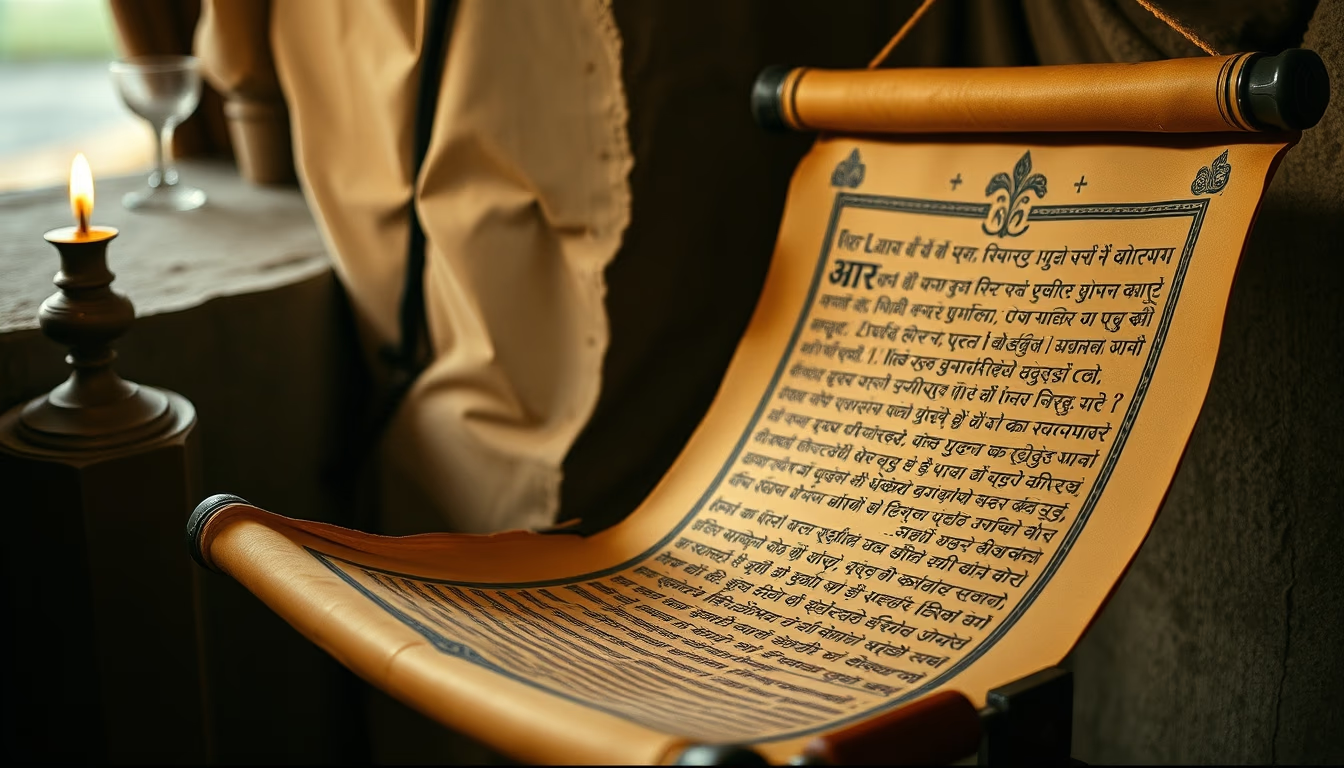
Devanagari is the writing system used for Sanskrit and several Indian languages, known for its continuous horizontal line and ancient origins.
About this subject
Devanagari is an abugida writing system derived from the Brahmi script, developing around the 7th century CE. It is used for Sanskrit, Hindi, Marathi, and several other Indo-Aryan languages. The name means "script of the city of gods," reflecting its association with sacred texts. A distinctive feature is the horizontal line at the top of characters, known as shirorekha, which connects letters into words.
In India, Devanagari inscriptions appear on temples, monuments, and ancient manuscripts. Classical Hindu texts such as the Vedas and Upanishads were originally composed in Sanskrit and preserved in this script. Calligraphy in Devanagari is an appreciated art form, with precise strokes and proportions.
Sanskrit is an ancient Indo-European language, serving as the liturgical language of Hinduism and one of India's classical languages. Though no longer a mother tongue, it has greatly influenced South Asian languages. Devanagari is the primary script for representing Sanskrit, enabling the reading of millennia-old texts.
Interestingly, Devanagari is also used for non-Indian languages like Nepali. In the digital age, Devanagari fonts are widely supported, facilitating written communication across regions. The combination of Devanagari script and Sanskrit language represents a priceless cultural heritage, still studied and admired worldwide.
Frequently Asked Questions
What is the difference between Devanagari and Sanskrit?
Devanagari is a writing system, while Sanskrit is a language. Sanskrit can be written in Devanagari but also in other scripts like Latin. Devanagari is used for multiple languages, not just Sanskrit.
How do you write in Devanagari?
Devanagari is an abugida: each basic character represents a consonant followed by the inherent vowel 'a'. Vowels are indicated with diacritics. Writing is left to right, with a continuous horizontal line on top.
Where can you find inscriptions in Devanagari?
Devanagari inscriptions are common on Hindu temples, historical monuments, ancient manuscripts, and signage in India. Famous examples include inscriptions at Khajuraho temples and the pillars of Ashoka (though those are in Brahmi).
Direct URL
https://pub-c7d6a6ea828543ac903a74a341ccb2e1.r2.dev/imagens/indian-devanagari-sanskrit-architectural-photography-fresh11.avifHow to credit
Include a visible link back to UtilizAí. Copy one of the snippets below:
<a href="https://xn--utiliza-eza.com/en/midia/imagens/indian-devanagari-sanskrit-architectural-photography-fresh11">Indian devanagari sanskrit</a> by <a href="https://xn--utiliza-eza.com">UtilizAí</a>, licensed under <a href="https://creativecommons.org/licenses/by/4.0/">CC BY 4.0</a>.
[Indian devanagari sanskrit](https://xn--utiliza-eza.com/en/midia/imagens/indian-devanagari-sanskrit-architectural-photography-fresh11) by [UtilizAí](https://xn--utiliza-eza.com), CC BY 4.0
License: CC-BY-4.0