Incubator lab petri
1344×768 · AVIF · CC BY 4.0

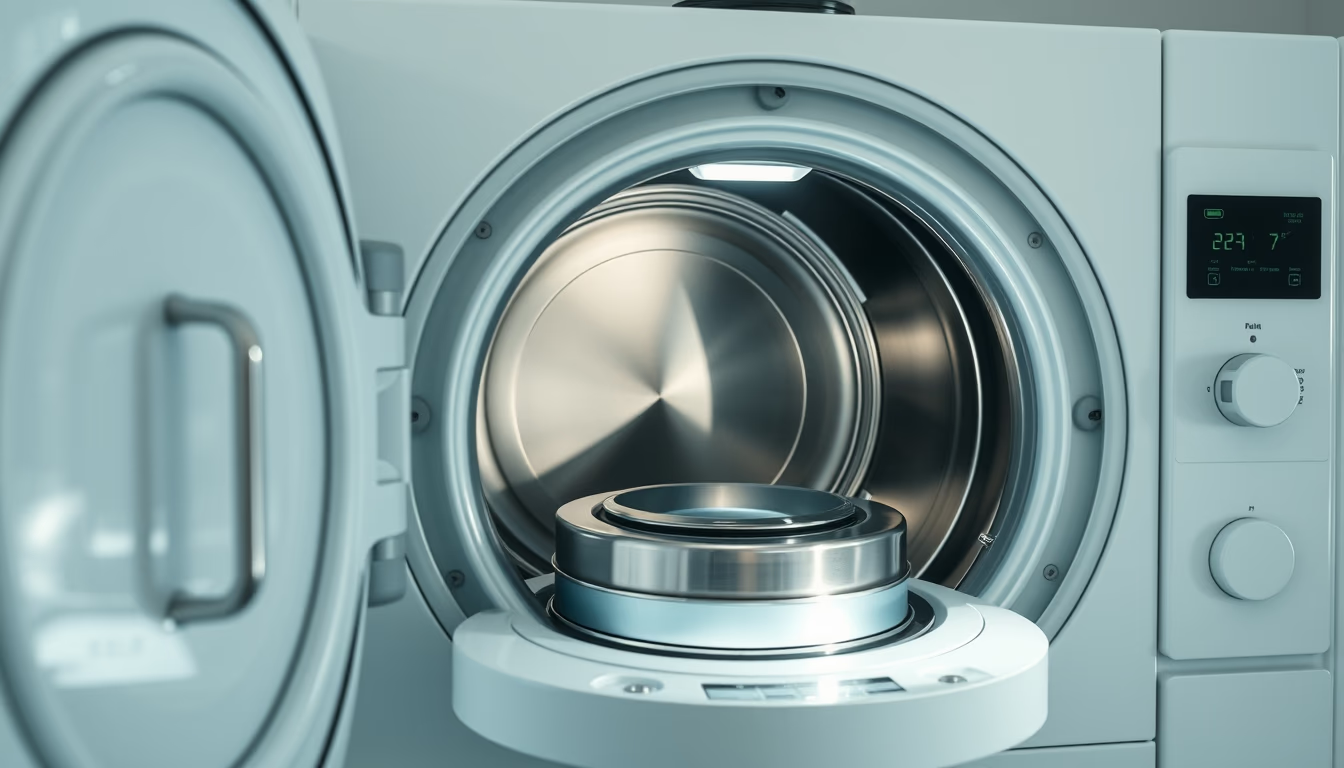
Laboratory incubator for culturing microorganisms on Petri dishes, essential equipment in microbiology and biotechnology.
About this subject
The incubator is a crucial piece of equipment in microbiology, biotechnology, and biomedical research laboratories. Its primary function is to provide controlled conditions of temperature, humidity, and sometimes CO2 concentration for the growth of microorganisms, cells, or tissues. Petri dishes, invented by German bacteriologist Julius Richard Petri in 1887, are used in conjunction with the incubator to cultivate bacteria, fungi, and other microorganisms on solid or semisolid culture media.
Typical incubation temperatures vary by microorganism: mesophilic bacteria such as Escherichia coli grow at 37°C, while yeasts may be incubated at 30°C. Modern incubators feature precise temperature control with deviations of ±0.1°C, along with air circulation systems for uniformity. Internal lighting, when present, is usually cool to avoid interfering with growth. For animal cells, the atmosphere may be enriched with 5% CO2 to maintain medium pH.
The importance of incubators extends beyond cultivation: they are used in antibiotic sensitivity testing (antibiograms), vaccine production, genetic research, and quality control in the food and pharmaceutical industries. The term "incubator" also applies to equipment for hatching eggs in poultry, but in the laboratory context the focus is on microbial growth. The combination with Petri dishes allows observation of isolated colonies, essential for microorganism identification and counting.
Frequently Asked Questions
What is the standard temperature for a laboratory incubator?
The most common standard temperature is 37°C, ideal for mesophilic bacteria such as Escherichia coli. However, other temperatures can be set depending on the microorganism: 30°C for yeasts, 25°C for filamentous fungi, or up to 42°C for some thermophiles.
What does CO2 control mean in incubators?
CO2 refers to carbon dioxide. Incubators with CO2 control are used for animal cell culture, where a 5% CO2 atmosphere helps maintain the pH of the culture medium stable through the bicarbonate buffering system.
Why are Petri dishes placed upside down in the incubator?
Petri dishes are incubated with the lid down (inverted) to prevent condensation droplets from falling onto the culture medium, which could contaminate the surface and hinder colony growth.
Direct URL
https://pub-c7d6a6ea828543ac903a74a341ccb2e1.r2.dev/imagens/incubator-lab-petri-rembrandt-lighting-dramatic-shadows-fresh13.avifHow to credit
Include a visible link back to UtilizAí. Copy one of the snippets below:
<a href="https://xn--utiliza-eza.com/en/midia/imagens/incubator-lab-petri-rembrandt-lighting-dramatic-shadows-fresh13">Incubator lab petri</a> by <a href="https://xn--utiliza-eza.com">UtilizAí</a>, licensed under <a href="https://creativecommons.org/licenses/by/4.0/">CC BY 4.0</a>.
[Incubator lab petri](https://xn--utiliza-eza.com/en/midia/imagens/incubator-lab-petri-rembrandt-lighting-dramatic-shadows-fresh13) by [UtilizAí](https://xn--utiliza-eza.com), CC BY 4.0
License: CC-BY-4.0