Incubator lab petri
1344×768 · AVIF · CC BY 4.0
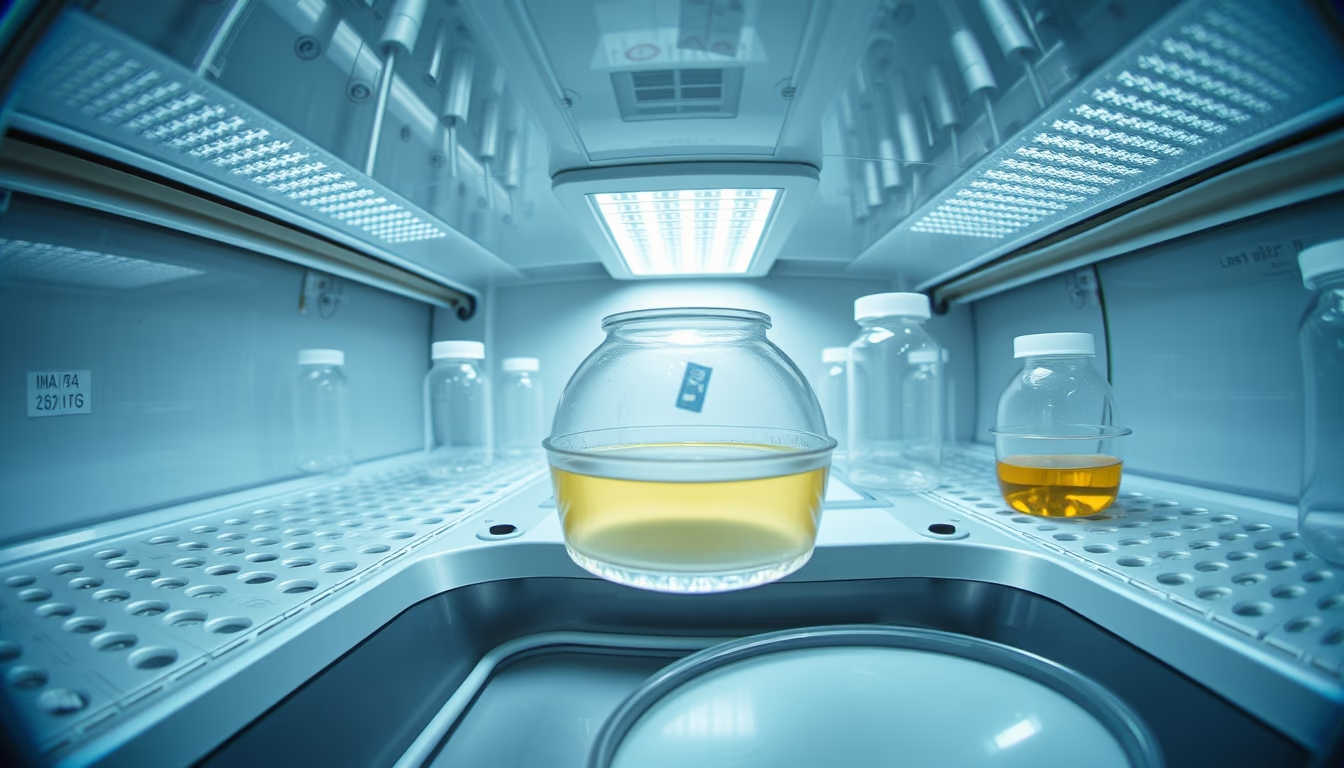
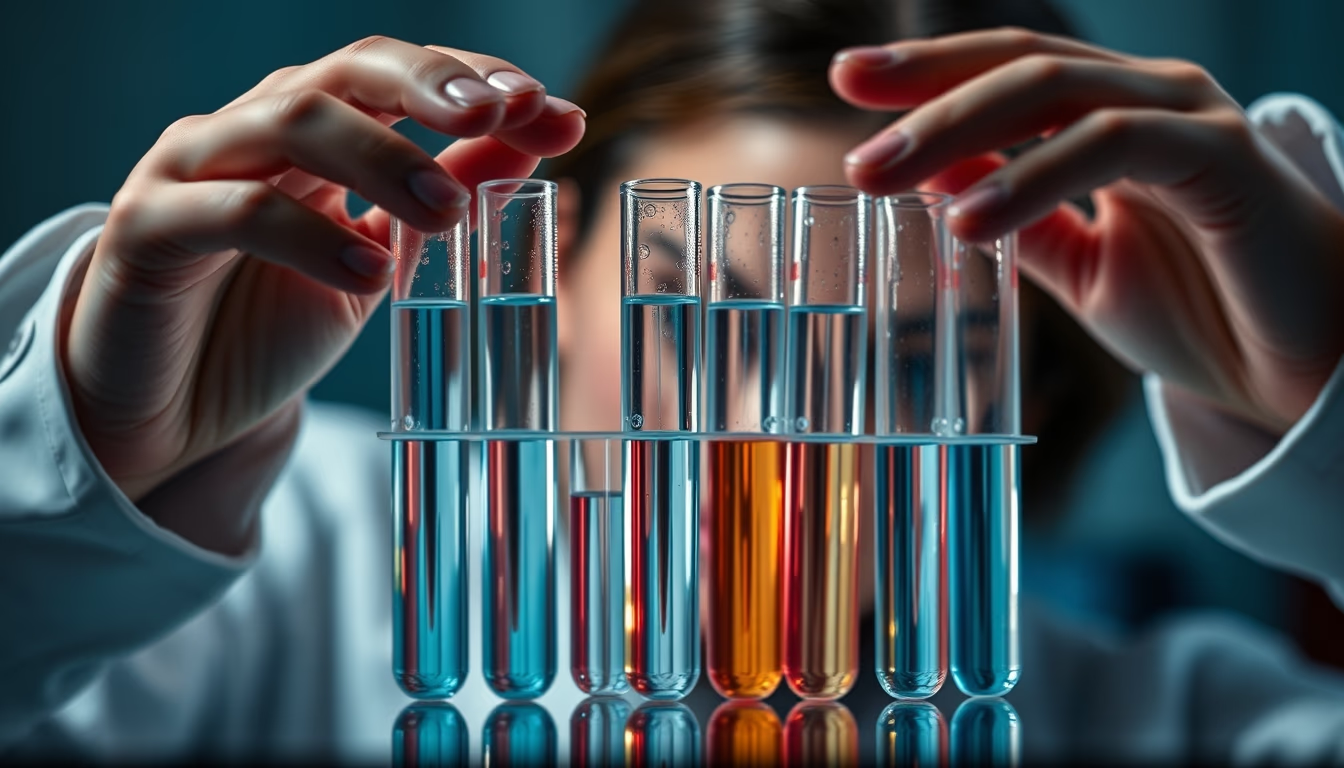
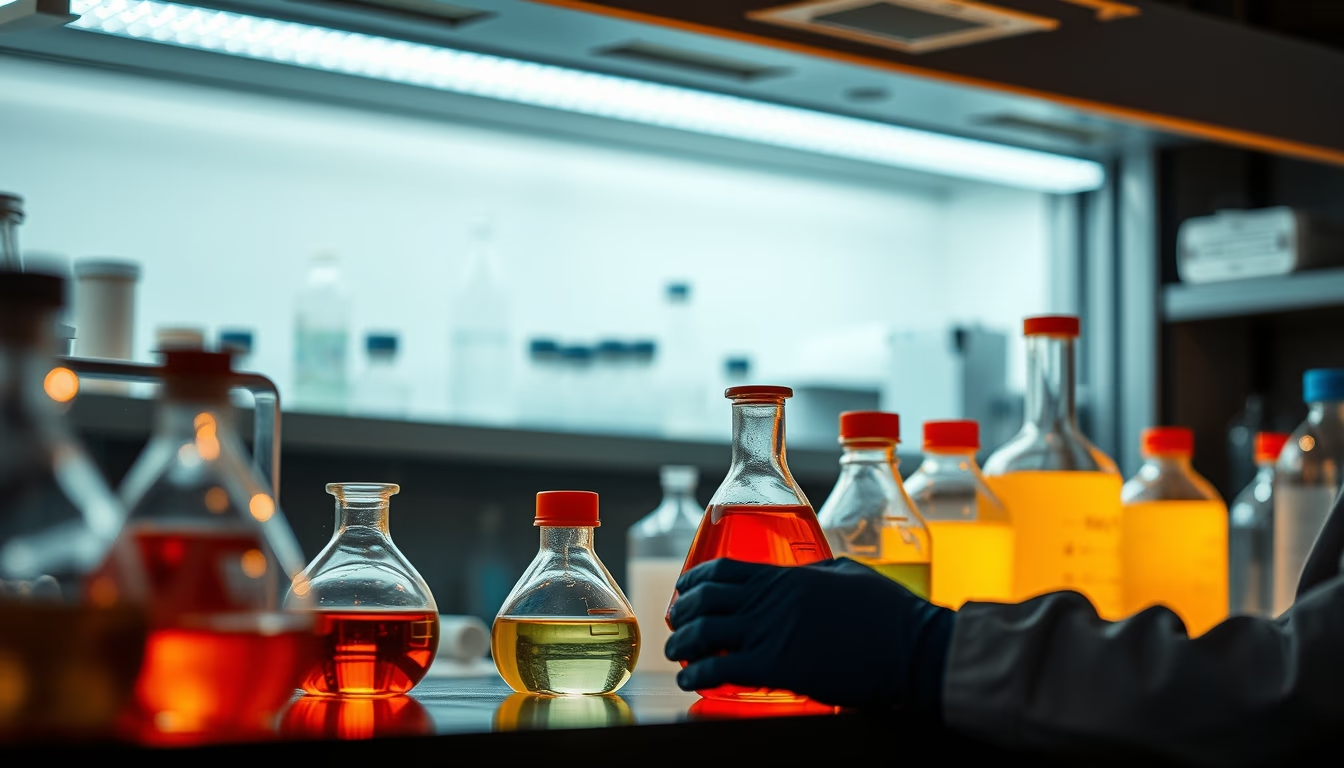
Laboratory incubators and Petri dishes are essential tools for cultivating microorganisms under controlled temperature and humidity conditions.
About this subject
A laboratory incubator is equipment designed to maintain constant temperature, humidity, and sometimes CO2 levels, enabling the growth of microbial cultures, cells, or tissues. Combined with Petri dishes, it forms the backbone of classical microbiology. The Petri dish, invented by German bacteriologist Julius Richard Petri in 1887, is a shallow cylindrical lidded container typically made of transparent glass or plastic, allowing easy visualization of colony growth. Typical incubation ranges from 25°C to 37°C depending on the organism, over periods from 24 hours to several days.
Globally, incubators are used in research labs, hospitals, pharmaceutical and food industries. For instance, in pathogen identification, samples are streaked onto Petri dishes with specific culture media and incubated for isolation. Precise temperature is critical: a 1°C deviation can alter bacterial metabolism. Modern models include orbital shaking for liquid cultures and humidity control to prevent medium dehydration.
The image captured with a fish-eye wide-angle lens provides a broad perspective of the incubator interior, highlighting metallic shelves and stacked dishes. This visual distortion is common in scientific photography to show equipment layout without compromising documentary function. Uniform lighting and absence of shadows indicate diffused light sources typical of lab environments.
Interesting fact: standard Petri dish diameter for solid cultures is 90 mm, but sizes range from 35 mm to 150 mm. Disposable plastic dishes reduced cross-contamination, though glass ones are reusable after sterilization. In high-containment labs, incubators with sealed doors and HEPA filtration ensure biological agent containment.
Frequently Asked Questions
What is the ideal temperature for incubating bacteria on Petri dishes?
The standard temperature for most pathogenic bacteria is 37°C, but environmental organisms may grow at 25-30°C. Always check your protocol, as some require lower or higher temperatures.
Why is a fish-eye lens used in lab photography?
A fish-eye lens captures a very wide field of view (180° or more), allowing photographers to show the interior of compact equipment like incubators, revealing shelves and layout without moving the device.
How long does it take for colonies to grow on a Petri dish?
It depends on the organism. Fast-growing bacteria like E. coli form visible colonies within 24 hours. Fungi and mycobacteria may take days or weeks.
Direct URL
https://pub-c7d6a6ea828543ac903a74a341ccb2e1.r2.dev/imagens/incubator-lab-petri-fish-eye-wide-angle-fresh11.avifHow to credit
Include a visible link back to UtilizAí. Copy one of the snippets below:
<a href="https://xn--utiliza-eza.com/en/midia/imagens/incubator-lab-petri-fish-eye-wide-angle-fresh11">Incubator lab petri</a> by <a href="https://xn--utiliza-eza.com">UtilizAí</a>, licensed under <a href="https://creativecommons.org/licenses/by/4.0/">CC BY 4.0</a>.
[Incubator lab petri](https://xn--utiliza-eza.com/en/midia/imagens/incubator-lab-petri-fish-eye-wide-angle-fresh11) by [UtilizAí](https://xn--utiliza-eza.com), CC BY 4.0
License: CC-BY-4.0