Incubator lab petri
1344×768 · AVIF · CC BY 4.0

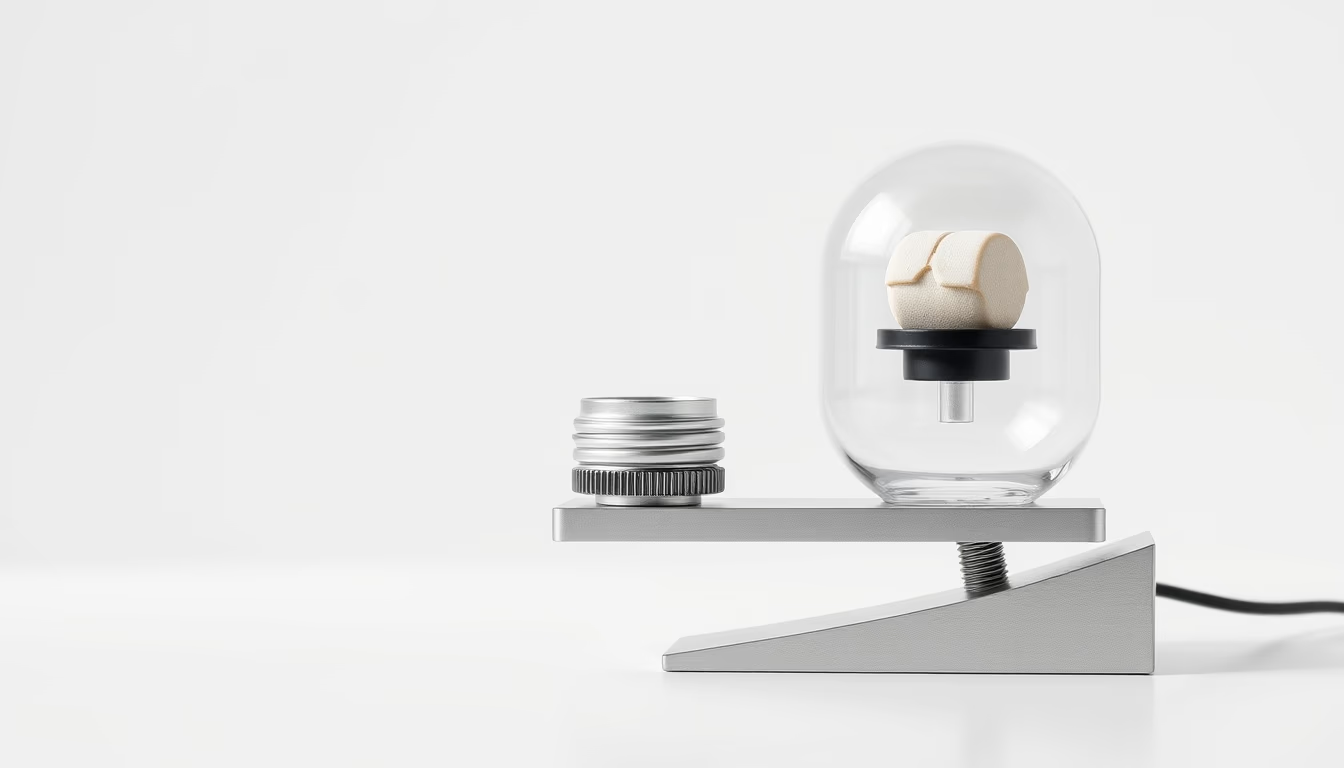
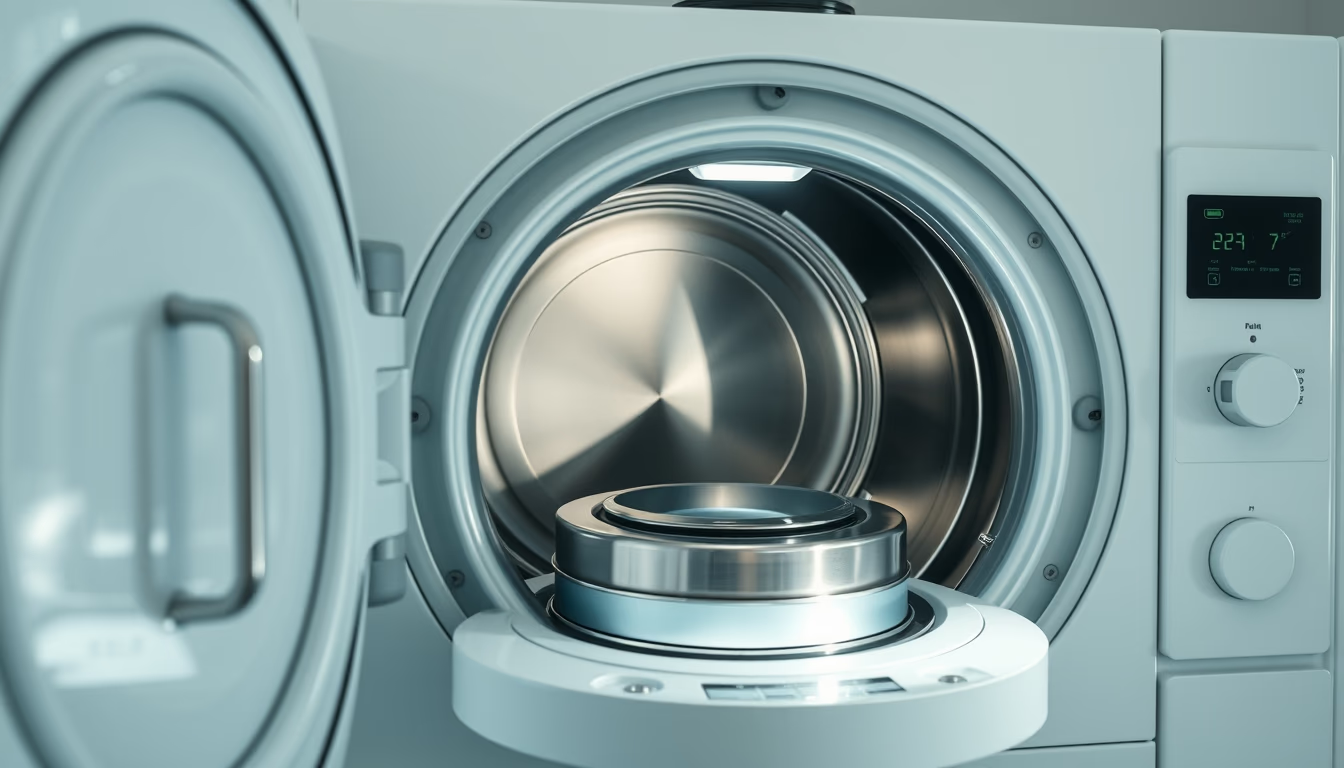
Laboratory incubators maintain ideal temperature and humidity for growing microorganisms and cells in Petri dishes, a crucial instrument in microbiology and biotechnology.
About this subject
The laboratory incubator is a fundamental piece of equipment in research environments, especially in microbiology, cell biology, and biotechnology. Its primary purpose is to provide a controlled environment with constant temperature (typically between 20°C and 45°C), relative humidity, and, in more advanced models, specific CO2 or oxygen concentrations. This control is vital for the growth of microorganisms such as bacteria and fungi, as well as for eukaryotic cell culture. Petri dishes, invented by German bacteriologist Julius Richard Petri in 1887, are shallow glass or plastic containers that hold solid or liquid culture media, allowing observation of colony development. The combined use of incubators and Petri dishes revolutionized medicine and industry, enabling everything from infectious disease diagnosis to vaccine and antibiotic production. Modern incubators may include shaking mechanisms (shaking incubators) for suspension cultures, CO2 sensors for cell culture, and humid chambers to prevent media dehydration. The precision of these instruments is critical: temperature fluctuations or contamination can ruin entire experiments. In fine art photography, the aesthetics of smooth surfaces, diffuse lighting, and geometric arrangement of dishes transform scientific equipment into a visual object, highlighting the intersection of science and art.
Frequently Asked Questions
What is the standard temperature of a laboratory incubator?
The standard incubation temperature for bacteria such as E. coli is 37°C, but incubators can operate between 20°C and 45°C, with specialized models reaching up to 60°C for certain applications.
Why are Petri dishes used in microbiology?
Petri dishes allow cultivation of microorganisms on solid (agar) or liquid media, facilitating observation of isolated colonies, antibiotic testing, and microbial counting. Their transparent surface and lid prevent contamination.
What is a CO2 incubator?
A CO2 incubator maintains a controlled atmosphere of carbon dioxide (usually 5%), essential for mammalian cell culture, which requires stable pH provided by the bicarbonate-CO2 buffering system.
Direct URL
https://pub-c7d6a6ea828543ac903a74a341ccb2e1.r2.dev/imagens/incubator-lab-petri-fine-art-photography-fresh0.avifHow to credit
Include a visible link back to UtilizAí. Copy one of the snippets below:
<a href="https://xn--utiliza-eza.com/en/midia/imagens/incubator-lab-petri-fine-art-photography-fresh0">Incubator lab petri</a> by <a href="https://xn--utiliza-eza.com">UtilizAí</a>, licensed under <a href="https://creativecommons.org/licenses/by/4.0/">CC BY 4.0</a>.
[Incubator lab petri](https://xn--utiliza-eza.com/en/midia/imagens/incubator-lab-petri-fine-art-photography-fresh0) by [UtilizAí](https://xn--utiliza-eza.com), CC BY 4.0
License: CC-BY-4.0