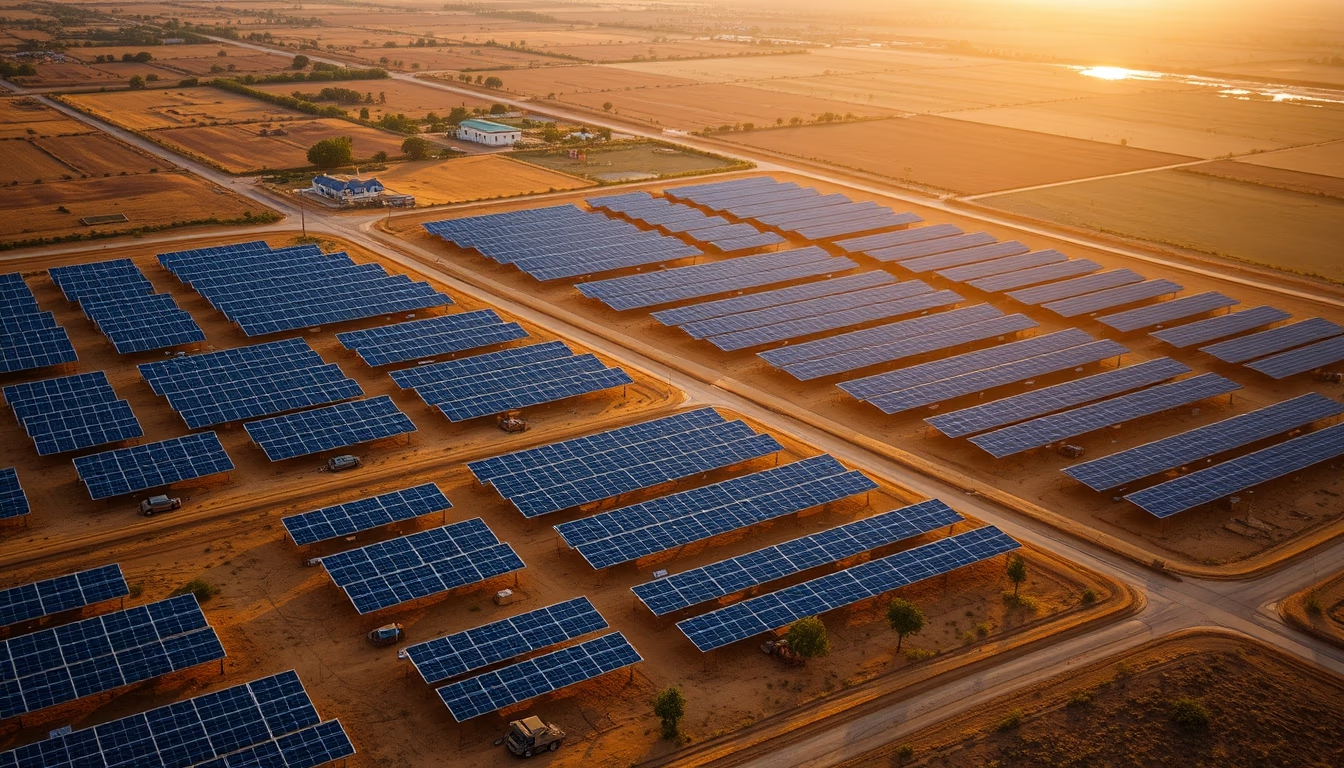
Hydrogen fuel station
1344×768 · AVIF · CC BY 4.0

Hydrogen fueling stations are essential infrastructure for fuel cell vehicles, with global expansion concentrated in countries such as Japan, Germany, and California.
About this subject
Hydrogen fueling stations are facilities that supply compressed or liquid hydrogen to fuel cell vehicles. Hydrogen is either produced on-site (via electrolysis or natural gas reforming) or delivered from external sources and stored in high-pressure tanks (350 to 700 bar). Refueling takes 3 to 5 minutes, comparable to gasoline or diesel.
As of 2023, approximately 500 stations were operational worldwide, led by Japan (over 160), Germany (nearly 100), and California (about 60). South Korea and China are also investing heavily, aiming for thousands of units by 2030. However, deployment faces hurdles: each station costs $1, 2 million, and transporting hydrogen (as gas or liquid) is logistically complex and energy-intensive.
Hydrogen's energy efficiency is lower than that of battery electric vehicles for light-duty applications, but it excels in heavy-duty transport (trucks, buses, trains) and scenarios requiring long range and fast refueling. Examples include the Coradia iLint trains in Germany and hydrogen bus fleets in London and Tokyo. Green hydrogen, produced from renewables, is considered crucial for decarbonizing these sectors.
In Brazil, interest is growing, with pilot projects in São Paulo and Rio de Janeiro, but no commercial stations are yet open to the public. The country's abundant solar and wind resources favor green hydrogen production, and infrastructure is expected to develop rapidly in the coming decade.
Frequently Asked Questions
How does a hydrogen fueling station work?
The station produces or receives hydrogen, compresses it, and stores it. Vehicles are refueled via a hose similar to gasoline pumps, with high-pressure dispensing (350 or 700 bar). The process takes 3 to 5 minutes.
How much does it cost to fill a hydrogen car?
Costs vary by region but average $15 to $20 per kilogram. A typical car uses about 1 kg per 100 km, making the per-km cost higher than that of battery electric vehicles in most markets.
Does Brazil have hydrogen fueling stations?
There are no commercial stations open to the public yet, but pilot projects exist in São Paulo and Rio de Janeiro. The government and private companies are planning green hydrogen infrastructure for the coming years.
Direct URL
https://pub-c7d6a6ea828543ac903a74a341ccb2e1.r2.dev/imagens/hydrogen-fuel-station-national-geographic-style-p2.avifHow to credit
Include a visible link back to UtilizAí. Copy one of the snippets below:
<a href="https://xn--utiliza-eza.com/en/midia/imagens/hydrogen-fuel-station-national-geographic-style-p2">Hydrogen fuel station</a> by <a href="https://xn--utiliza-eza.com">UtilizAí</a>, licensed under <a href="https://creativecommons.org/licenses/by/4.0/">CC BY 4.0</a>.
[Hydrogen fuel station](https://xn--utiliza-eza.com/en/midia/imagens/hydrogen-fuel-station-national-geographic-style-p2) by [UtilizAí](https://xn--utiliza-eza.com), CC BY 4.0
License: CC-BY-4.0