Houseboat amsterdam canal
1344×768 · AVIF · CC BY 4.0
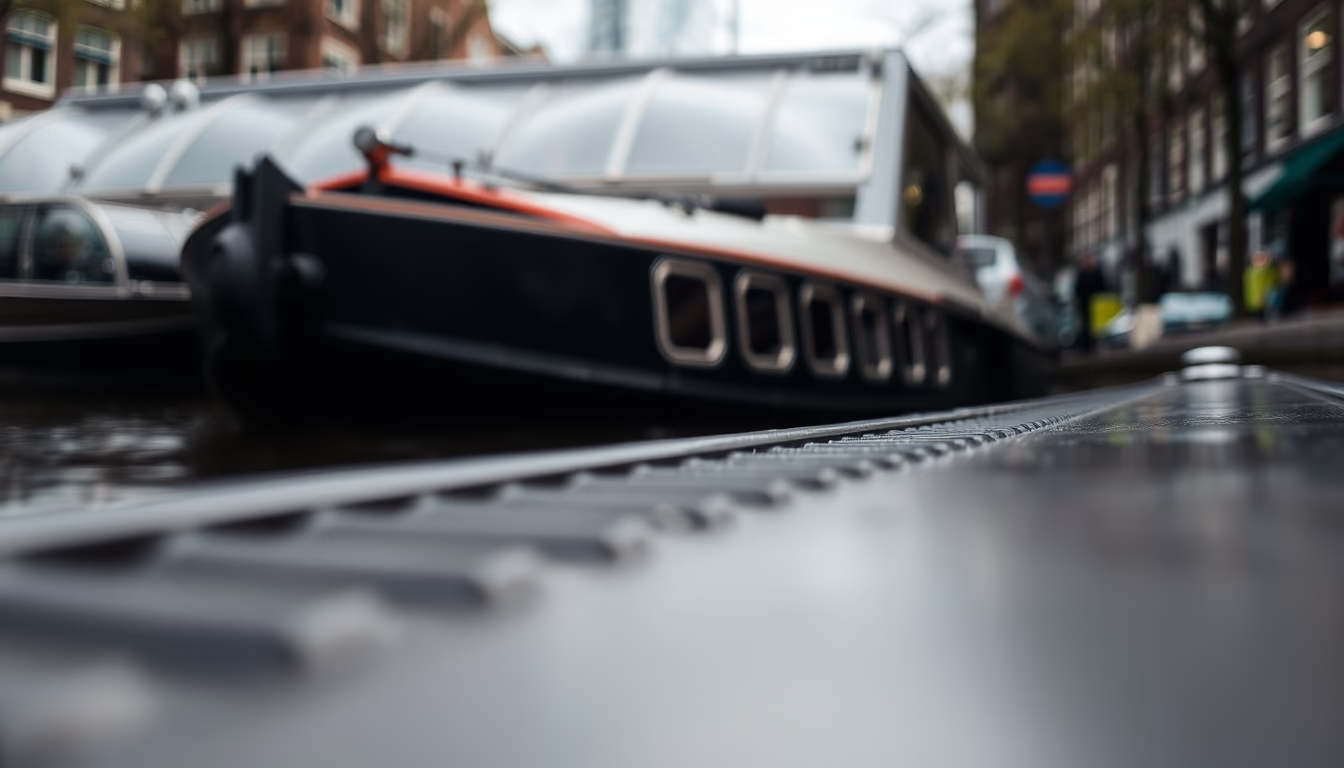
Houseboats are a hallmark of Amsterdam's canals, offering a unique perspective on aquatic living in the Dutch capital.
About this subject
Amsterdam's houseboats are converted vessels used as permanent residences, moored along iconic canals such as Prinsengracht, Keizersgracht, and Herengracht. This tradition began after World War II when obsolete cargo barges were adapted to address housing shortages. Today, there are an estimated 2,500 houseboats in Amsterdam, many of which have become symbols of the city's alternative and sustainable lifestyle.
The structure of these floating homes ranges from simple wooden barges to modern architectural designs with solar panels and wastewater treatment systems. Each houseboat requires a mooring permit (woonvergunning) issued by the municipality, which strictly controls available spots. Due to high demand, permits are fiercely contested, and vessel prices can exceed those of conventional apartments in the central area.
Culturally, houseboats represent a close-knit community bound by neighborly ties and the challenge of living on water. The Houseboat Museum on Prinsengracht offers guided tours inside a typical 1950s vessel, allowing tourists to understand residents' daily routines. Additionally, some houseboats function as hotels, cafés, or cultural spaces, integrating into the local tourism landscape.
Interestingly, not all houseboats are stationary: some are navigable and can move, though most remain permanently moored. The houseboat phenomenon reflects the Netherlands' historical relationship with water and Dutch ingenuity in creating innovative, sustainable housing solutions.
Frequently Asked Questions
How many houseboats are there in Amsterdam?
It is estimated that there are about 2,500 houseboats scattered along the city's canals. Many are residential, but some function as hotels or cultural spaces.
Is it possible to buy a houseboat in Amsterdam?
Yes, but supply is limited and prices are high. In addition to the vessel's cost, you need to obtain a mooring permit (woonvergunning) from the municipality, which strictly controls available spots. Maintenance includes docking fees, insurance, and sewage treatment systems.
Are houseboats permanently fixed in the canals?
Most houseboats are permanently moored in designated locations with fixed connections for water, electricity, and sewage. However, some are navigable and can move, depending on the vessel type and municipal authorizations.
Direct URL
https://pub-c7d6a6ea828543ac903a74a341ccb2e1.r2.dev/imagens/houseboat-amsterdam-canal-macro-closeup-p0.avifHow to credit
Include a visible link back to UtilizAí. Copy one of the snippets below:
<a href="https://xn--utiliza-eza.com/en/midia/imagens/houseboat-amsterdam-canal-macro-closeup-p0">Houseboat amsterdam canal</a> by <a href="https://xn--utiliza-eza.com">UtilizAí</a>, licensed under <a href="https://creativecommons.org/licenses/by/4.0/">CC BY 4.0</a>.
[Houseboat amsterdam canal](https://xn--utiliza-eza.com/en/midia/imagens/houseboat-amsterdam-canal-macro-closeup-p0) by [UtilizAí](https://xn--utiliza-eza.com), CC BY 4.0
License: CC-BY-4.0