Honey extractor stainless
1344×768 · AVIF · CC BY 4.0
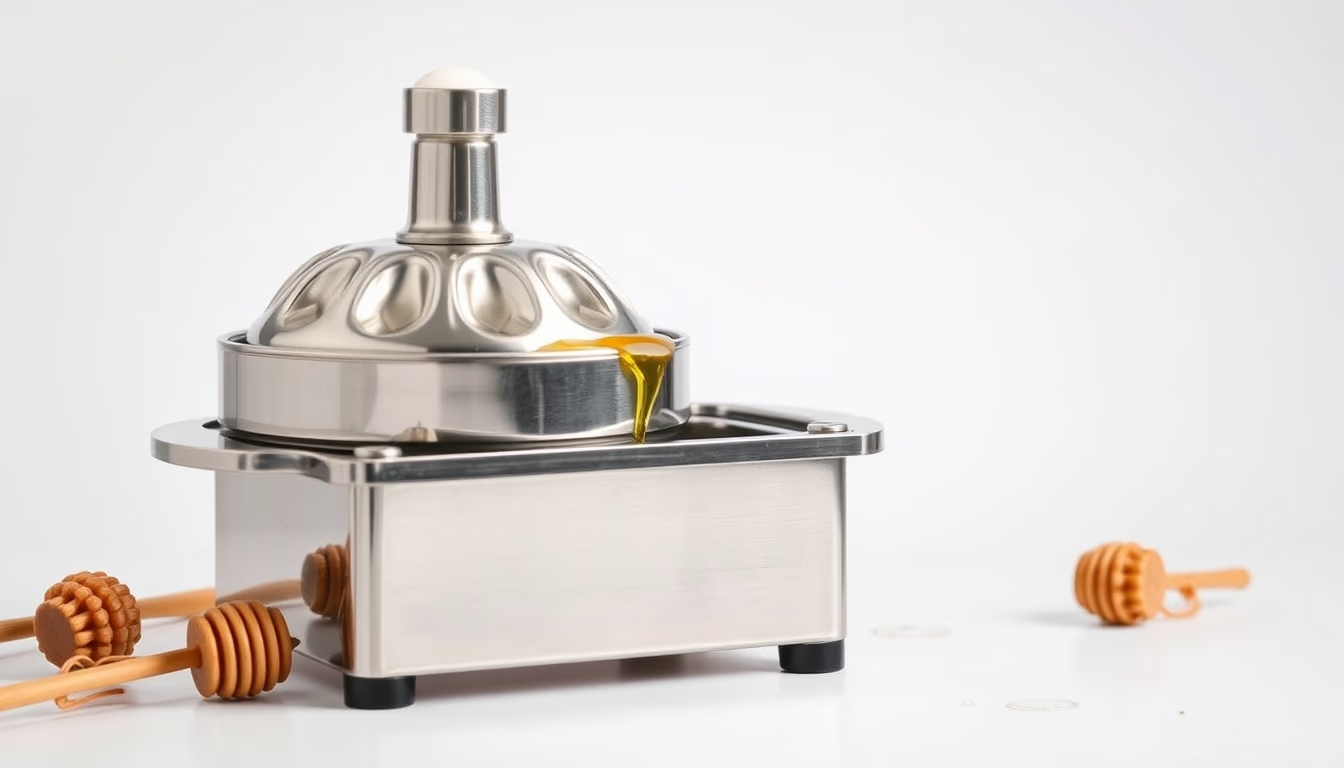
Stainless steel honey extractor, essential equipment in modern beekeeping for efficient honey extraction via centrifugation without damaging the combs.
About this subject
The honey extractor is one of the most important pieces of equipment in beekeeping, used to separate honey from the comb without destroying it, allowing the combs to be reused by the bees. Its working principle relies on centrifugal force: frames with honeycombs are placed in baskets or supports inside a rotating drum. As the drum spins, honey is thrown against the walls and flows to the bottom, where it is collected through a spigot.
There are two main types of extractors: radial and tangential. In radial models, frames are positioned like spokes of a wheel, with the comb face facing the outer wall; centrifugation extracts honey from both sides simultaneously. In tangential models, frames are inserted one side at a time, requiring manual flipping to extract honey from the opposite side. Radial extractors are faster and more efficient for large-scale production, while tangential ones are common in small apiaries.
The predominant material in modern manufacturing is stainless steel, chosen for its corrosion resistance, ease of cleaning, and compliance with sanitary standards. Unlike plastic or aluminum, stainless steel does not react with honey, preserving its flavor and properties. Moreover, its durability allows decades of intensive use. Extractors vary in capacity from manual models holding 2 to 4 frames to industrial electric versions capable of handling dozens of frames per load.
Mechanical extraction by centrifugation revolutionized beekeeping, making it more productive and less harmful to colonies. Before its invention, combs had to be cut and squeezed, destroying the hive and forcing bees to rebuild everything. The first manual extractor was patented in 1865 by Major Francesco Hruschka, an Italian beekeeper. Since then, the design has evolved into more efficient, safe, and hygienic models, becoming an indispensable item in any professional apiary.
Frequently Asked Questions
How does a honey extractor work?
A honey extractor uses centrifugal force to separate honey from the combs. Frames with honeycombs are placed inside a drum that spins rapidly. The honey is thrown against the walls and flows to the bottom, where it is collected via a spigot. The process preserves the comb structure, allowing reuse.
What is the difference between radial and tangential extractors?
In radial extractors, frames are positioned like spokes, extracting honey from both sides simultaneously. In tangential extractors, frames are inserted one side at a time, requiring manual flipping. Radial extractors are faster and suitable for large volumes, while tangential ones are common in small apiaries.
Why is stainless steel the preferred material for honey extractors?
Stainless steel is corrosion-resistant, easy to clean, and does not react with honey, preserving its flavor and quality. It also meets sanitary standards and has long durability, making it ideal for professional use.
Direct URL
https://pub-c7d6a6ea828543ac903a74a341ccb2e1.r2.dev/imagens/honey-extractor-stainless-commercial-product-photography-fresh13.avifHow to credit
Include a visible link back to UtilizAí. Copy one of the snippets below:
<a href="https://xn--utiliza-eza.com/en/midia/imagens/honey-extractor-stainless-commercial-product-photography-fresh13">Honey extractor stainless</a> by <a href="https://xn--utiliza-eza.com">UtilizAí</a>, licensed under <a href="https://creativecommons.org/licenses/by/4.0/">CC BY 4.0</a>.
[Honey extractor stainless](https://xn--utiliza-eza.com/en/midia/imagens/honey-extractor-stainless-commercial-product-photography-fresh13) by [UtilizAí](https://xn--utiliza-eza.com), CC BY 4.0
License: CC-BY-4.0