Hieroglyphs egyptian wall
1344×768 · AVIF · CC BY 4.0
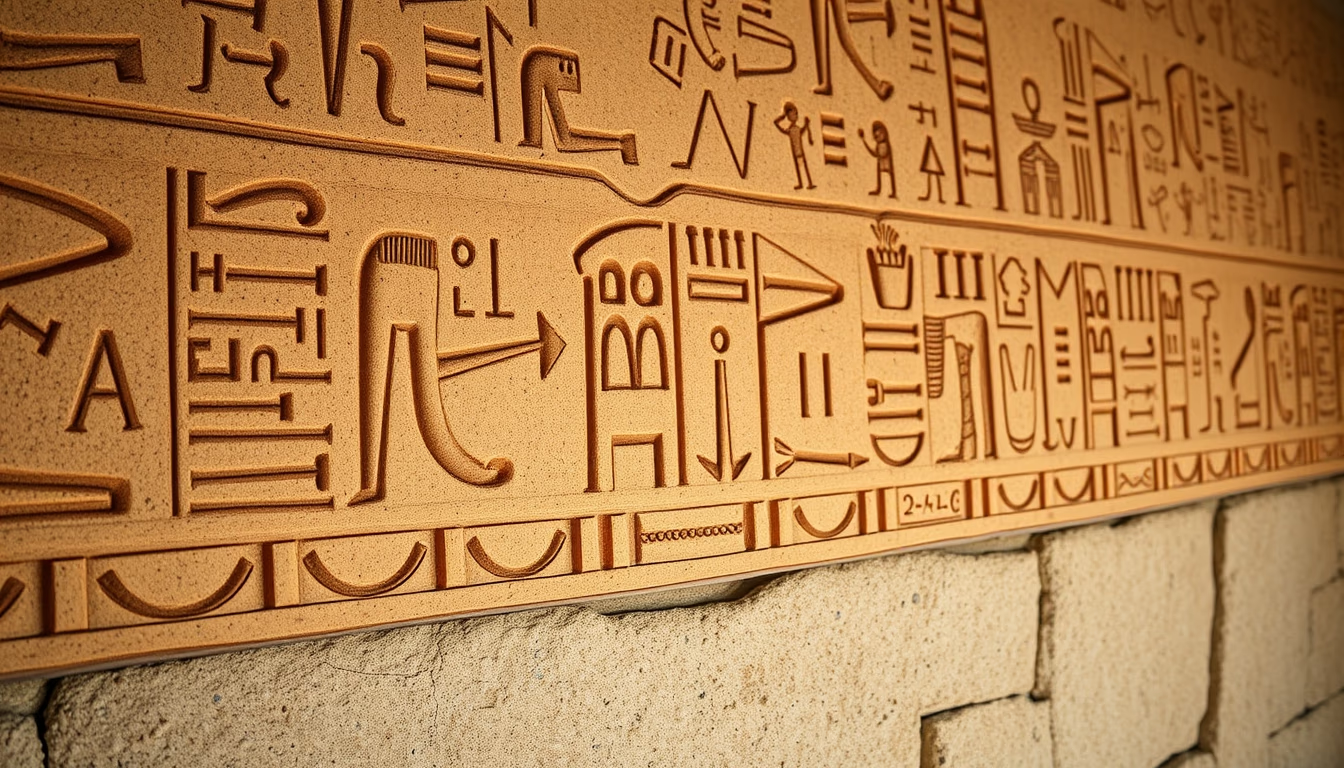
Egyptian hieroglyphs are one of the oldest writing systems in the world, used for over 3,500 years in Ancient Egypt to record history, religion, and administration.
About this subject
Egyptian hieroglyphs originated around 3200 BCE and remained in use until the 4th century CE. This writing system combined logograms, symbols representing words or ideas, and phonograms, signs representing sounds. It is estimated that there were about 700 to 800 distinct hieroglyphic signs, though the number varied by period. Hieroglyphs were carved on the walls of temples, tombs, and monuments, as well as written on papyrus with ink. The Rosetta Stone, discovered in 1799, was key to deciphering the script, thanks to its bilingual text in Ancient Greek and Egyptian.
Hieroglyphic writing had a strong connection to Egyptian religiosity. The symbols were considered sacred, hence the name "hieroglyph," which means "sacred writing" in Greek. In most cases, reading was done from right to left or left to right, depending on the direction of carved human and animal figures. Scribes, members of a learned elite, mastered this script and enjoyed high social status. Besides hieroglyphs, there were two cursive forms: hieratic and demotic, used for everyday and administrative texts.
Hieroglyphic texts cover topics such as mythology, funerary rituals, pharaohs' achievements, and harvest records. On the walls of Old Kingdom pyramids, for example, are the Pyramid Texts, which instructed the pharaoh on the afterlife. In the Middle Kingdom, the Coffin Texts expanded these teachings to the nobility. Over time, knowledge of the script was lost after the fall of Ancient Egypt, only rediscovered in the 19th century by scholars like Jean-François Champollion.
Today, hieroglyphs are one of the most recognizable symbols of Egyptian civilization. They continue to fascinate historians and tourists, who visit archaeological sites such as Luxor and Giza to admire these ancient inscriptions. UNESCO classifies several of these sites as World Heritage, ensuring their preservation for future generations.
Frequently Asked Questions
How were Egyptian hieroglyphs deciphered?
Decipherment was possible thanks to the Rosetta Stone, which contains the same text in Ancient Greek, Demotic, and hieroglyphs. Jean-François Champollion used the names of Ptolemaic kings as a key to crack the system in 1822.
Are hieroglyphs read from left to right or right to left?
It depends on the direction of the figures. If animals or people face right, the reading goes from right to left. If they face left, reading goes from left to right.
What is the difference between hieroglyphs, hieratic, and demotic?
Hieroglyphs are the pictorial form used on monuments. Hieratic is a cursive version for faster writing on papyrus. Demotic is a later simplification used for administrative and literary documents.
Direct URL
https://pub-c7d6a6ea828543ac903a74a341ccb2e1.r2.dev/imagens/hieroglyphs-egyptian-wall-documentary-nature-style-fresh14.avifHow to credit
Include a visible link back to UtilizAí. Copy one of the snippets below:
<a href="https://xn--utiliza-eza.com/en/midia/imagens/hieroglyphs-egyptian-wall-documentary-nature-style-fresh14">Hieroglyphs egyptian wall</a> by <a href="https://xn--utiliza-eza.com">UtilizAí</a>, licensed under <a href="https://creativecommons.org/licenses/by/4.0/">CC BY 4.0</a>.
[Hieroglyphs egyptian wall](https://xn--utiliza-eza.com/en/midia/imagens/hieroglyphs-egyptian-wall-documentary-nature-style-fresh14) by [UtilizAí](https://xn--utiliza-eza.com), CC BY 4.0
License: CC-BY-4.0