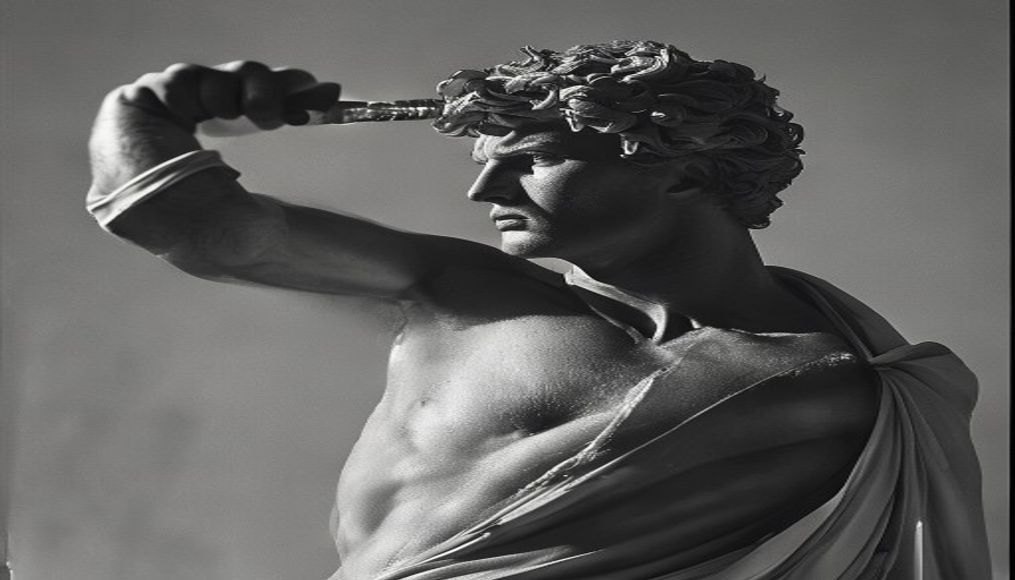
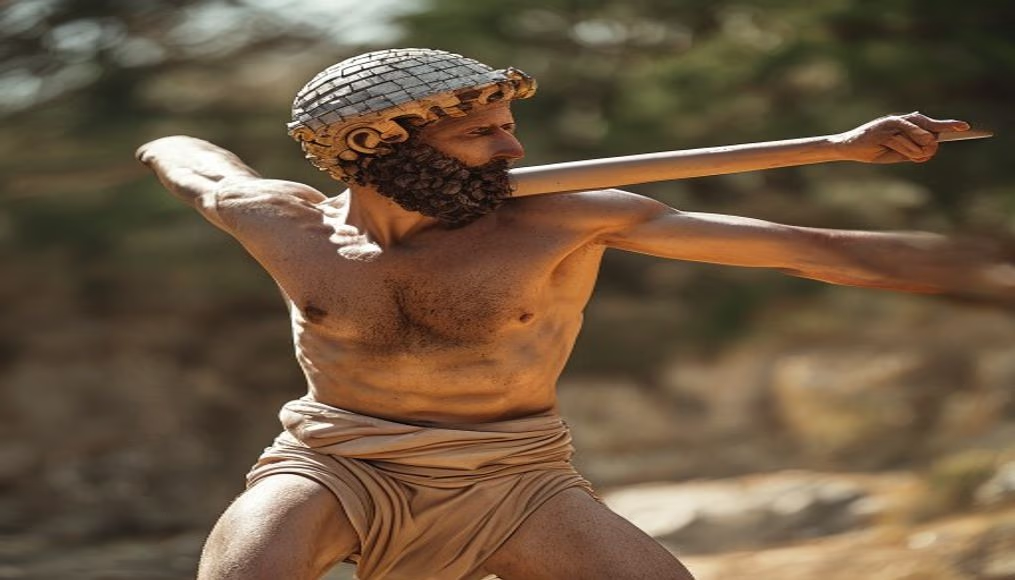
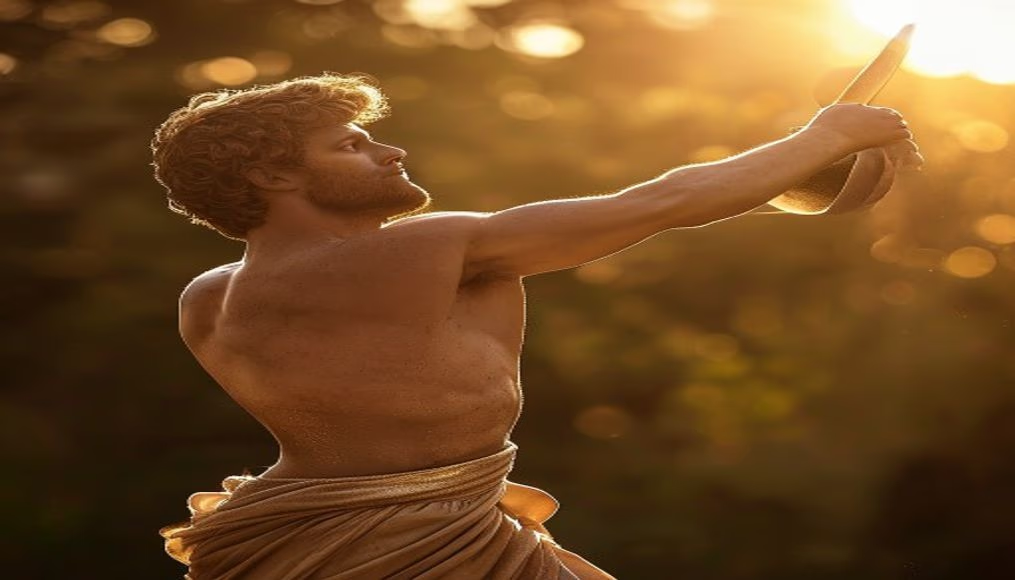
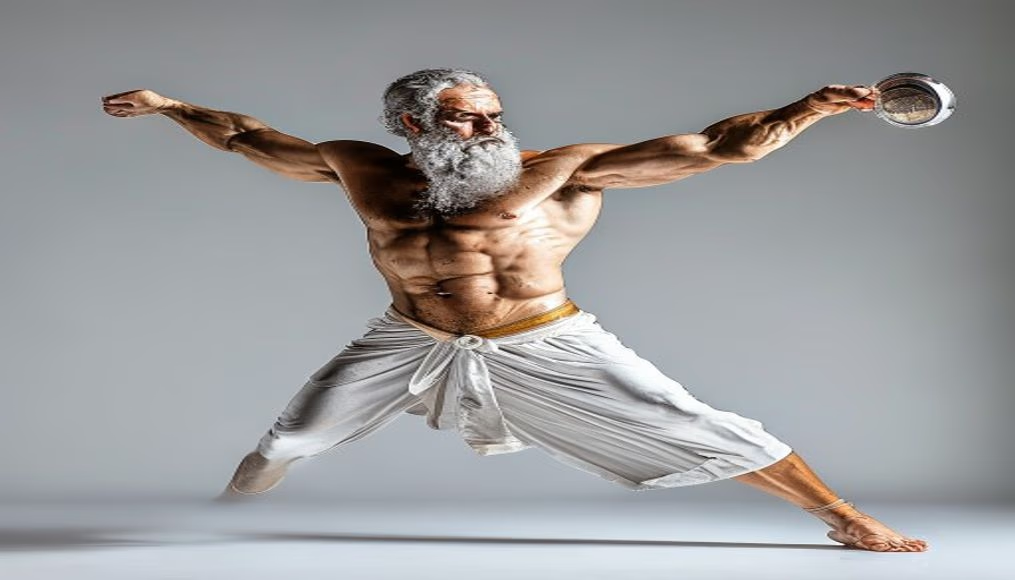
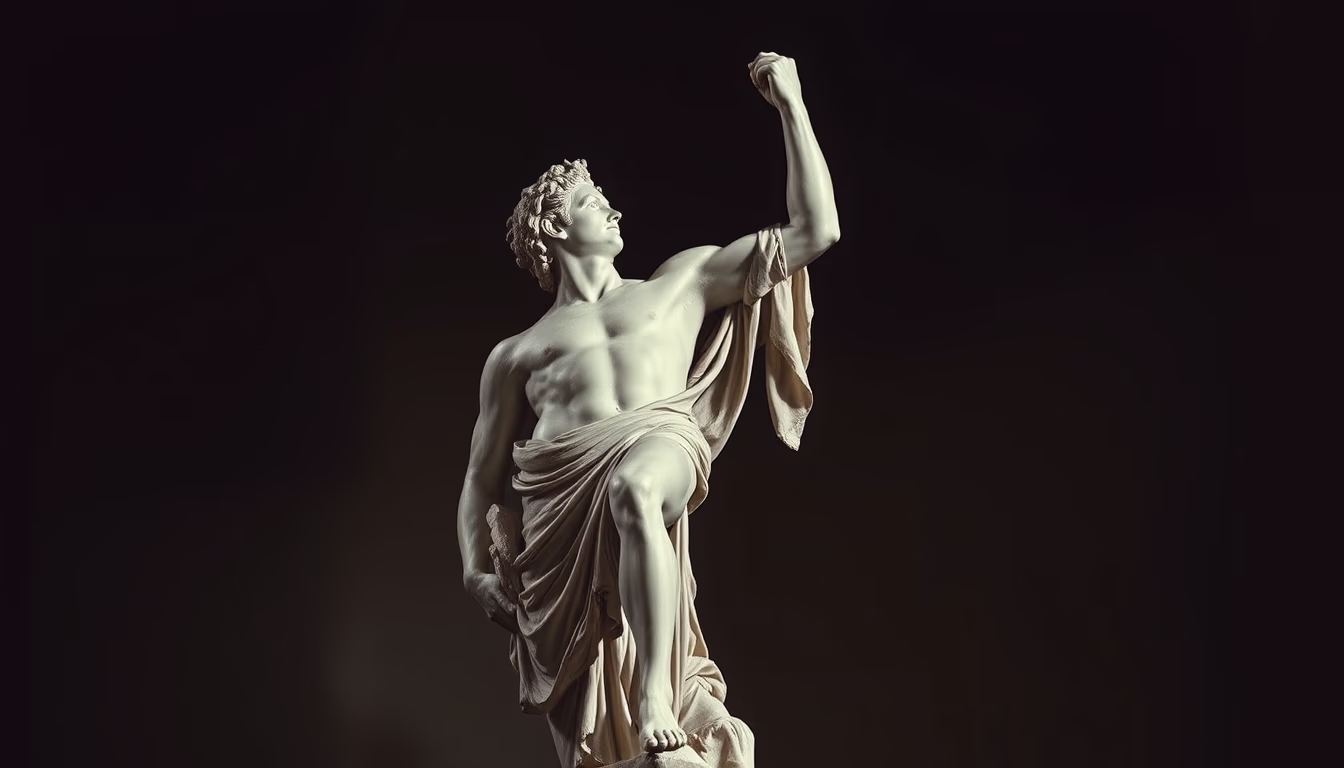
Henry moore abstract
1344×768 · AVIF · CC BY 4.0
Henry Moore revolutionized abstract sculpture with organic forms and voids, exploring the relationship between the human figure and landscape.
About this subject
Henry Moore (1898-1986) was one of the most influential British modernist sculptors, renowned for his abstract works that evoke the human body and nature. Born in Castleford, Yorkshire, into a miner's family, Moore studied at Leeds College of Art and the Royal College of Art in London. His early work was influenced by Cubism and pre-Columbian sculpture, but he quickly developed a distinctive style characterized by fluid forms, sinuous curves, and voids that integrate the surrounding space into the sculpture.
Moore's abstraction was not total: he always started from the human figure, especially the reclining female form, which he reinterpreted in a stylized manner. His sculptures often combine massive volumes with deep cavities, creating a play of light and shadow. Works such as "Reclining Mother and Child" and "Reclining Figure" exemplify this approach, where the body merges with geological or landscape elements. Moore also gained fame for his monumental public sculptures, like "Nuclear Energy" (1967) at the University of Chicago, commemorating the site of the first controlled nuclear chain reaction.
Moore believed sculpture should be tactile and accessible, inviting the viewer to walk around and touch it. His preferred technique was modeling in plaster, from which bronze casts were made, though he also worked in stone and wood. He was a prolific draftsman, and his sketches often preceded the sculptures. Moore influenced generations of artists, and his legacy is preserved by the Henry Moore Foundation in Perry Green, where his studio and sculpture garden are open to the public.
Frequently Asked Questions
What inspired Henry Moore to create abstract sculptures?
Moore was inspired by nature, human forms, and ancient art from pre-Columbian and African cultures. He admired Cubism and the sculpture of Michelangelo and Rodin, but sought a simplification of forms that connected the human body to the landscape.
What are the main characteristics of Henry Moore's sculptures?
Moore's sculptures are characterized by organic shapes, smooth curves, voids that create transparency, and integration with the environment. He often explored the reclining figure motif, using massive volumes and cavities that play with light and shadow.
Where can I see Henry Moore's works?
Moore's works are in museums and public spaces worldwide, such as Tate Britain and Yorkshire Sculpture Park in the UK, the Museum of Modern Art in New York, and the São Paulo Museum of Art (MASP). His foundation in Perry Green also displays a vast collection.
Direct URL
https://pub-c7d6a6ea828543ac903a74a341ccb2e1.r2.dev/imagens/henry-moore-abstract-commercial-product-photography-p5.avifHow to credit
Include a visible link back to UtilizAí. Copy one of the snippets below:
<a href="https://xn--utiliza-eza.com/en/midia/imagens/henry-moore-abstract-commercial-product-photography-p5">Henry moore abstract</a> by <a href="https://xn--utiliza-eza.com">UtilizAí</a>, licensed under <a href="https://creativecommons.org/licenses/by/4.0/">CC BY 4.0</a>.
[Henry moore abstract](https://xn--utiliza-eza.com/en/midia/imagens/henry-moore-abstract-commercial-product-photography-p5) by [UtilizAí](https://xn--utiliza-eza.com), CC BY 4.0
License: CC-BY-4.0