Hebrew calligraphy torah
1344×768 · AVIF · CC BY 4.0
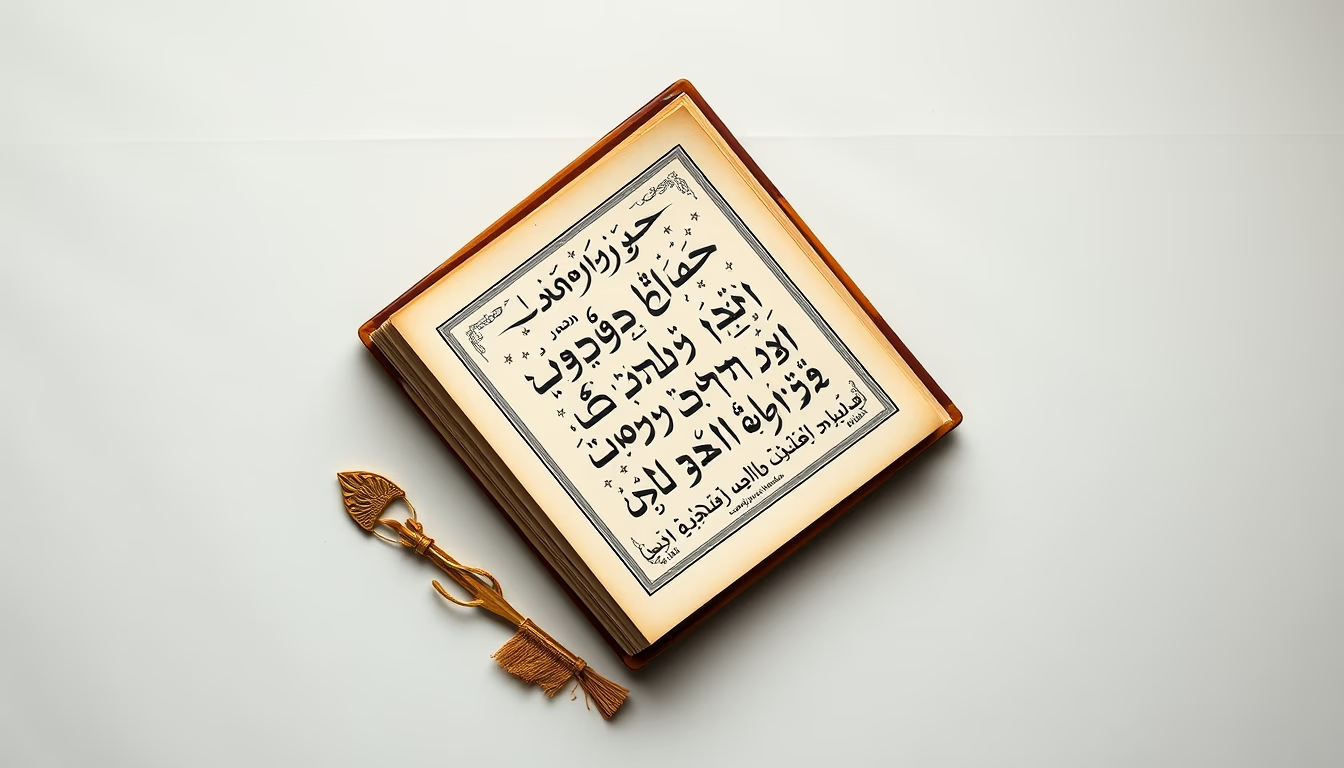
Hebrew calligraphy for the Torah, known as STaM, follows ancient rules by trained scribes using special ink and kosher bird quills.
About this subject
Hebrew calligraphy for the Torah, known as STaM (an acronym for Sifrei Torah, Tefillin, and Mezuzot), is a sacred art form dating back millennia. Each letter must be written with absolute precision, following rules from the Talmud and Shulchan Aruch. The scribe, called a sofer, must be an observant Jew and undergo years of training to master the 22 letters of the Hebrew alphabet in their Ktav Ashurit style (Assyrian script). The quill is typically from a kosher bird, such as a turkey or goose, and the ink must be black, indelible, and made from specific ingredients like acacia gum and ferrous sulfate. The support, parchment, comes from the skin of a kosher animal, like cattle or sheep, prepared by a specialized artisan. A complete Torah scroll contains exactly 304,805 letters arranged in 248 columns. Any mistake, even an extra or missing stroke, invalidates the entire scroll, explaining the sofer's extreme care. Specific rules also apply to the crowns (tagin) adorning some letters and special spacing between sections. The tradition of hand-copying the Torah remains alive today, especially in Orthodox communities, where the scroll is used in synagogues for public reading. Each letter is written with intention and reverence, making Hebrew calligraphy a cornerstone of Jewish cultural preservation. The aesthetics of Hebrew writing have also influenced Islamic art and modern design, but its primary function remains liturgical.
Frequently Asked Questions
What does STaM mean in Hebrew calligraphy?
STaM is an acronym for Sifrei Torah, Tefillin, and Mezuzot, the three types of sacred texts requiring special scribal writing.
How many letters are in a Torah scroll?
A complete Torah scroll contains exactly 304,805 letters, traditionally counted by scribes.
What type of quill is used to write the Torah?
Traditionally, a quill from a kosher bird such as a turkey, goose, or duck is used, cut in a specific way.
Direct URL
https://pub-c7d6a6ea828543ac903a74a341ccb2e1.r2.dev/imagens/hebrew-calligraphy-torah-isometric-flat-lay-fresh17.avifHow to credit
Include a visible link back to UtilizAí. Copy one of the snippets below:
<a href="https://xn--utiliza-eza.com/en/midia/imagens/hebrew-calligraphy-torah-isometric-flat-lay-fresh17">Hebrew calligraphy torah</a> by <a href="https://xn--utiliza-eza.com">UtilizAí</a>, licensed under <a href="https://creativecommons.org/licenses/by/4.0/">CC BY 4.0</a>.
[Hebrew calligraphy torah](https://xn--utiliza-eza.com/en/midia/imagens/hebrew-calligraphy-torah-isometric-flat-lay-fresh17) by [UtilizAí](https://xn--utiliza-eza.com), CC BY 4.0
License: CC-BY-4.0