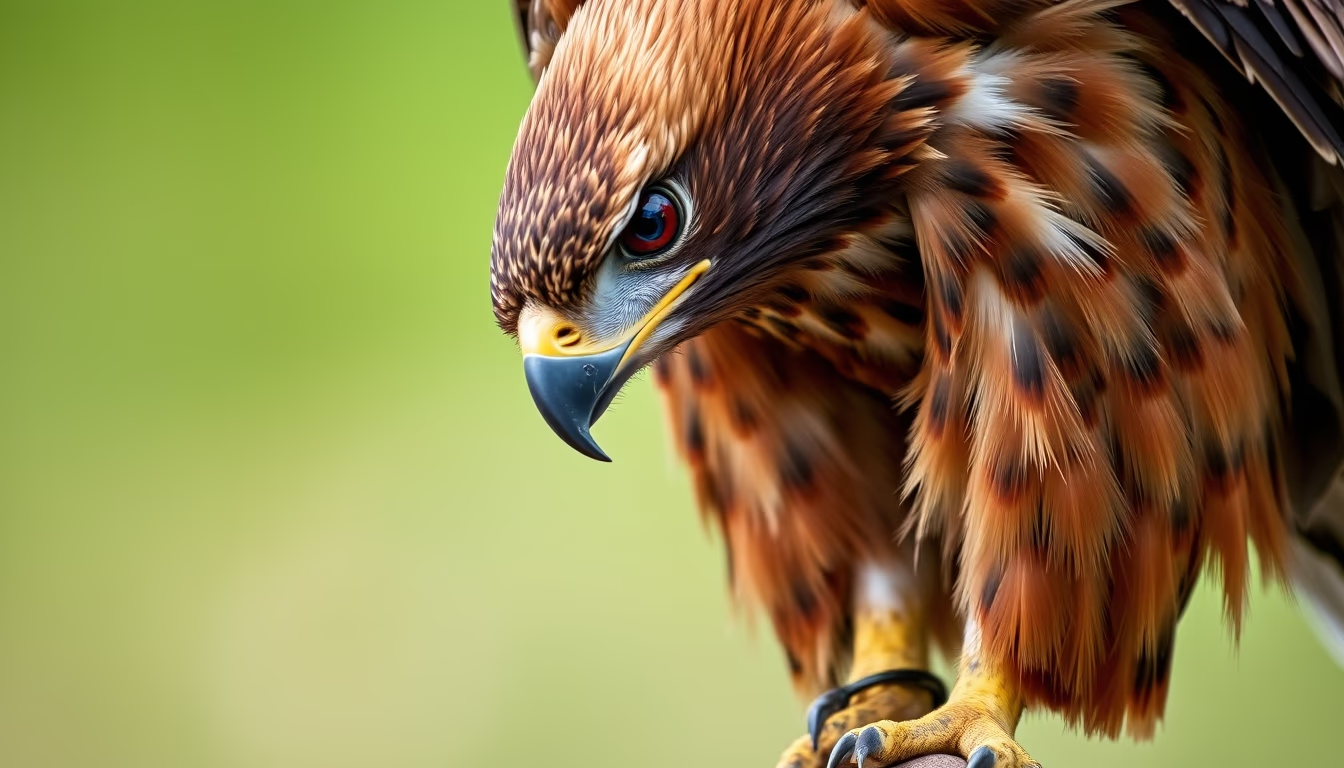
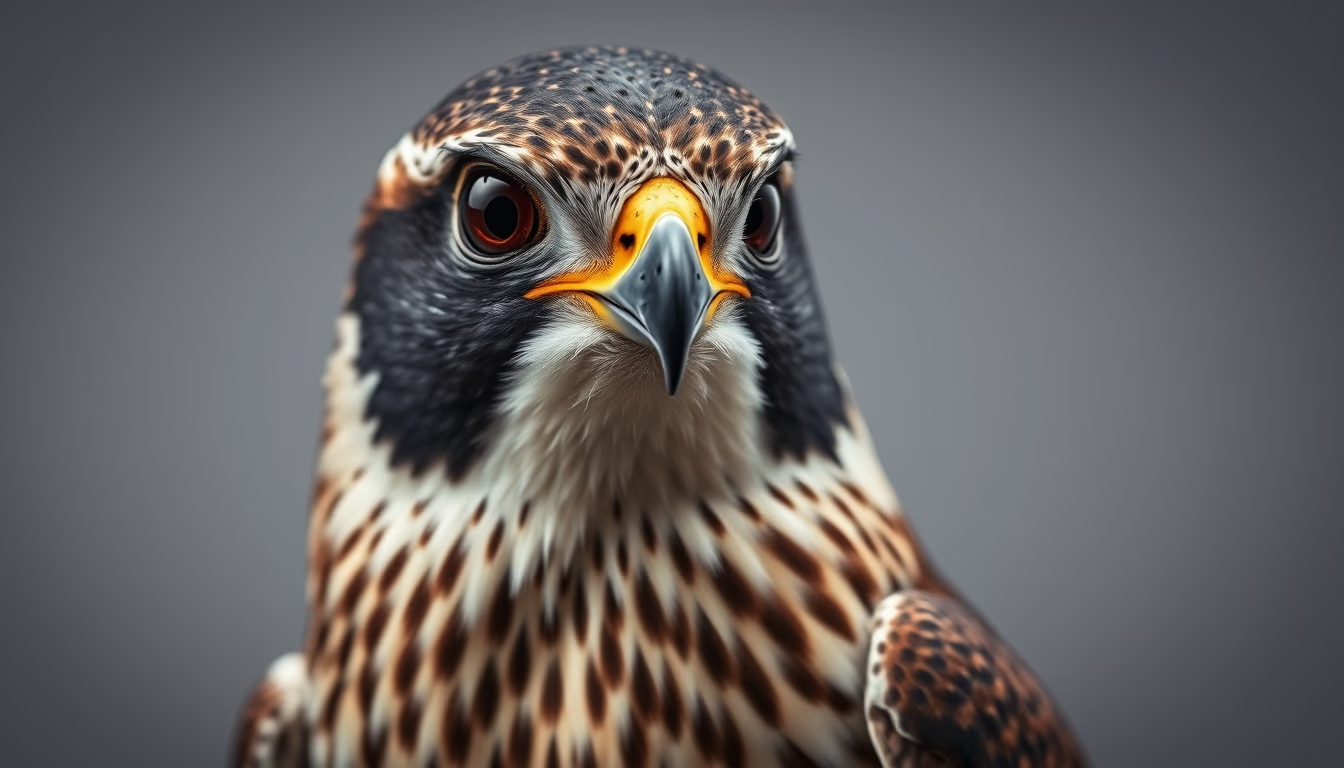
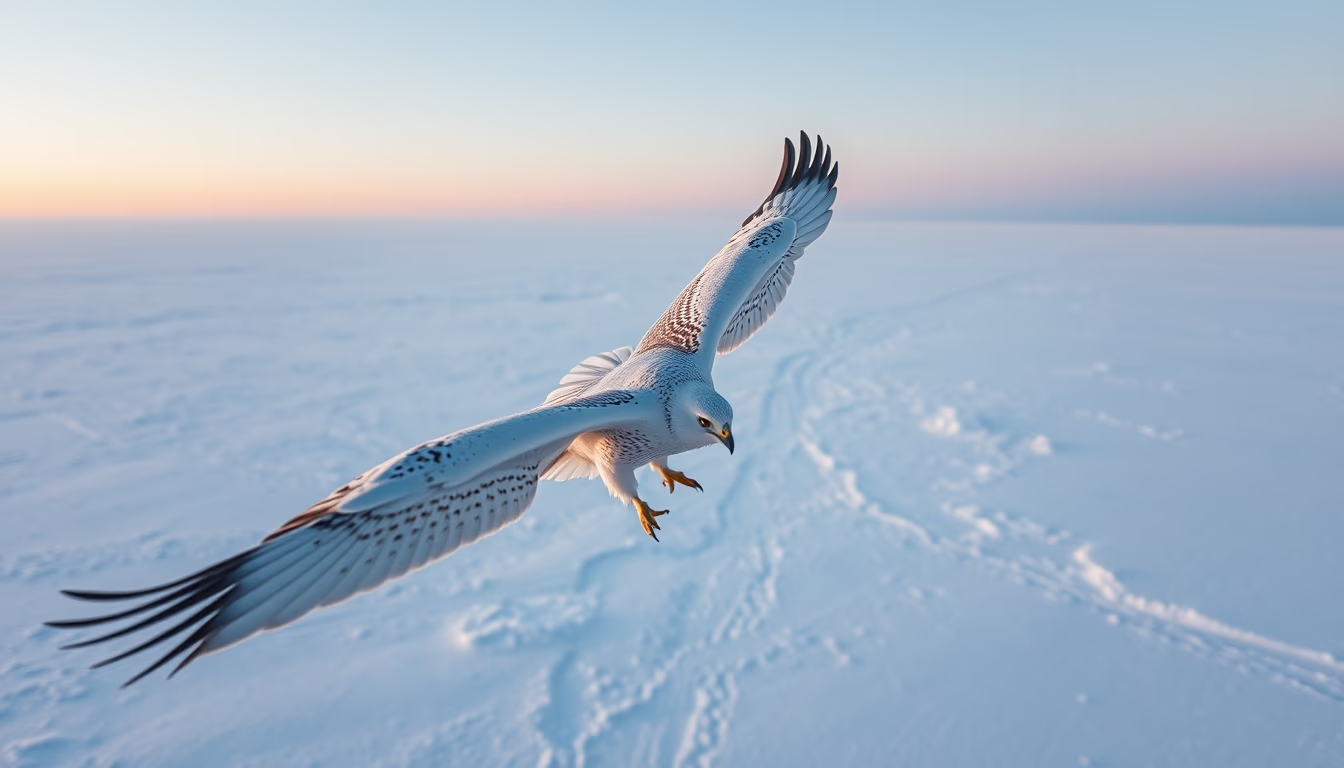
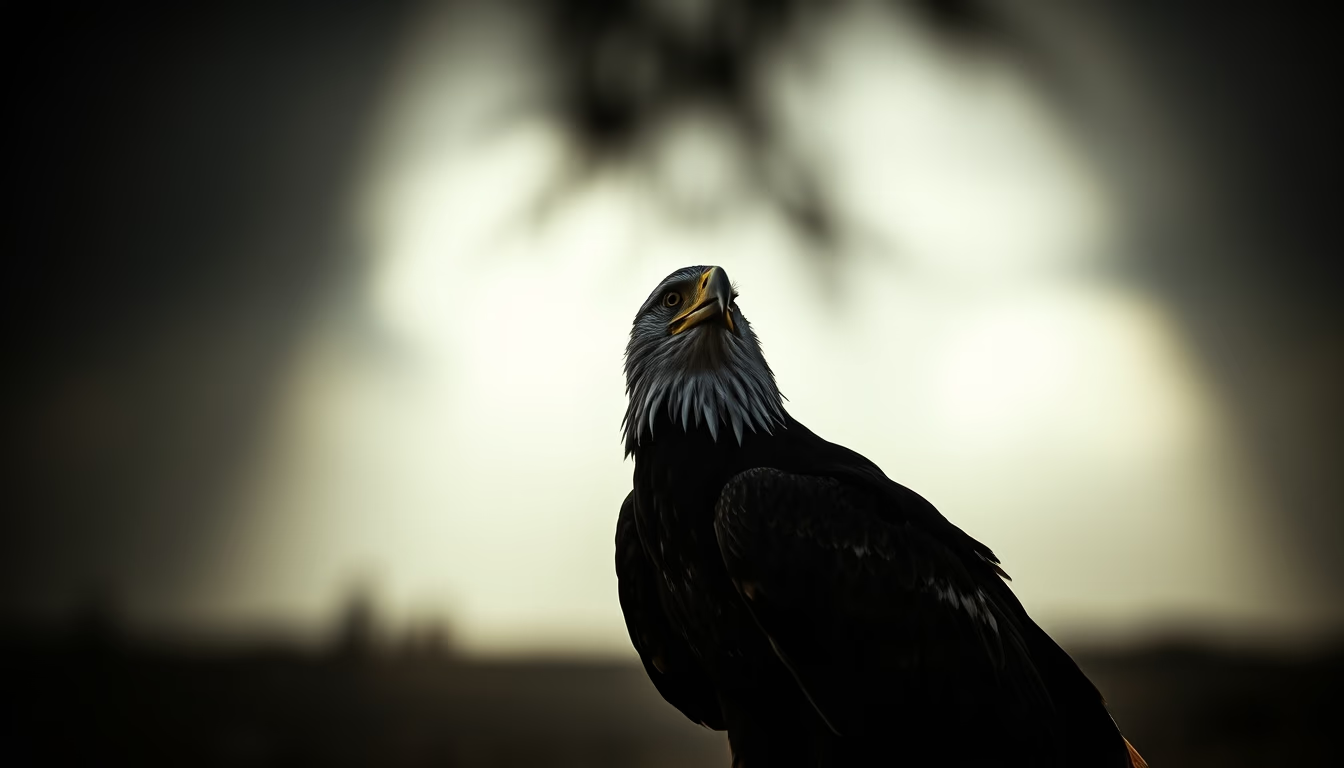
Harris hawk perched
1344×768 · AVIF · CC BY 4.0

The Harris's hawk (Parabuteo unicinctus) is a bird of prey known for its unique social behavior and widespread use in modern falconry.
About this subject
The Harris's hawk, also known as the Harris hawk, is a medium-sized bird of prey native to the Americas. Its range extends from the southwestern United States to central Chile and Argentina, inhabiting semi-arid regions, deserts, savannas, and open woodlands. The plumage is predominantly dark brown, with chestnut patches on the shoulders and upper tail coverts, and a distinctive white tip on the tail. It has long legs and broad wings, adapted for pursuit flights in open terrain.
One of the most remarkable traits of this hawk is its social behavior. Unlike most raptors that are solitary or form only pairs, the Harris's hawk hunts in cooperative family groups, typically of two to six individuals. This hierarchical social structure allows team hunting tactics, such as ambushes and relay chasing of prey. This social intelligence makes the species highly adaptable and explains its success in diverse environments.
In falconry, the Harris's hawk is considered one of the best options for beginners and for educational demonstrations. Its docile nature, ease of training, and ability to work alongside other hawks and the falconer set it apart. Falconers appreciate its versatility: it can be trained to hunt rabbits, hares, birds, and even larger prey in groups. In captivity, the lifespan can reach up to 25 years, provided it receives proper care and a balanced diet.
The hawk's name honors Edward Harris, a 19th-century American naturalist and philanthropist who supported ornithological expeditions. In some regions, it is also called the bay-winged hawk or red-tailed hawk, though the latter name is more commonly used for a different species. Interestingly, Harris's hawk chicks exhibit a behavior called 'cainism,' where the older sibling may attack the younger one, but this is less frequent than in other raptors. The species is listed as Least Concern by the IUCN, but it faces habitat loss and persecution in some areas.
Frequently Asked Questions
What is the origin of the name 'Harris's hawk'?
The name honors Edward Harris, a 19th-century American naturalist and philanthropist who supported ornithological expeditions.
Why is the Harris's hawk so popular in falconry?
Due to its docile temperament, intelligence, and social behavior. It is easy to train, can hunt in groups, and adapts well to different prey and environments.
Is the Harris's hawk found in Brazil?
Yes, it occurs in open and semi-arid regions of Brazil, especially in the Cerrado and Caatinga biomes, though it is less common than in other countries.
Direct URL
https://pub-c7d6a6ea828543ac903a74a341ccb2e1.r2.dev/imagens/harris-hawk-perched-isometric-flat-lay-fresh10.avifHow to credit
Include a visible link back to UtilizAí. Copy one of the snippets below:
<a href="https://xn--utiliza-eza.com/en/midia/imagens/harris-hawk-perched-isometric-flat-lay-fresh10">Harris hawk perched</a> by <a href="https://xn--utiliza-eza.com">UtilizAí</a>, licensed under <a href="https://creativecommons.org/licenses/by/4.0/">CC BY 4.0</a>.
[Harris hawk perched](https://xn--utiliza-eza.com/en/midia/imagens/harris-hawk-perched-isometric-flat-lay-fresh10) by [UtilizAí](https://xn--utiliza-eza.com), CC BY 4.0
License: CC-BY-4.0