Hangul korean ancient
1344×768 · AVIF · CC BY 4.0
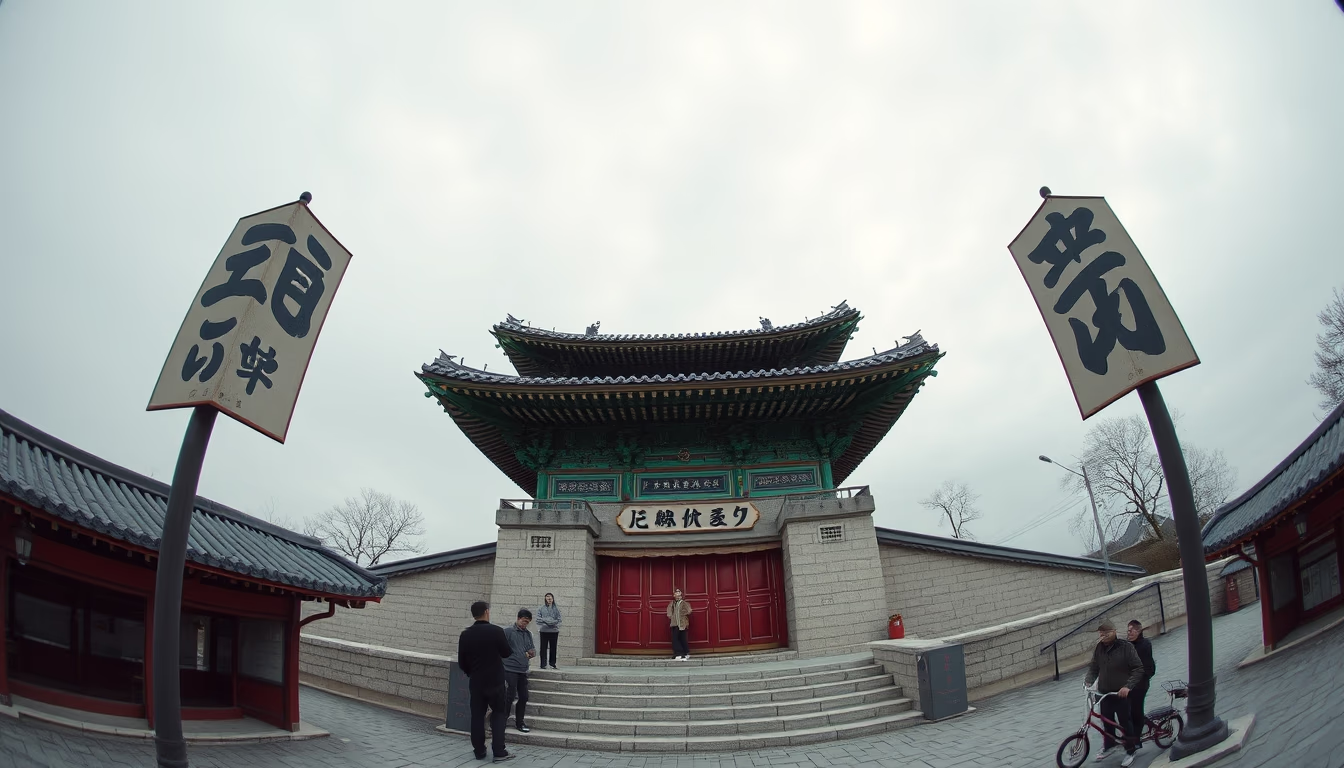
Hangul, the Korean alphabet created in the 15th century, is one of the most scientific and easy-to-learn writing systems in the world.
About this subject
Hangul is the native alphabet of the Korean language, created by King Sejong the Great in 1443 and promulgated in 1446 through the document Hunminjeongeum (The Correct Sounds for the Instruction of the People). Unlike logographic systems like Chinese, Hangul is phonetic: each syllabic block combines consonants and vowels in shapes that represent the position of the tongue and mouth when articulating sounds. Originally it had 28 letters, of which 24 are used today (14 consonants and 10 vowels).
The creation of Hangul was a milestone in democratizing knowledge. Before it, Koreans used Chinese characters (hanja), which required years of study and were accessible only to the elite. Sejong, in his quest for popular literacy, designed Hangul to be so simple that 'a wise man can learn it in a morning and a fool in a week'. The shapes of consonant letters were inspired by the position of speech organs: for example, the letter 'ㄱ' (g/k) represents the root of the tongue blocking the throat.
In 1997, the Hunminjeongeum was inscribed in UNESCO's Memory of the World Register, and Hangul Day (October 9) is a national holiday in South Korea. The alphabet is also used to write Korean in North Korea (where it is called Joseongeul) and by the Korean diaspora. Its efficiency is proven: South Korea has a literacy rate close to 100%, partly thanks to Hangul. Moreover, the system has inspired the creation of alphabets for minority languages, such as Cia-Cia in Indonesia.
Interestingly, Hangul is considered one of the few alphabets deliberately invented by a group of scholars under royal leadership, unlike most systems that evolved organically. Its syllabic block structure allows letters to fit together into squares, which facilitates reading and layout in various media, from books to road signs and digital screens.
Frequently Asked Questions
Who invented Hangul and when?
Hangul was created by King Sejong the Great of the Joseon dynasty in 1443 and officially promulgated in 1446.
Is Hangul considered a scientific alphabet?
Yes, the shapes of consonant letters represent the position of the speech organs (tongue, throat, lips), and vowels combine elements symbolizing heaven, earth, and the human being.
How many letters does Hangul have today?
Modern Hangul has 24 basic letters: 14 consonants and 10 vowels. However, combinations form dozens of syllabic blocks.
Direct URL
https://pub-c7d6a6ea828543ac903a74a341ccb2e1.r2.dev/imagens/hangul-korean-ancient-fish-eye-wide-angle-fresh17.avifHow to credit
Include a visible link back to UtilizAí. Copy one of the snippets below:
<a href="https://xn--utiliza-eza.com/en/midia/imagens/hangul-korean-ancient-fish-eye-wide-angle-fresh17">Hangul korean ancient</a> by <a href="https://xn--utiliza-eza.com">UtilizAí</a>, licensed under <a href="https://creativecommons.org/licenses/by/4.0/">CC BY 4.0</a>.
[Hangul korean ancient](https://xn--utiliza-eza.com/en/midia/imagens/hangul-korean-ancient-fish-eye-wide-angle-fresh17) by [UtilizAí](https://xn--utiliza-eza.com), CC BY 4.0
License: CC-BY-4.0