Hangul korean ancient
1344×768 · AVIF · CC BY 4.0
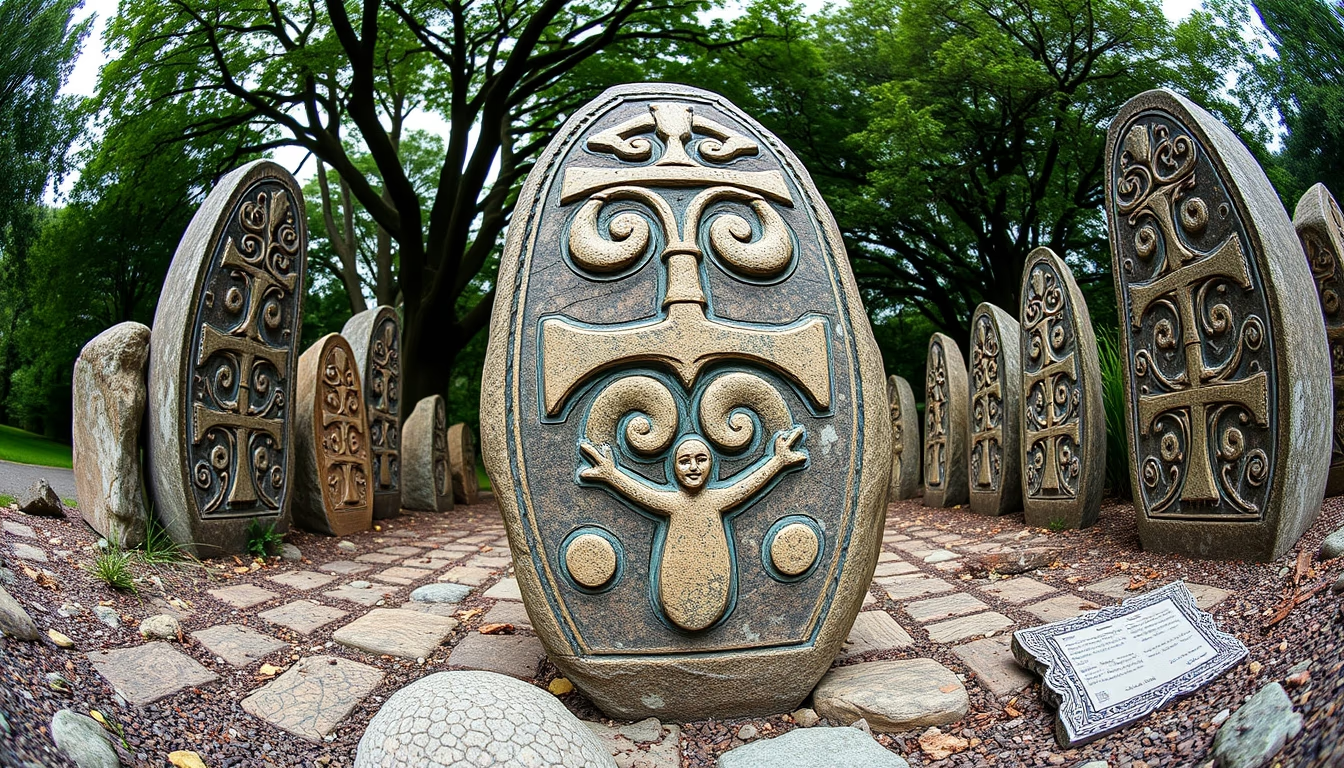
Hangul, the Korean alphabet created in the 15th century, revolutionized writing with its phonetic and scientific design, now a UNESCO World Heritage.
About this subject
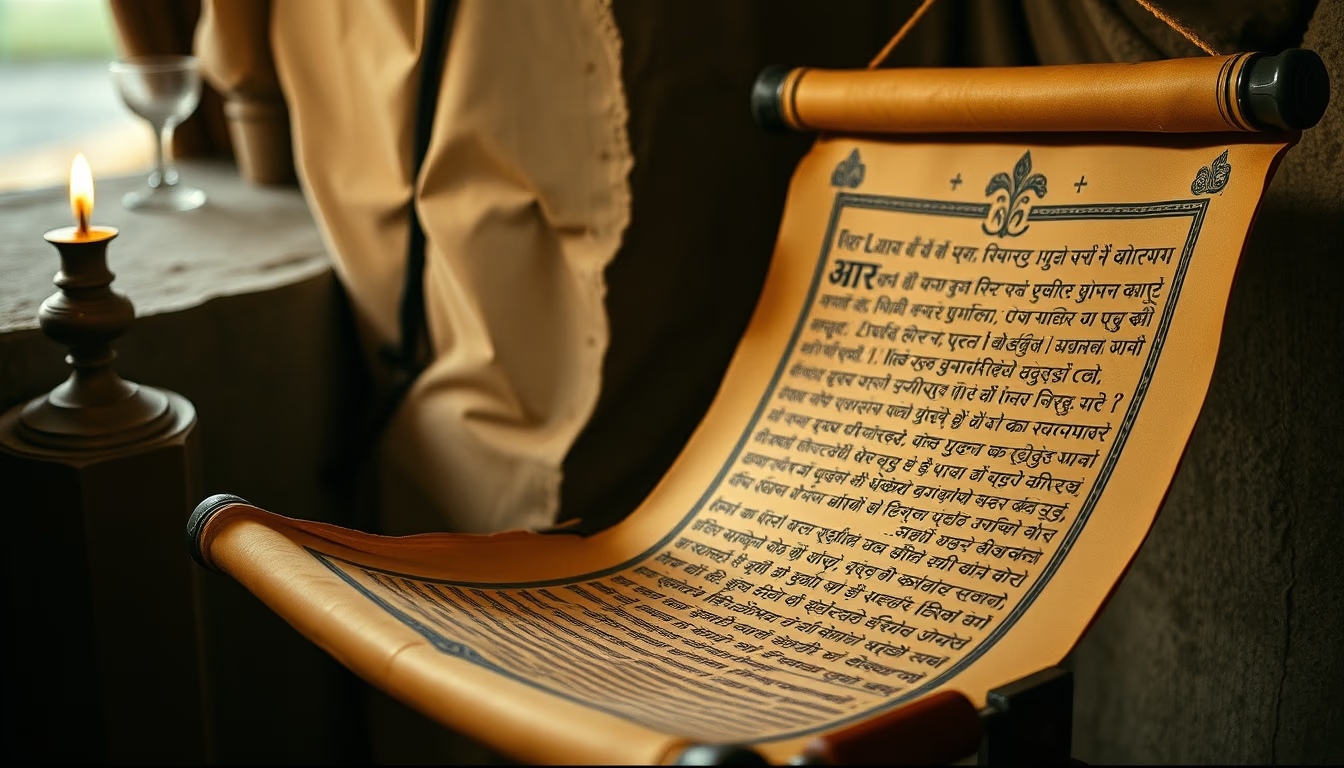
Hangul is the native writing system of Korea, developed around 1443 under the reign of King Sejong the Great of the Joseon dynasty. Unlike most alphabets, Hangul was deliberately designed to be easy to learn and precise in representing the sounds of the Korean language. The Hunminjeongeum document, which announced the creation of the alphabet, explains its principles: consonant shapes imitate the vocal organs (tongue, lips, teeth), and vowels derive from the elements of heaven, earth, and man. This scientific design has led to near 100% literacy rates in modern Korea.
Before Hangul, Koreans wrote using Chinese characters (hanja), which were restricted to the educated elite. The new alphabet democratized writing and was initially called eonmun (vulgar script). During the 20th century, Hangul was suppressed under Japanese occupation (1910, 1945) but reemerged as a symbol of national identity. Today it is used in both South and North Korea, with minor orthographic differences. UNESCO recognized the Hunminjeongeum as a Memory of the World in 1997.
Interestingly, Hangul can be written both vertically and horizontally, and letters form syllabic blocks by combining consonants and vowels into a single unit. Its modular structure facilitated easy adaptation to digital devices. Hangul Day is celebrated on October 9 in South Korea and January 15 in North Korea. Modern linguistic studies rank Hangul as one of the most efficient and logical alphabets in the world.
Frequently Asked Questions
Who created the Hangul alphabet and when?
King Sejong the Great of the Joseon dynasty created Hangul in 1443, with the publication of the Hunminjeongeum document in 1446.
Why is Hangul considered a scientific alphabet?
Because its consonants mimic the shape of the vocal organs during pronunciation, and vowels represent the Chinese elements of heaven, earth, and man. This makes it systematic and easy to learn.
Is Hangul used only in South Korea?
No, Hangul is the official writing system in both South Korea and North Korea, though there are minor differences in spelling and the use of some characters.
Direct URL
https://pub-c7d6a6ea828543ac903a74a341ccb2e1.r2.dev/imagens/hangul-korean-ancient-documentary-photography-fresh0.avifHow to credit
Include a visible link back to UtilizAí. Copy one of the snippets below:
<a href="https://xn--utiliza-eza.com/en/midia/imagens/hangul-korean-ancient-documentary-photography-fresh0">Hangul korean ancient</a> by <a href="https://xn--utiliza-eza.com">UtilizAí</a>, licensed under <a href="https://creativecommons.org/licenses/by/4.0/">CC BY 4.0</a>.
[Hangul korean ancient](https://xn--utiliza-eza.com/en/midia/imagens/hangul-korean-ancient-documentary-photography-fresh0) by [UtilizAí](https://xn--utiliza-eza.com), CC BY 4.0
License: CC-BY-4.0