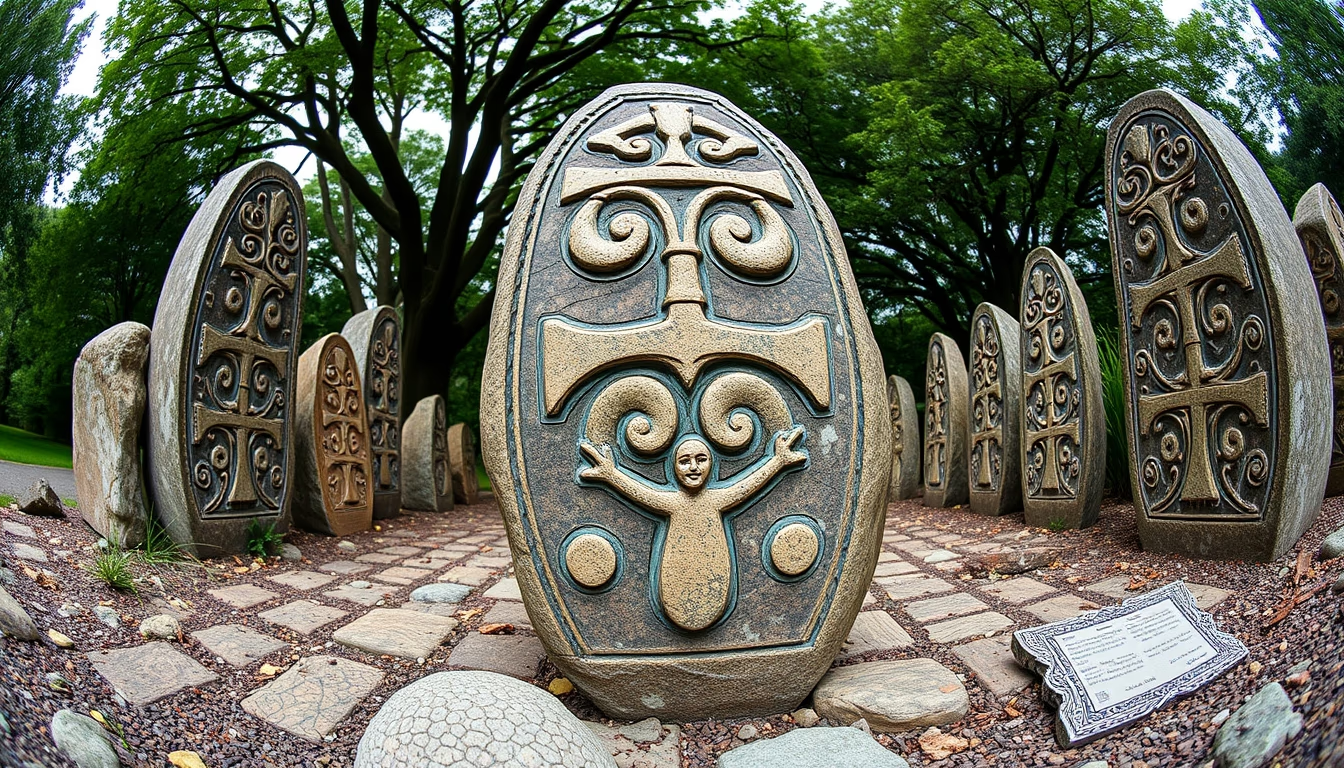
Hangul korean ancient
1344×768 · AVIF · CC BY 4.0

Hangul, the Korean alphabet created by King Sejong in the 15th century, is one of the most scientific and innovative writing systems in the world.
About this subject
Hangul is the native alphabet of Korea, created in 1443 by King Sejong the Great and officially promulgated in 1446 through the document Hunminjeongeum, which means "The Correct Sounds for the Instruction of the People." Before its creation, Korea used Chinese characters (hanja), which were complex and accessible only to the scholarly elite. Sejong, concerned with the literacy of the common people, developed a simple and logical writing system that allowed even peasants to learn to read and write quickly.
The structure of Hangul is remarkably scientific. Consonants were designed to visually represent the shape of the speech organs: for example, the consonant 'ㄱ' (g/k) imitates the tongue blocking the throat, while 'ㅁ' (m) represents the shape of the closed mouth. Vowels are based on three fundamental elements of Korean philosophy: heaven (•), earth (ㅡ), and human (ㅣ). Letters are combined into syllable blocks that represent each spoken syllable, forming a highly efficient phonemic system with 14 basic consonants and 10 vowels.
Culturally and historically, Hangul is a cornerstone of Korean identity. In 1997, UNESCO included the Hunminjeongeum in the Memory of the World Register, recognizing its significance. The alphabet is used both in South Korea (called Hangul) and North Korea (known as Chosŏn'gŭl). Hangul Day, celebrated on October 9 in South Korea, is a national holiday that commemorates the proclamation of the alphabet. Despite initial resistance from Confucian scholars who saw hanja as superior, Hangul prevailed and is now considered one of the easiest writing systems to learn, contributing to the extremely high literacy rate on the Korean peninsula.
Frequently Asked Questions
What is Hangul?
Hangul is the native alphabet of Korea, created in the 15th century by King Sejong the Great. It is a phonemic system consisting of 14 consonants and 10 basic vowels, combined into syllable blocks.
When and by whom was Hangul created?
It was created in 1443 by King Sejong of the Joseon dynasty and officially promulgated in 1446 through the document Hunminjeongeum, with the aim of increasing literacy among common people.
Why is Hangul considered a scientific alphabet?
Because its letters were designed based on the shape of the speech organs (consonants) and the philosophical elements heaven, earth, and human (vowels), forming a logical and easy-to-learn system.
Direct URL
https://pub-c7d6a6ea828543ac903a74a341ccb2e1.r2.dev/imagens/hangul-korean-ancient-documentary-nature-style-fresh9.avifHow to credit
Include a visible link back to UtilizAí. Copy one of the snippets below:
<a href="https://xn--utiliza-eza.com/en/midia/imagens/hangul-korean-ancient-documentary-nature-style-fresh9">Hangul korean ancient</a> by <a href="https://xn--utiliza-eza.com">UtilizAí</a>, licensed under <a href="https://creativecommons.org/licenses/by/4.0/">CC BY 4.0</a>.
[Hangul korean ancient](https://xn--utiliza-eza.com/en/midia/imagens/hangul-korean-ancient-documentary-nature-style-fresh9) by [UtilizAí](https://xn--utiliza-eza.com), CC BY 4.0
License: CC-BY-4.0