Granite mountain massive
1344×768 · AVIF · CC BY 4.0
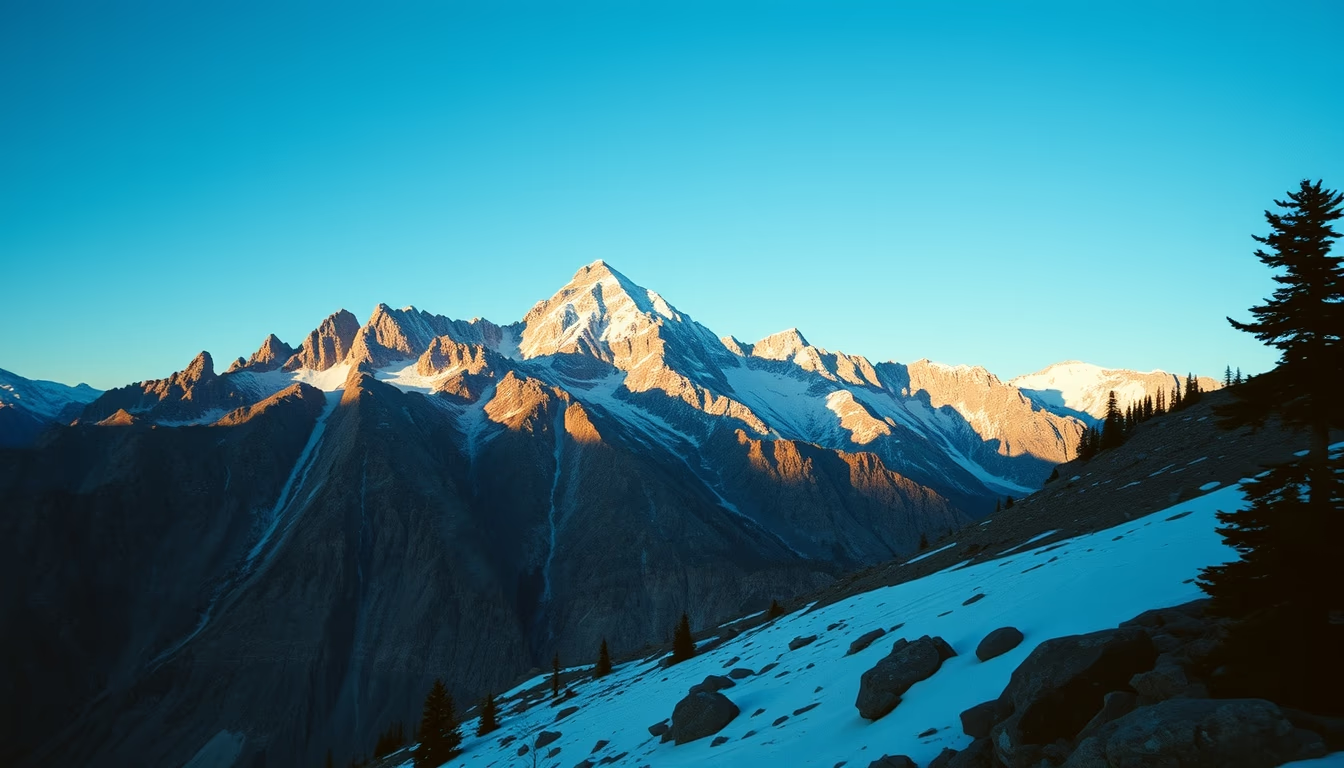
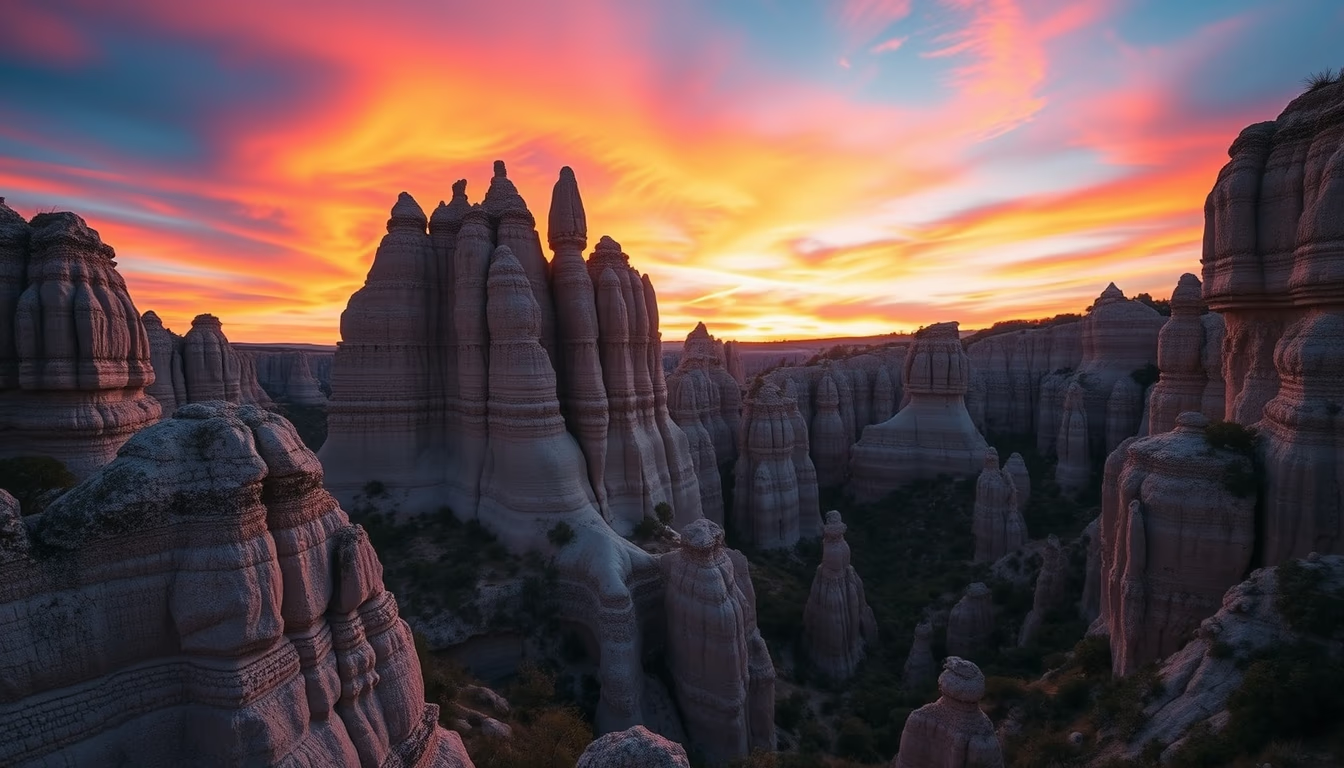
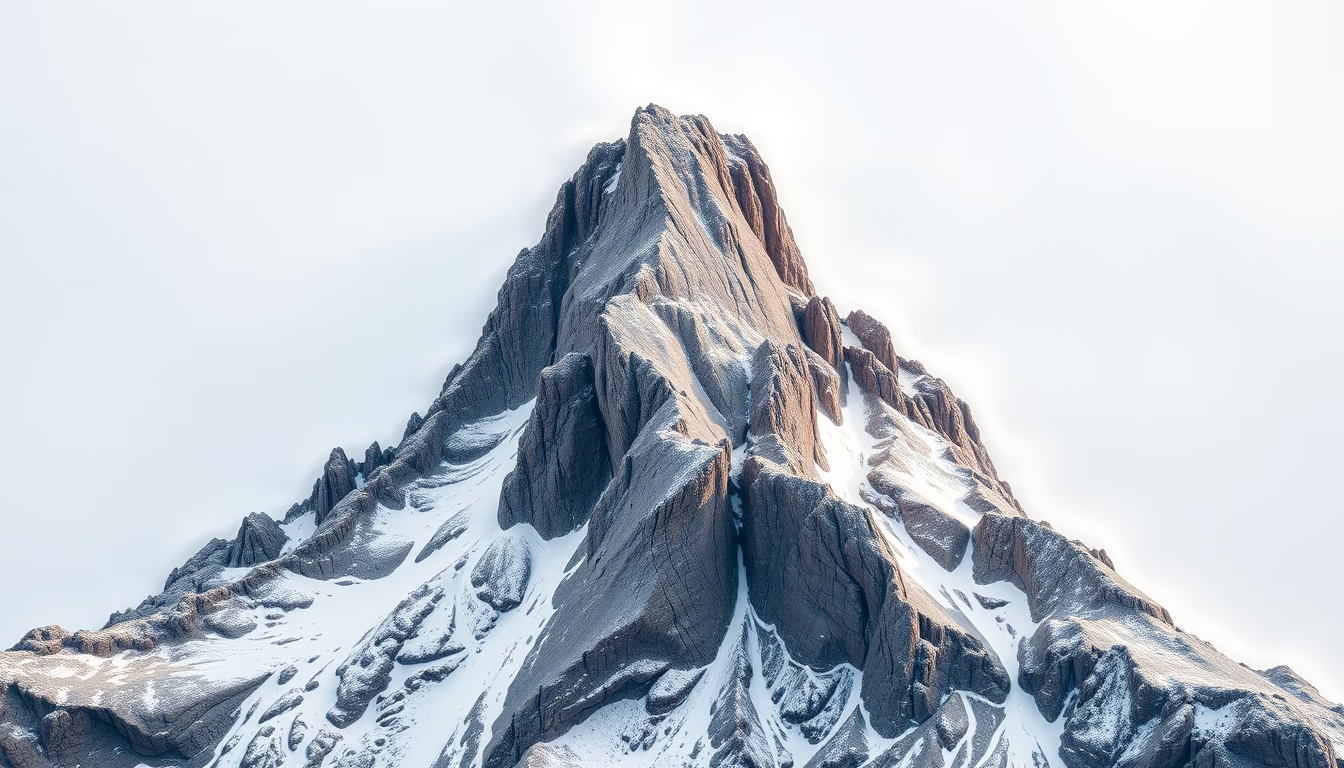
Massive granite peaks, carved from slow-cooling magma millions of years ago, now exposed by erosion.
About this subject
Granite is an igneous plutonic rock formed by the slow cooling of magma at depths up to 15 km. This process allows the growth of visible crystals, primarily composed of quartz, feldspar, and mica. In massive mountain ranges, such as the Serra da Mantiqueira (Brazil) or the Sierra Nevada (USA), granite emerges after the removal of overlying layers by millions of years of erosion. The hardness and chemical resistance of granite cause these mountains to maintain rounded and steep shapes, characteristic of landscapes like Sugarloaf Mountain in Rio de Janeiro, a granitic gneiss block 396 meters high.
These formations range from 1 to 4 billion years old, containing geological records of ancient orogenies. In Brazil, the Brazilian crystalline shield includes extensive granite bodies, such as the Itu batholith (SP), dating to the Proterozoic. Commercial extraction of granite as an ornamental rock moves billions of dollars annually, with Brazil being one of the world's largest exporters. Cities like Pedra Azul (ES) and Nova Venécia (ES) have economies based on granite quarrying.
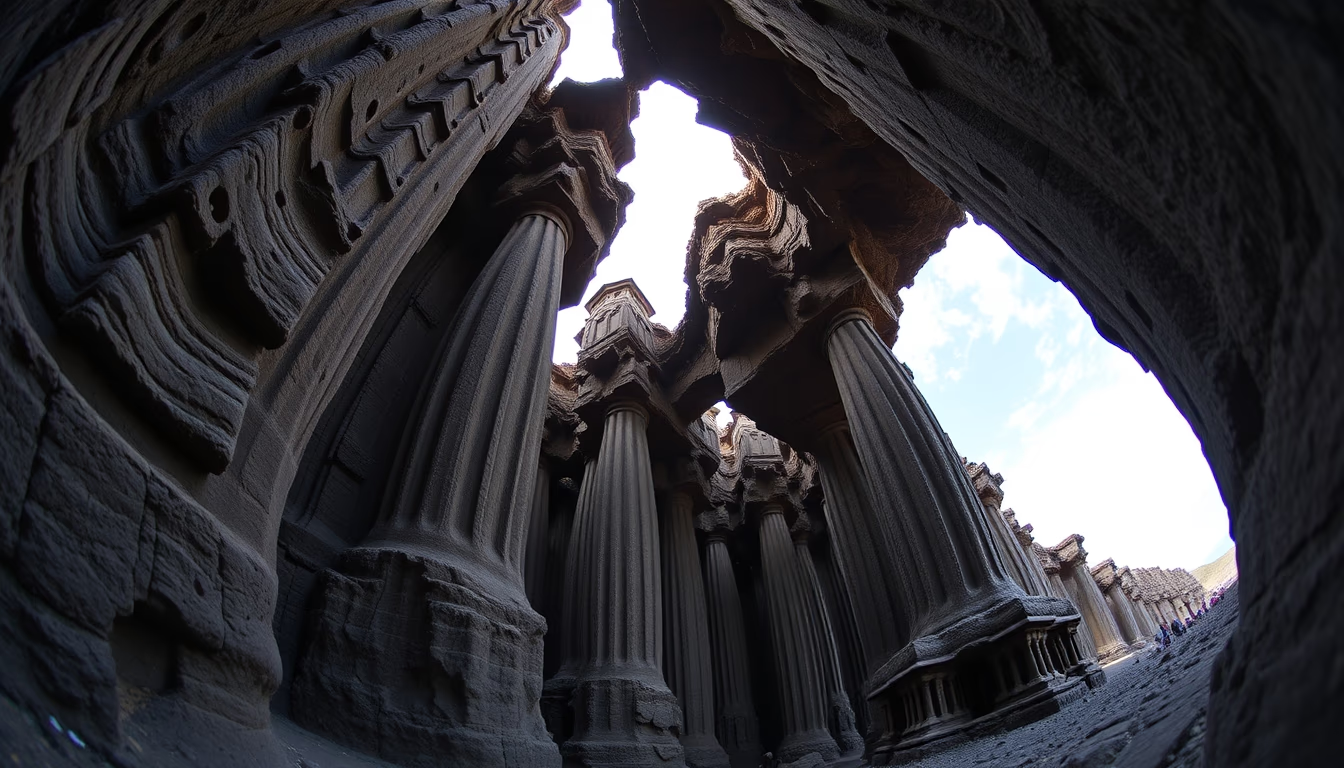
Interestingly, granite's texture and color vary with mineral composition: pink granite owes its hue to potassium feldspar, while gray is rich in quartz. Chemical weathering can create peculiar forms, such as blockfields in cold climates. On the Mohs hardness scale, granite ranks 6-7, and has been used since antiquity in monuments like the Luxor obelisk (Egypt) and the Parthenon columns.
Despite its resistance, granite is susceptible to freeze-thaw weathering at high latitudes, generating cracks and fragmentation. In Argentine Patagonia, the granite peaks of Mount Fitz Roy (3,405 m) are a climber's paradise due to solid rock and steep fractures. The formation of these mountains is linked to plate subduction and uplift over millions of years.
Frequently Asked Questions
What distinguishes granite from other igneous rocks?
Granite is a plutonic rock formed by slow magma cooling at depth, resulting in large, visible crystals. It is rich in quartz, feldspar, and mica, giving it high hardness (6-7 on Mohs scale) and resistance to weathering.
Why do some granite mountains have rounded shapes?
Granite weathers through chemical alteration and spheroidal exfoliation, where concentric layers peel off due to temperature and moisture changes, rounding the blocks. Pressure release also contributes to curved fractures.
Where are the largest granite mountains in the world?
Notable examples include the Serra do Mar (Brazil), Mount Fitz Roy (Argentina/Chile), Half Dome in Yosemite (USA), and Mount Kinabalu (Borneo). In Brazil, Pico da Neblina and Pedra da Mina are granite peaks.
Direct URL
https://pub-c7d6a6ea828543ac903a74a341ccb2e1.r2.dev/imagens/granite-mountain-massive-film-grain-authentic-fresh14.avifHow to credit
Include a visible link back to UtilizAí. Copy one of the snippets below:
<a href="https://xn--utiliza-eza.com/en/midia/imagens/granite-mountain-massive-film-grain-authentic-fresh14">Granite mountain massive</a> by <a href="https://xn--utiliza-eza.com">UtilizAí</a>, licensed under <a href="https://creativecommons.org/licenses/by/4.0/">CC BY 4.0</a>.
[Granite mountain massive](https://xn--utiliza-eza.com/en/midia/imagens/granite-mountain-massive-film-grain-authentic-fresh14) by [UtilizAí](https://xn--utiliza-eza.com), CC BY 4.0
License: CC-BY-4.0