Gondola venice canal
1344×768 · AVIF · CC BY 4.0
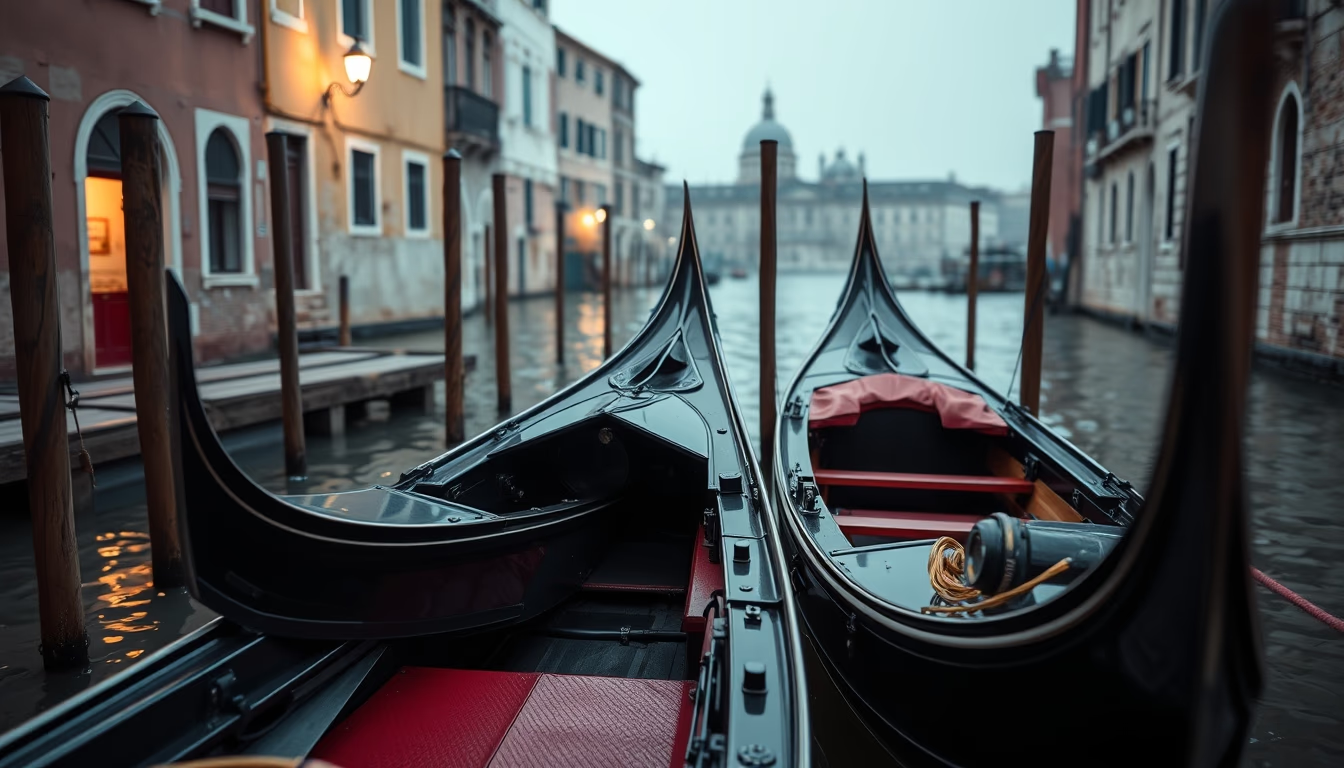
Gondolas are traditional Venetian boats, rowed by a gondolier, symbolizing the romance and history of the Italian city.
About this subject
The gondola is a quintessential Venetian boat, used for centuries as the primary means of transportation through the city's canals. Originating in the 11th century, its design evolved into the current asymmetrical form, measuring about 11 meters long and weighing 1.4 tons. Gondolas are handmade from woods like oak, linden, and walnut, requiring around 500 hours of labor by master carpenters called 'squerarioli'. The iron prow ornament (ferro) has seven teeth representing Venice's six sestieri (districts) and the island of Giudecca.
Once numbering up to 10,000 in the 16th century, today only about 400 licensed gondolas remain, primarily used for tourism. Each gondola is operated by a gondolier, a regulated and often hereditary profession. The gondolier stands at the stern and rows with a single oar (remo) placed in a rowlock (forcola), a technique that allows navigation in narrow canals. The role requires a license and deep knowledge of tides and currents.
Venice's canals form a 41-kilometer network of 177 canals, crossed by over 400 bridges. The Grand Canal (Canal Grande) is the main artery, stretching 3.8 km and lined with historic palaces. Gondolas are painted black by law (since 1633, to curb extravagance) and require seven coats of paint. Maintenance is rigorous due to brackish water; a new handmade gondola can cost over 50,000 euros. The profession of gondolier is demanding: training includes history, foreign languages, and navigation skills.
Culturally, the gondola symbolizes Venetian romance and elegance, featured in music and film. While many tourists take gondola rides (averaging 80 euros for 30 minutes), they remain a vital part of Venice's heritage. The peak season is spring and summer, but gondolas navigate year-round. Despite challenges like rising sea levels and mass tourism, efforts to preserve the tradition continue, including workshops that train new artisans.
Frequently Asked Questions
How much does a gondola ride cost in Venice?
The official price for a gondola ride is about 80 euros for 30 minutes during the day, rising to 100 euros at night. The fare is per gondola, which holds up to 5 passengers.
What are gondolas made of?
Gondolas are handcrafted from eight types of wood: oak, linden, walnut, cedar, mahogany, elm, cypress, and fir. The exact composition is a secret held by master artisans, and each piece is shaped manually.
Why are gondolas painted black?
In 1633, a Venetian law mandated that all gondolas be painted black to curb excessive competition and ostentation among nobles. The paint requires seven coats and is renewed monthly.
Direct URL
https://pub-c7d6a6ea828543ac903a74a341ccb2e1.r2.dev/imagens/gondola-venice-canal-studio-still-life-p2.avifHow to credit
Include a visible link back to UtilizAí. Copy one of the snippets below:
<a href="https://xn--utiliza-eza.com/en/midia/imagens/gondola-venice-canal-studio-still-life-p2">Gondola venice canal</a> by <a href="https://xn--utiliza-eza.com">UtilizAí</a>, licensed under <a href="https://creativecommons.org/licenses/by/4.0/">CC BY 4.0</a>.
[Gondola venice canal](https://xn--utiliza-eza.com/en/midia/imagens/gondola-venice-canal-studio-still-life-p2) by [UtilizAí](https://xn--utiliza-eza.com), CC BY 4.0
License: CC-BY-4.0