Gondola venice canal
1344×768 · AVIF · CC BY 4.0
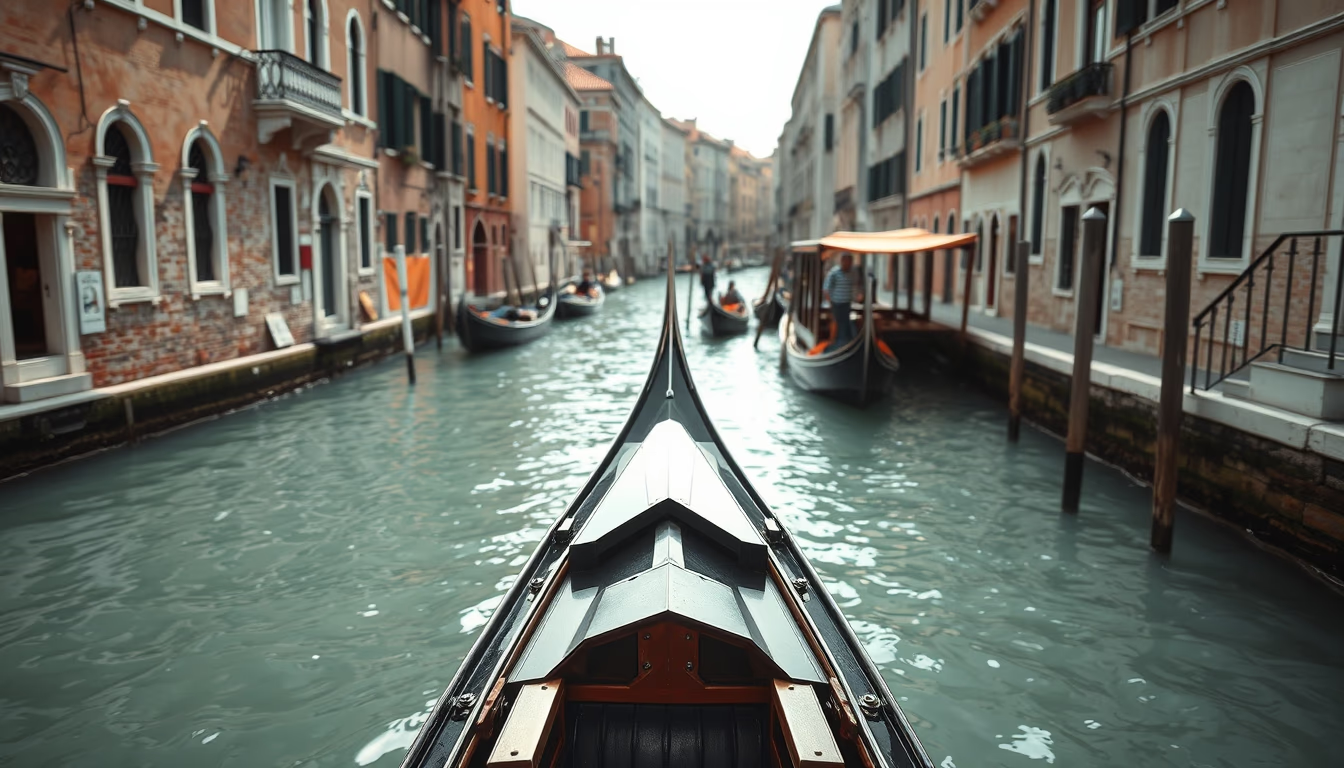
Gondolas are the iconic Venetian boats gliding through the canals of Venice, symbolizing the city's history and romance.
About this subject
The gondola is a traditional Venetian boat, famous worldwide for its role in navigating the canals of Venice. Measuring about 11 meters in length and 1.4 meters in width, it is handcrafted from eight different types of wood, including oak, elm, and mahogany, a process that takes roughly 40 hours. Its asymmetrical hull, wider on the left side, allows the gondolier to row with a single oar without turning the vessel. This unique design evolved over centuries to suit Venice's narrow, winding waterways.
Venice has approximately 150 canals totaling about 42 kilometers. Gondolas first appeared around the 11th century, reaching their peak in the 18th century, when more than 10,000 boats were estimated to exist. Today, only a few hundred remain, primarily used for tourism. Each gondola is built in a specialized boatyard called a 'squero', and gondoliers must undergo rigorous training and licensing, including rowing tests, city knowledge, and English proficiency.
Gondolas also play a cultural role in historical regattas like the Regata Storica, held annually on the Grand Canal. The traditional color of gondolas is black, mandated by a 16th-century sumptuary law to curb displays of wealth. However, gold details and upholstery are allowed. The iron prow, known as 'ferro', features six teeth representing Venice's districts, while the aft counterpart symbolizes the island of Giudecca.
Despite being strongly associated with romantic rides, gondolas continue to serve as practical transport for Venetians, especially in smaller canals inaccessible to motorboats. A new gondola can cost up to 40,000 euros, and its maintenance is constant due to saltwater exposure. The rowing technique, requiring balance and precision, has been passed down for generations, preserving a centuries-old tradition.
Frequently Asked Questions
How many gondolas are there in Venice today?
There are currently around 400 to 500 gondolas in Venice, a fraction of the thousands that existed in the 18th century.
Why are gondolas painted black?
The black color was mandated by a 16th-century sumptuary law to prevent displays of wealth. Today, it remains a tradition that ensures uniformity.
What do the teeth on the gondola's prow represent?
The six teeth of the ferro represent Venice's six districts (sestieri): Cannaregio, Castello, Dorsoduro, San Marco, San Polo, and Santa Croce.
Direct URL
https://pub-c7d6a6ea828543ac903a74a341ccb2e1.r2.dev/imagens/gondola-venice-canal-minimalist-composition-p12.avifHow to credit
Include a visible link back to UtilizAí. Copy one of the snippets below:
<a href="https://xn--utiliza-eza.com/en/midia/imagens/gondola-venice-canal-minimalist-composition-p12">Gondola venice canal</a> by <a href="https://xn--utiliza-eza.com">UtilizAí</a>, licensed under <a href="https://creativecommons.org/licenses/by/4.0/">CC BY 4.0</a>.
[Gondola venice canal](https://xn--utiliza-eza.com/en/midia/imagens/gondola-venice-canal-minimalist-composition-p12) by [UtilizAí](https://xn--utiliza-eza.com), CC BY 4.0
License: CC-BY-4.0