Gondola venice canal
1344×768 · AVIF · CC BY 4.0
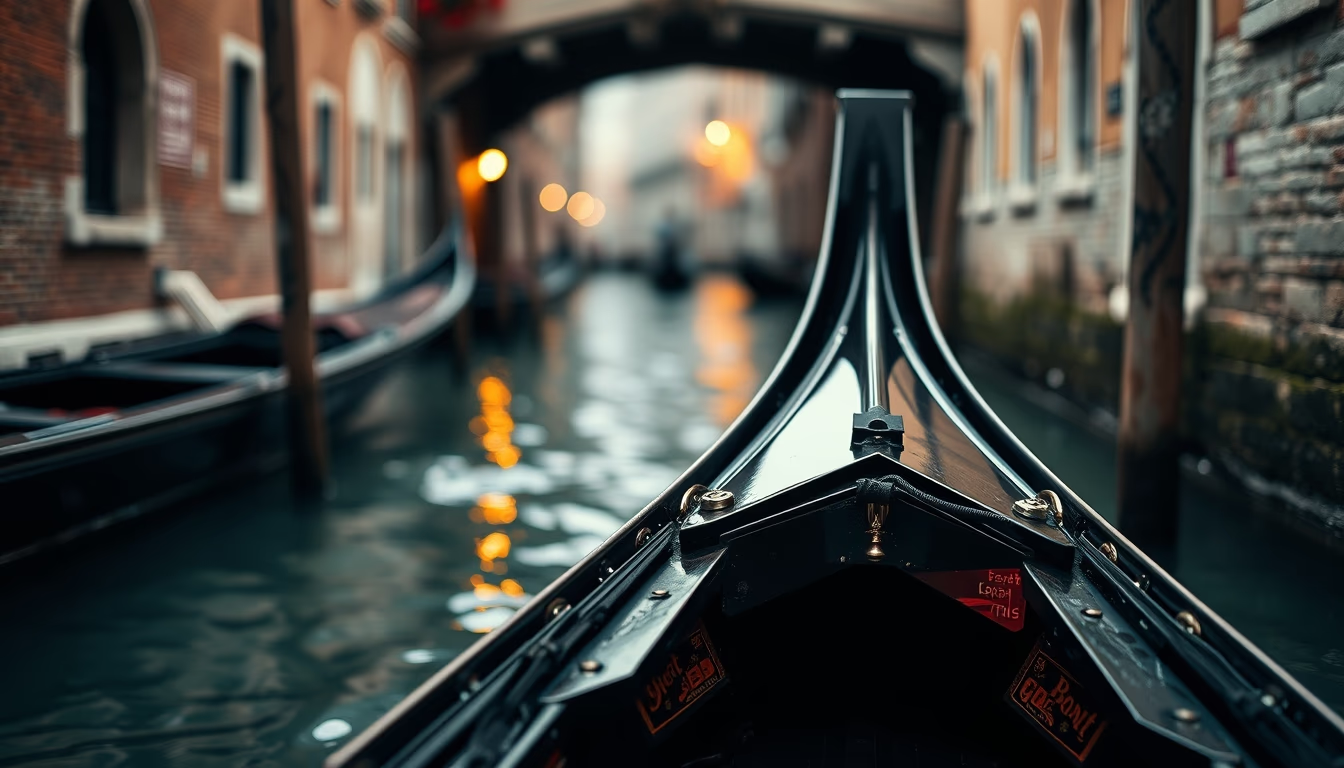
The gondola, a traditional Venetian boat, is a symbol of the city's canals and culture, featuring an asymmetrical design and historical significance.
About this subject
The gondola is an iconic Venetian boat, used for centuries to navigate the city's canals. Its unique design features an asymmetrical hull to counteract the gondolier's weight and prevent spinning. The gondola measures about 11 meters long and weighs approximately 400 kilograms, handcrafted from eight types of wood, including oak, elm, and mahogany. The construction process takes two to three months, following strict traditional guidelines.
Historically, gondolas were the primary transportation in Venice before bridges and walkways were built. In the 18th century, there were around 10,000 gondolas; today, only about 400 remain, mainly used for tourism and special events. Modern gondolas are painted black due to a 16th-century law limiting ostentation among nobles. The stern features six carvings representing Venice's six sestieri (districts): Cannaregio, Castello, Dorsoduro, San Marco, San Polo, and Santa Croce.
The gondolier uses a single 4-meter oar, resting on a forcola (rowlock). Maneuvering through narrow canals requires training at specialized schools, with rigorous exams. Traditional attire includes a straw hat, striped shirt, and white shirt, though not all gondoliers wear the full uniform. Gondolas appear in festivals like the Regata Storica, an annual historical competition on the Grand Canal.
Interestingly, the gondola's origins are uncertain, with records dating to the 11th century. Some historians suggest influence from Roman or Byzantine boats. The word "gondola" may derive from Greek "kondyle" (cavity) or Latin "cunicula" (canoe). Today, beyond tourism, the gondola is a romantic symbol of Venice, immortalized in films and literature. A gondola ride at sunset, under bridges like the Rialto, remains one of the world's most sought-after experiences.
Frequently Asked Questions
How many gondolas are there in Venice today?
Today, there are about 400 gondolas in Venice, mainly used for tourism and special events, compared to around 10,000 in the 18th century.
Why are gondolas painted black?
Gondolas are painted black due to a 16th-century law that limited ostentation among noble families. Before that, they were decorated with colors and gold.
What do the carvings on the gondola's stern represent?
The six carvings on the stern represent Venice's six sestieri (districts): Cannaregio, Castello, Dorsoduro, San Marco, San Polo, and Santa Croce.
Direct URL
https://pub-c7d6a6ea828543ac903a74a341ccb2e1.r2.dev/imagens/gondola-venice-canal-macro-closeup-p11.avifHow to credit
Include a visible link back to UtilizAí. Copy one of the snippets below:
<a href="https://xn--utiliza-eza.com/en/midia/imagens/gondola-venice-canal-macro-closeup-p11">Gondola venice canal</a> by <a href="https://xn--utiliza-eza.com">UtilizAí</a>, licensed under <a href="https://creativecommons.org/licenses/by/4.0/">CC BY 4.0</a>.
[Gondola venice canal](https://xn--utiliza-eza.com/en/midia/imagens/gondola-venice-canal-macro-closeup-p11) by [UtilizAí](https://xn--utiliza-eza.com), CC BY 4.0
License: CC-BY-4.0