Gondola venice canal
1344×768 · AVIF · CC BY 4.0
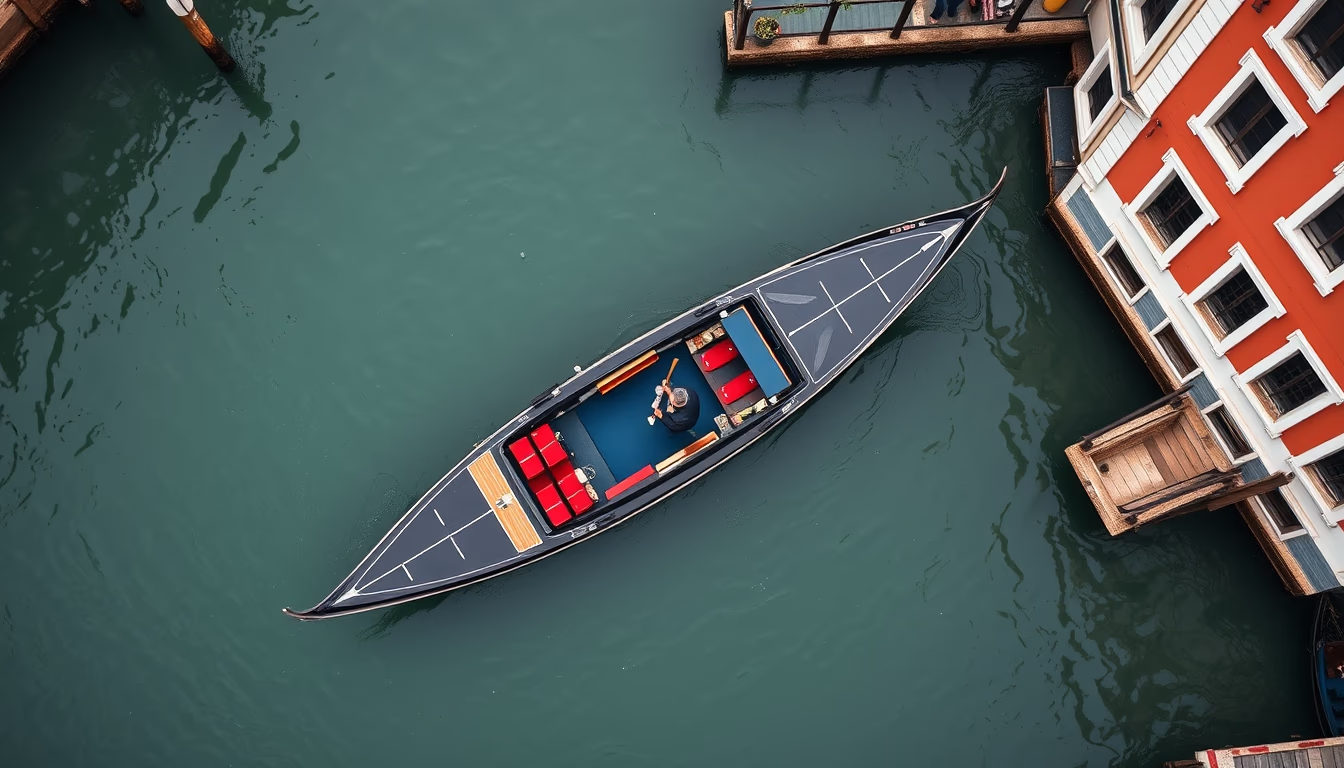
The Venetian gondola is a traditional boat navigating Venice's canals, symbolizing the city and Italian maritime craftsmanship.
About this subject
The gondola is a flat-bottomed boat propelled by a single oar wielded by a gondolier, its asymmetrical design refined over centuries to navigate Venice's narrow canals. The hull consists of 280 pieces of wood from eight species, including oak, walnut, and elm, ensuring lightness and strength. The lateral curvature compensates for the gondolier's thrust, keeping the boat straight. Each gondola costs between EUR 40,000 and 100,000 due to intensive handcrafting, taking about three months to complete.
Historically, gondolas emerged around the 11th century as simple dugout canoes, but by the 16th century they gained standardized shapes and ornaments. During the Renaissance, noble families competed in luxury, decorating their gondolas with gold and silk. To curb ostentation, the Venetian Senate decreed in 1562 that all gondolas must be painted black, a tradition that persists today. The only exceptions are official gondolas or those used in historical regattas. Today only about 400 gondolas remain active, a sharp decline from thousands in the 18th century.
The gondolier profession is strictly regulated: candidates must pass theoretical and practical exams covering Venetian history, maneuvers, and safety. Traditionally male, the first female gondolier was licensed only in 2010, Giorgia Boscolo. The gondola is also a global cultural icon, appearing in works such as Thomas Mann's "Death in Venice" and films like "Casanova." Beyond tourism, gondolas are used in ceremonies like the Regata Storica, an annual event reviving historical boat races on the canals.
Gondola building is preserved by a few traditional shipyards called "squeri," such as the Squero di San Trovaso, founded in the 17th century. The wood comes mainly from the Cadore forests in the Alps, and the planks are bent using steam and special molds. The oar is fixed into a forcola, a carved support allowing different rowing positions. The prow features a metal piece called ferro di prua, whose six teeth represent Venice's six districts (sestieri).
Frequently Asked Questions
Why are gondolas painted black?
In 1562, the Venetian Senate decreed that all gondolas must be black to curb the ostentatious competition among noble families. The tradition persists today, except for official gondolas or those used in historical regattas.
How much does a gondola cost today?
A handmade gondola costs between EUR 40,000 and 100,000, depending on materials and decoration. Construction takes about three months and requires skills passed down through generations.
How many gondolas exist in Venice today?
There are approximately 400 gondolas in active service in Venice today. In the 18th century, thousands existed, but time and modernization have drastically reduced the fleet.
Direct URL
https://pub-c7d6a6ea828543ac903a74a341ccb2e1.r2.dev/imagens/gondola-venice-canal-isometric-flat-lay-p4.avifHow to credit
Include a visible link back to UtilizAí. Copy one of the snippets below:
<a href="https://xn--utiliza-eza.com/en/midia/imagens/gondola-venice-canal-isometric-flat-lay-p4">Gondola venice canal</a> by <a href="https://xn--utiliza-eza.com">UtilizAí</a>, licensed under <a href="https://creativecommons.org/licenses/by/4.0/">CC BY 4.0</a>.
[Gondola venice canal](https://xn--utiliza-eza.com/en/midia/imagens/gondola-venice-canal-isometric-flat-lay-p4) by [UtilizAí](https://xn--utiliza-eza.com), CC BY 4.0
License: CC-BY-4.0