Galleon spanish ancient
1344×768 · AVIF · CC BY 4.0
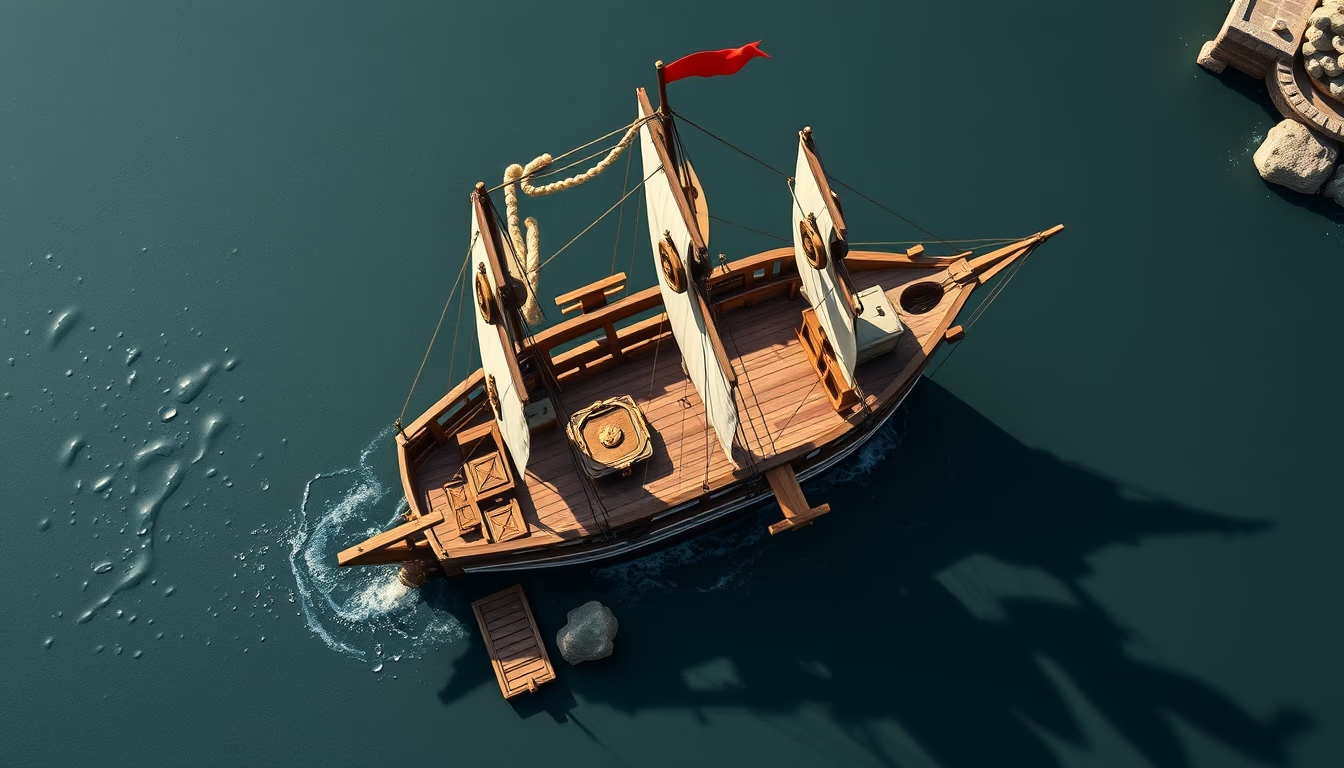
Spanish galleons were iconic ships of the Age of Discovery, used for transatlantic trade and exploration of new maritime routes between the 16th and 18th centuries.
About this subject
Spanish galleons were the most emblematic ships of the Spanish navy between the 16th and 18th centuries. Designed for long ocean voyages, they combined cargo capacity with firepower, being essential for trade with the Americas and the Philippines. These vessels typically had three to four masts, with square sails on the main masts and a lateen sail on the mizzen mast. The hull was sturdy, often sheathed in lead for protection against punctures and marine fouling.
The main function of galleons was to transport silver and gold from the American colonies to Spain, forming the famous treasure fleets. The best-known route was the Manila Galleon, which connected the Philippines to Mexico, carrying Chinese silk, spices, and porcelain in exchange for American silver. This route lasted over 250 years until the early 19th century. Galleons were also used as warships, especially in the Spanish Armada of 1588, although many historians note that their design prioritized cargo over maneuverability.
One of the most famous galleons is the Nuestra Señora de Atocha, which sank in 1622 off the coast of Florida carrying a huge treasure. The ship was found in 1985 by Mel Fisher's treasure hunting company, resulting in the recovery of gold, silver, and emeralds worth hundreds of millions of dollars. Another example is the galleon San José, known as the 'Holy Grail of shipwrecks', which sank in 1708 near Colombia with a cargo estimated at billions of dollars.
Culturally, Spanish galleons symbolize the imperial power of Spain and the age of navigation. They appear in paintings, literature, and even modern pop culture, such as pirate movies. However, their legacy also includes the negative impact on indigenous populations of the Americas due to the colonial exploitation that these trade routes sustained. Today, replicas like the Galeón Andalucía allow the public to learn about these majestic vessels up close.
Frequently Asked Questions
What differentiated a Spanish galleon from other ships of the time?
Spanish galleons had a robust design with a high bow and elevated stern, along with square sails that allowed good speed in favorable winds. They were distinguished by their mixed use: they carried precious goods and also acted as warships, with cannons arranged on several decks.
How many original Spanish galleons still exist?
No original Spanish galleon has survived to the present day. Known examples are modern replicas, such as the Galeón Andalucía, built in Spain in 2010, which sails as a museum ship.
Why were the Manila galleons so important?
The Manila Galleon route was vital for global trade, connecting Asia and America regularly for the first time. It allowed the exchange of American silver for luxurious Asian products, enriching Spain and influencing economies and cultures on both continents.
Direct URL
https://pub-c7d6a6ea828543ac903a74a341ccb2e1.r2.dev/imagens/galleon-spanish-ancient-isometric-flat-lay-p6.avifHow to credit
Include a visible link back to UtilizAí. Copy one of the snippets below:
<a href="https://xn--utiliza-eza.com/en/midia/imagens/galleon-spanish-ancient-isometric-flat-lay-p6">Galleon spanish ancient</a> by <a href="https://xn--utiliza-eza.com">UtilizAí</a>, licensed under <a href="https://creativecommons.org/licenses/by/4.0/">CC BY 4.0</a>.
[Galleon spanish ancient](https://xn--utiliza-eza.com/en/midia/imagens/galleon-spanish-ancient-isometric-flat-lay-p6) by [UtilizAí](https://xn--utiliza-eza.com), CC BY 4.0
License: CC-BY-4.0