Galleon spanish ancient
1344×768 · AVIF · CC BY 4.0
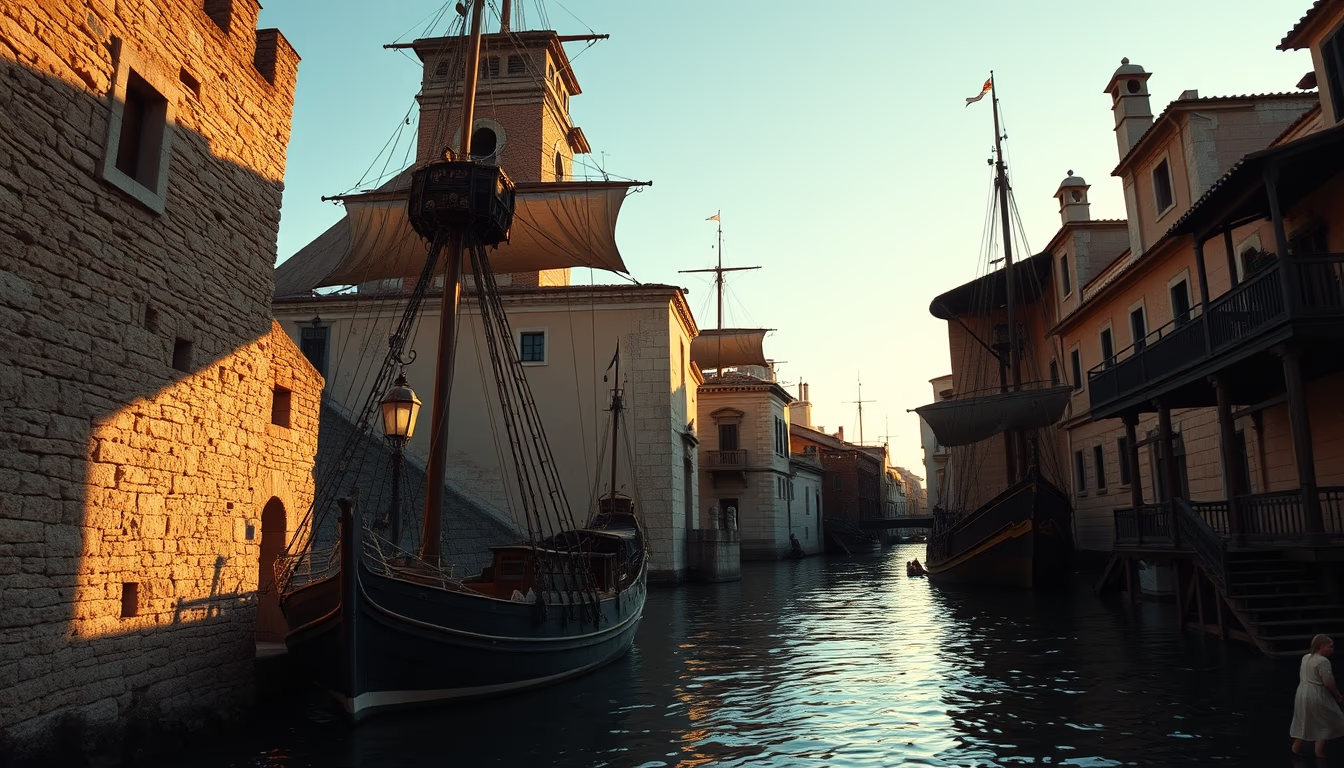
Spanish galleons were warships and merchant vessels that dominated the seas from the 16th to the 18th centuries, crucial for transporting wealth from the Americas.
About this subject
Spanish galleons represent a landmark in maritime history, combining cargo capacity with firepower. Evolving from carracks, these three- or four-masted vessels had a high, rounded hull ideal for long ocean voyages. They were the backbone of the Spanish treasure fleets, carrying silver and gold from Mexico and Peru to Spain, along with spices and silk from Asia via Manila.
Built in shipyards in Havana, Seville, and the Philippines, galleons could reach up to 50 meters in length and displace over 1,000 tons. Their high stern and forecastles provided tactical advantages in battle, carrying up to 60 cannons on two decks. Notably, many galleons never returned to Spain, sinking in hurricanes or being captured by English privateers like Francis Drake.
The most famous galleon might be the San Juan Nepomuceno, which fought at the Battle of Trafalgar in 1805 before being captured. Though slower than frigates, galleons were sturdy and could carry 500 tons of cargo, becoming symbols of Spanish colonial power. Their construction used pine and oak, with techniques that evolved to withstand the harsh Atlantic conditions.
The decline of galleons began in the 18th century as more specialized ships of the line took over military roles. Nevertheless, their design influenced later vessels, and their legacy persists in underwater treasures and popular culture, such as pirate movies. Archaeological study of wrecks like Nuestra Señora de Atocha reveals details of life on board and the naval technology of the era.
Frequently Asked Questions
What was the main purpose of Spanish galleons?
Spanish galleons were multipurpose vessels, used both as warships and for cargo transport. Their most famous role was in the Spanish treasure fleets, carrying precious metals and colonial goods from the Americas to Spain.
How were galleons built and what materials were used?
Construction required hardwoods like oak for the hull and pine for masts. Major shipyards were in Havana, Seville, and the Philippines. The process took months and involved hundreds of craftsmen.
What is the difference between a galleon and a carrack?
The carrack (nau) was older and less maneuverable. The galleon, emerging in the 16th century, had a longer hull, lateen sails on the mizzen mast, and lower castles, making it more balanced for ocean voyages.
Direct URL
https://pub-c7d6a6ea828543ac903a74a341ccb2e1.r2.dev/imagens/galleon-spanish-ancient-cinematic-wide-shot-p10.avifHow to credit
Include a visible link back to UtilizAí. Copy one of the snippets below:
<a href="https://xn--utiliza-eza.com/en/midia/imagens/galleon-spanish-ancient-cinematic-wide-shot-p10">Galleon spanish ancient</a> by <a href="https://xn--utiliza-eza.com">UtilizAí</a>, licensed under <a href="https://creativecommons.org/licenses/by/4.0/">CC BY 4.0</a>.
[Galleon spanish ancient](https://xn--utiliza-eza.com/en/midia/imagens/galleon-spanish-ancient-cinematic-wide-shot-p10) by [UtilizAí](https://xn--utiliza-eza.com), CC BY 4.0
License: CC-BY-4.0