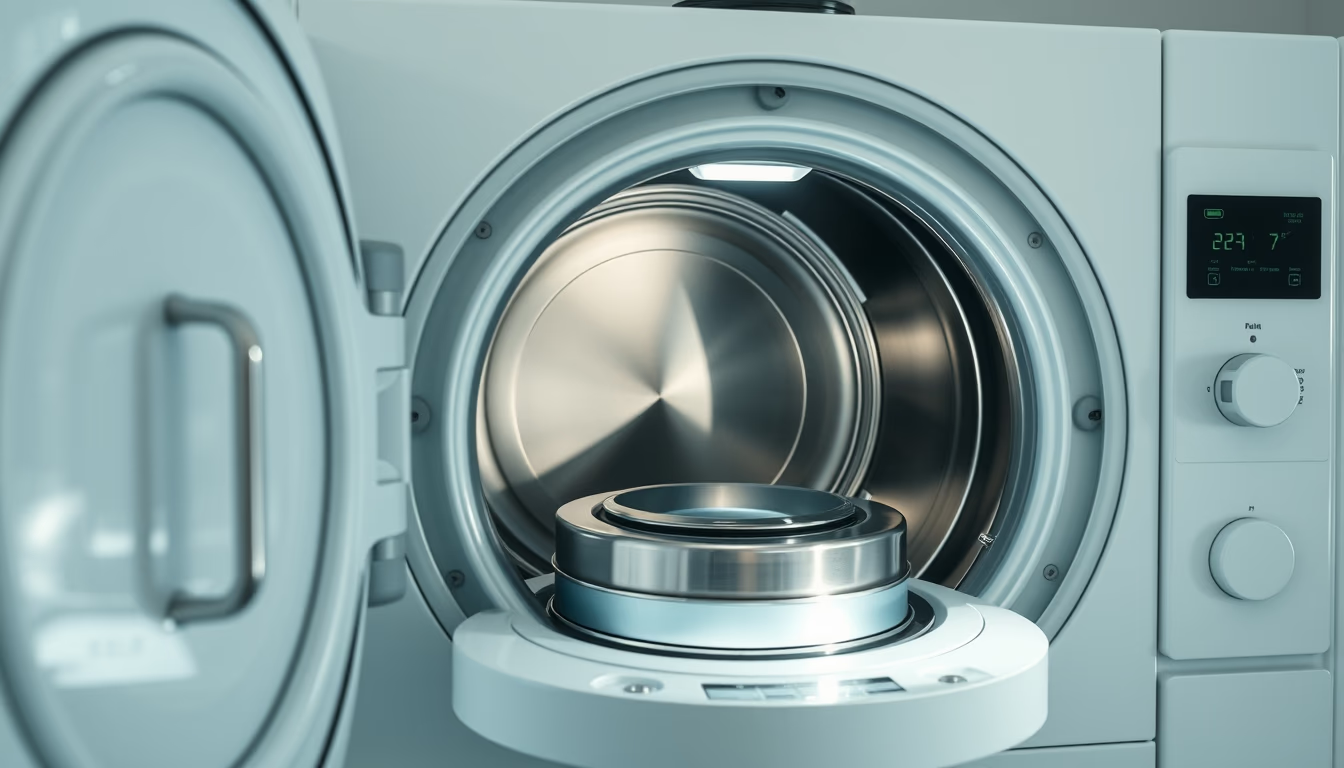
Fume hood chemistry
1344×768 · AVIF · CC BY 4.0

A chemistry fume hood is a lab safety device that protects users from toxic fumes, using forced exhaust and filtration systems.
About this subject
A chemical fume hood, also known as a laboratory exhaust hood, is a local ventilation device designed to capture and remove airborne contaminants such as vapors, gases, dust particles, and aerosols generated during chemical experiments. Its operating principle relies on creating an inward airflow into the cabinet, which is then exhausted to the exterior or filtered before recirculation. There are two main types: ducted fume hoods, which expel contaminants via ductwork outside the building, and recirculating fume hoods (filtering hoods), which use HEPA and activated carbon filters to purify the air before returning it to the lab. The choice depends on the chemicals used and local regulations.
Fume hoods are critical in many areas of chemistry, especially organic chemistry, where volatile solvents like diethyl ether, chloroform, and benzene are handled, and inorganic chemistry, when working with concentrated acids (nitric, sulfuric) and strong bases. They are also essential in toxicological, pharmaceutical, and research labs dealing with carcinogenic or mutagenic substances. Without proper hoods, chronic exposure to harmful substances can cause respiratory issues, dermatitis, or severe poisoning. Safety standards require the face velocity to be between 0.4 and 0.6 m/s to ensure effective containment.
Historically, the first chemical fume hoods appeared in the 19th century, evolving from simple open windows to masonry structures with natural exhaust. Modern hoods are made from corrosion-resistant materials such as epoxy-coated stainless steel and tempered glass, with electronic monitoring systems for airflow and temperature. Specialized hoods exist for radiochemistry (with lead shielding) and microbiology (with laminar unidirectional flow). Regular maintenance, including filter replacement and leak checks, is vital for safety and performance.
Frequently Asked Questions
What is the difference between a chemical fume hood and a laminar flow hood?
A chemical fume hood protects the user by exhausting toxic fumes outside, while a laminar flow hood protects the sample from contamination by filtering incoming air. The latter may or may not provide user protection depending on its class.
How can I tell if a fume hood is working properly?
The hood should have a face velocity or differential pressure monitor. Face velocity should be between 0.4 and 0.6 m/s. Smoke tests or anemometers can confirm airflow. Visual and audible alarms indicate malfunctions.
Which chemicals require mandatory use of a fume hood?
All volatile, toxic, corrosive, or carcinogenic reagents must be handled in a fume hood. Examples include concentrated hydrochloric acid, benzene, formaldehyde, chloroform, and hydrofluoric acid.
Direct URL
https://pub-c7d6a6ea828543ac903a74a341ccb2e1.r2.dev/imagens/fume-hood-chemistry-tilt-shift-miniature-fresh10.avifHow to credit
Include a visible link back to UtilizAí. Copy one of the snippets below:
<a href="https://xn--utiliza-eza.com/en/midia/imagens/fume-hood-chemistry-tilt-shift-miniature-fresh10">Fume hood chemistry</a> by <a href="https://xn--utiliza-eza.com">UtilizAí</a>, licensed under <a href="https://creativecommons.org/licenses/by/4.0/">CC BY 4.0</a>.
[Fume hood chemistry](https://xn--utiliza-eza.com/en/midia/imagens/fume-hood-chemistry-tilt-shift-miniature-fresh10) by [UtilizAí](https://xn--utiliza-eza.com), CC BY 4.0
License: CC-BY-4.0