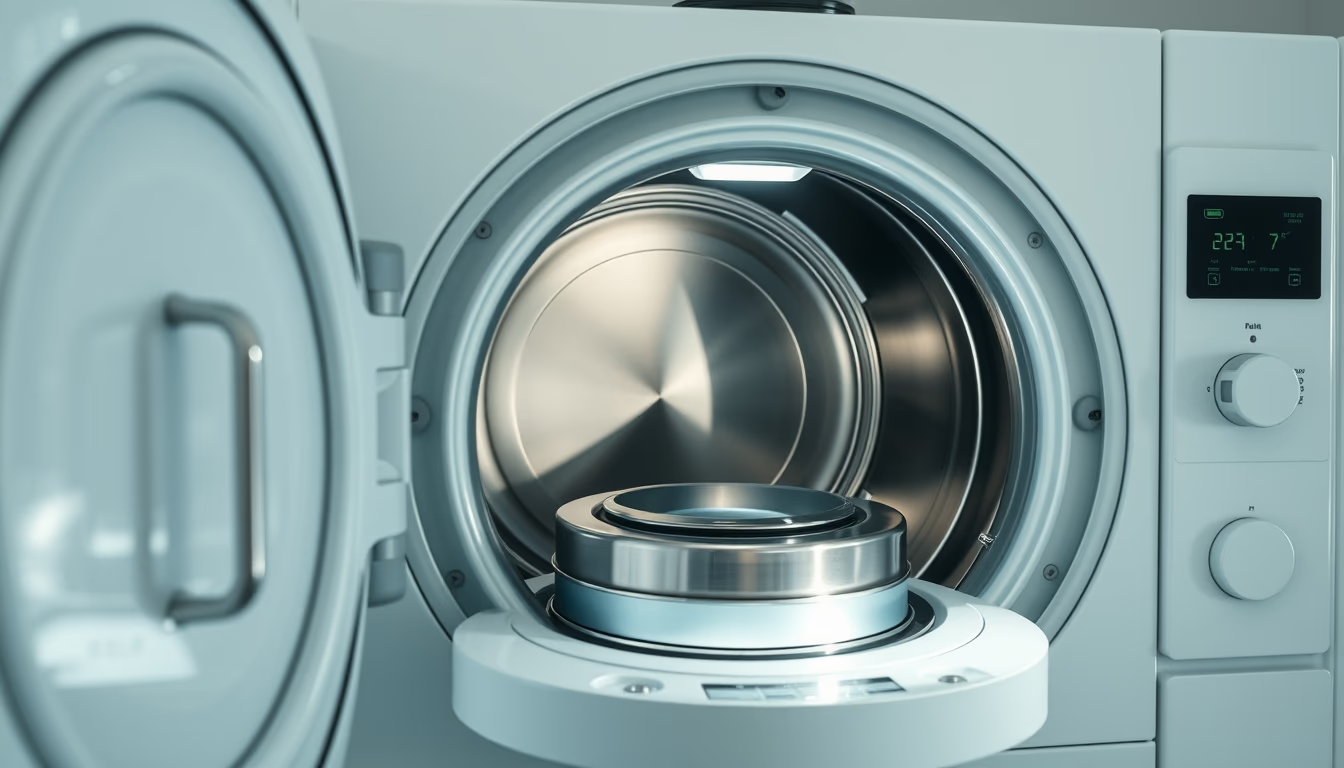
Fume hood chemistry
1344×768 · AVIF · CC BY 4.0

Fume hoods are essential equipment in chemical laboratories, protecting users from toxic vapors and hazardous reactions.
About this subject
A fume hood, also known as a chemical hood or laboratory hood, is a local ventilation device that removes airborne contaminants from laboratory environments. Its basic principle is to draw contaminated air away from the operator, filtering or expelling it to the outside, ensuring safety when handling volatile, toxic, or flammable substances. Typical design includes a work chamber with a sliding glass sash, exhaust fan, and ductwork, which can be connected to filtration systems or direct exhaust.
Fume hoods are classified into two main types: forced air (with mechanical exhaust) and natural draft. Modern models often incorporate airflow sensors, alarms, and recirculation systems with HEPA and activated carbon filters. The American standard ASHRAE 110 and European EN 14175 specify performance requirements, including face velocity (typically 0.4, 0.6 m/s) to contain vapors. In academic laboratories, the fume hood is one of the most important collective protective equipment, mandatory for experiments with organic solvents, concentrated acids, and carcinogenic substances.
Interestingly, the concept of local exhaust ventilation dates back to the late 19th century, when early exhaust systems were installed in European laboratories to remove unpleasant odors. With the rise of organic chemistry and increased solvent use, fume hoods evolved rapidly. Today, high-containment laboratories use negative pressure hoods and airtight exhaust systems, essential for handling high-risk biological and chemical agents. Proper maintenance, including periodic airflow and seal checks, is critical to ensure their effectiveness.
Frequently Asked Questions
What is the difference between a fume hood and a biological safety cabinet?
Fume hoods protect only the operator from chemical vapors, exhausting contaminated air outside the lab. Biological safety cabinets protect the operator, environment, and sample using HEPA filters to retain microorganisms, used in microbiology labs.
How do I know if a fume hood is working correctly?
Check airflow with an anemometer: face velocity should be 0.4, 0.6 m/s per standards. Most modern hoods have alarms and flow indicators. Periodic maintenance and containment tests (e.g., tracer gas test) are recommended.
What substances should never be used in a fume hood?
Perchloric acid requires special hoods with washdown systems to prevent explosive perchlorate buildup. Water- or air-reactive substances demand hoods with resistant materials and specific exhaust systems.
Direct URL
https://pub-c7d6a6ea828543ac903a74a341ccb2e1.r2.dev/imagens/fume-hood-chemistry-lo-fi-disposable-camera-fresh5.avifHow to credit
Include a visible link back to UtilizAí. Copy one of the snippets below:
<a href="https://xn--utiliza-eza.com/en/midia/imagens/fume-hood-chemistry-lo-fi-disposable-camera-fresh5">Fume hood chemistry</a> by <a href="https://xn--utiliza-eza.com">UtilizAí</a>, licensed under <a href="https://creativecommons.org/licenses/by/4.0/">CC BY 4.0</a>.
[Fume hood chemistry](https://xn--utiliza-eza.com/en/midia/imagens/fume-hood-chemistry-lo-fi-disposable-camera-fresh5) by [UtilizAí](https://xn--utiliza-eza.com), CC BY 4.0
License: CC-BY-4.0